Plus: managers sacked after signing new deals, war victims commemorated on kits and the first club website (part II)
Mail us with all of your questions and answers
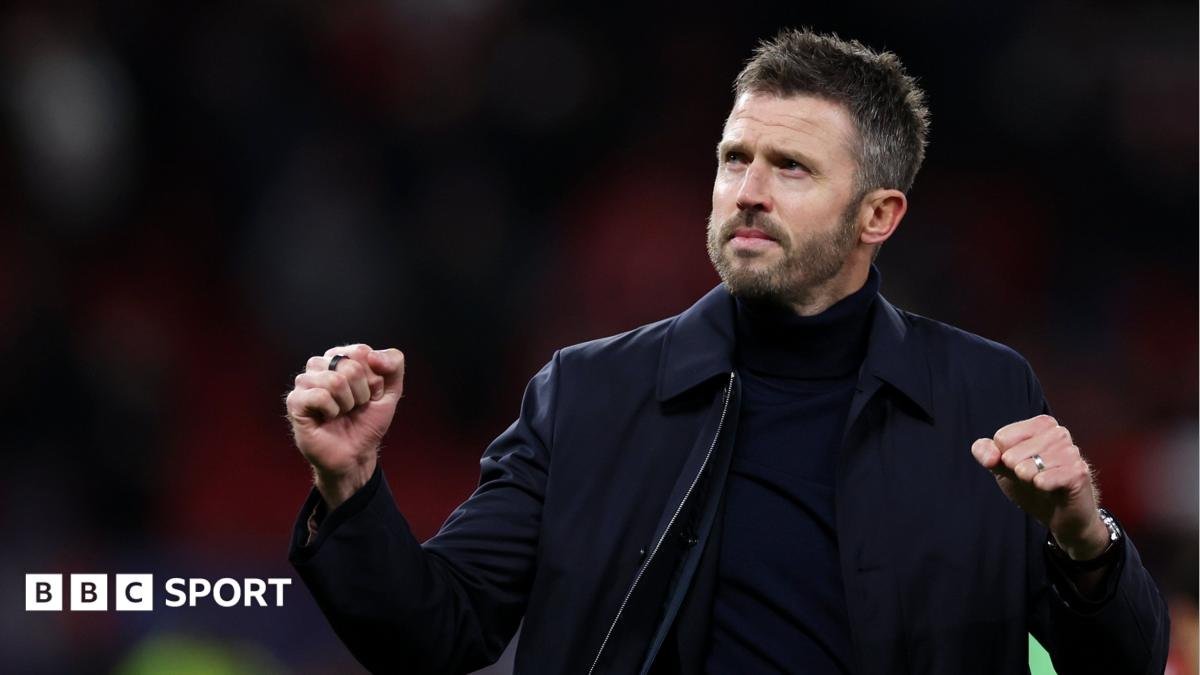
It came as no surprise to the Knowledge that James Milner had spent the early months of his retirement training for – and then running in – the New York City Marathon. Yes, the bleep test-loving former Brighton, Liverpool and Manchester City player recorded an excellent time of 3hr 9min 4sec, an average of 7min 13sec per mile. Not bad for a 40-year-old whose physique is more like that of a wrestler than a whippet. “A few years ago, I feel like I could have definitely done sub-3:00,” he said, lamenting his late-career injuries for hindering him.
In 2012 we ran a column listing footballers’ fastest marathon times, with the former Leicester playmaker Muzzy Izzet leading the pack on 3hr 22min 36sec at the 2011 London Marathon. That very respectable time has now been surpassed by the Premier League’s record appearance maker, so we thought we had better take a gulp of our isotonic energy drink and run through a few more tales of football’s marathon men and women.
More recent marathon attempts by either active or former footballers puts Izzet down in 12th place, just behind André Schürrle, who clocked 3hr 21min 25sec in Berlin last year, though clearly wanted a greater challenge than a mere 26.2 miles. This year, the 35-year-old completed the 167.7-mile six-stage Marathon des Sables in 51hr 41min 16sec, placing 675th overall. He also climbed Mont Blanc. But back to marathons, where the fastest time we can find for a female footballer is 3hr 40min 30sec by the former USA midfielder Lauren Holiday. She is closely followed by her good friends from the USWNT, Leslie Osborne (3hr 41min 33sec) and Abby Wambach (3hr 44min 25sec).
The Fulham manager, Álvaro Arbeloa, is 11th on our overall list (3hr 15min 21sec, Valencia 2019), with Kevin Kilbane, who always looked like he had a marathon runner’s spring in his step, 10th on 3hr 14min 44sec (London, 2013). A tip of the hat now to Danny Mills, father to the GB Olympic runner George Mills, with Mills Sr running the 2023 London Marathon in 3hr 12min 18sec at 45 years of age. Meanwhile, Milner’s run places him eighth as we approach some of football’s more serious runners.
The former Dundee United and West Ham defender Christian Dailly clocked a seriously impressive 3hr 6min 26sec at the 2013 London Marathon. “In 1990, I went from boys’ football in May to my Dundee United debut in August,” said Dailly after the race. “We’d be down at the beach, and all of a sudden, I’d be running through the sea at St Andrews or up and down the sand dunes. When I got to pre-season at Dundee United, I was flying, running away from everyone.” Dailly went into athletics coaching when his football career ended. We did not expect a goalkeepeer to be jostling for position towards the front of the pack, but the former Derby County and Sheffield Wednesday stopper Lee Grant hared around London in 3hr 0min 33sec this year.
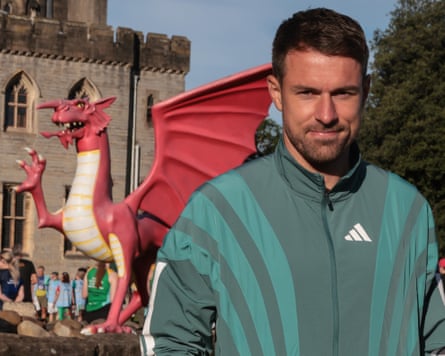
And so we get to the hallowed ground of a sub-three hour marathon and a select group of only five. The Real Madrid legend Raúl González was clearly being cheered from the rafters as he ran his home marathon in 2hr 59min 22sec in 2019. “It was only the second marathon of my life. I wanted to break three hours, and I’m very happy with what I’ve accomplished,” he said. The Oxford United manager, Aaron Ramsey, used his relative youth at 35 to tear up the Stockholm Marathon this summer in exactly 2hr 59min. Arjen Robben was known for his blistering pace over short distances in his glittering career but he showed that he could blend speed with stamina as he raced round Rotterdam in 2023 in a time of 2hr 58min 33sec.
Before setting out on his managerial career, Luis Enrique trained like a demon for the Florence Marathon, with his hard work paying off as he came home in 2hr 58min 8sec. He has since continued his fitness regime, competing in the Frankfurt Ironman event and the Marathon des Sables.
But the gold medal for the fastest former footballer to run a marathon goes to Alexei Smertin. The former Chelsea and Russia utility man took endurance running seriously when he retired in 2008 and hit a peak of 2hr 48min 17sec at the Kazan Marathon in 2020, aged 45. That is an incredible pace of 6min 25sec per mile. He has since tried switching to longer distances as he has aged but believes he may still have one or two quick marathons left in him. “I’ve been leaning toward ultras. One reason is that speed declines with age,” he said recently. “I thought I’d never be able to improve my personal best [2:48:17] … [but] I have a few more years to improve my speed.”
Let the ink dry
“What is the soonest a manager has been sacked after signing a contract extension?” asks Dave Smythe.
Adam Clark comes in hot with the first suggestion: “Leam Richardson, then of Wigan Athletic, signed a three-year contract extension on 25 October 2022 and was sacked 16 days later on 10 November 2022. Wigan then recruited Kolo Touré on a three-and-a-half year contract, who subsequently lasted just nine games.”
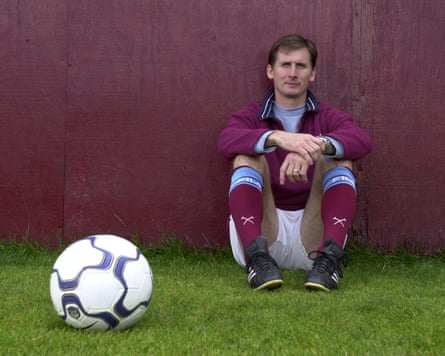
“I’m pretty sure when Watford sacked Glenn Roeder in 1996 he’d signed a contract extension about a fortnight earlier?” suggests Daz Pearce. Good shout, Daz: Watford were not yet in their era of sacking a manager every month, but Roeder – initially appointed at Vicarage Road in 1993 – was given the boot by Watford just 10 days after signing a new one-year contract extension in February 1996. “I am sure I have learned from this experience,” said Roeder, who announced his intention to stay in the game. He would not get another managerial job for another five years, enjoying a successful stint at West Ham from 2001-03.
Not a contract extension but Kevin Cullis’s appointment at Swansea City in 1996 lasted just seven days. Cullis, who never played professionally, had only ever previously coached non-league Crawley Town’s youth team and was later jailed for fraud in 2003, and didn’t get off to the best start in Wales with Swans players reportedly ignoring his tactics at half-time against Blackpool during just his second game in charge. Cullis resigned shortly afterwards.