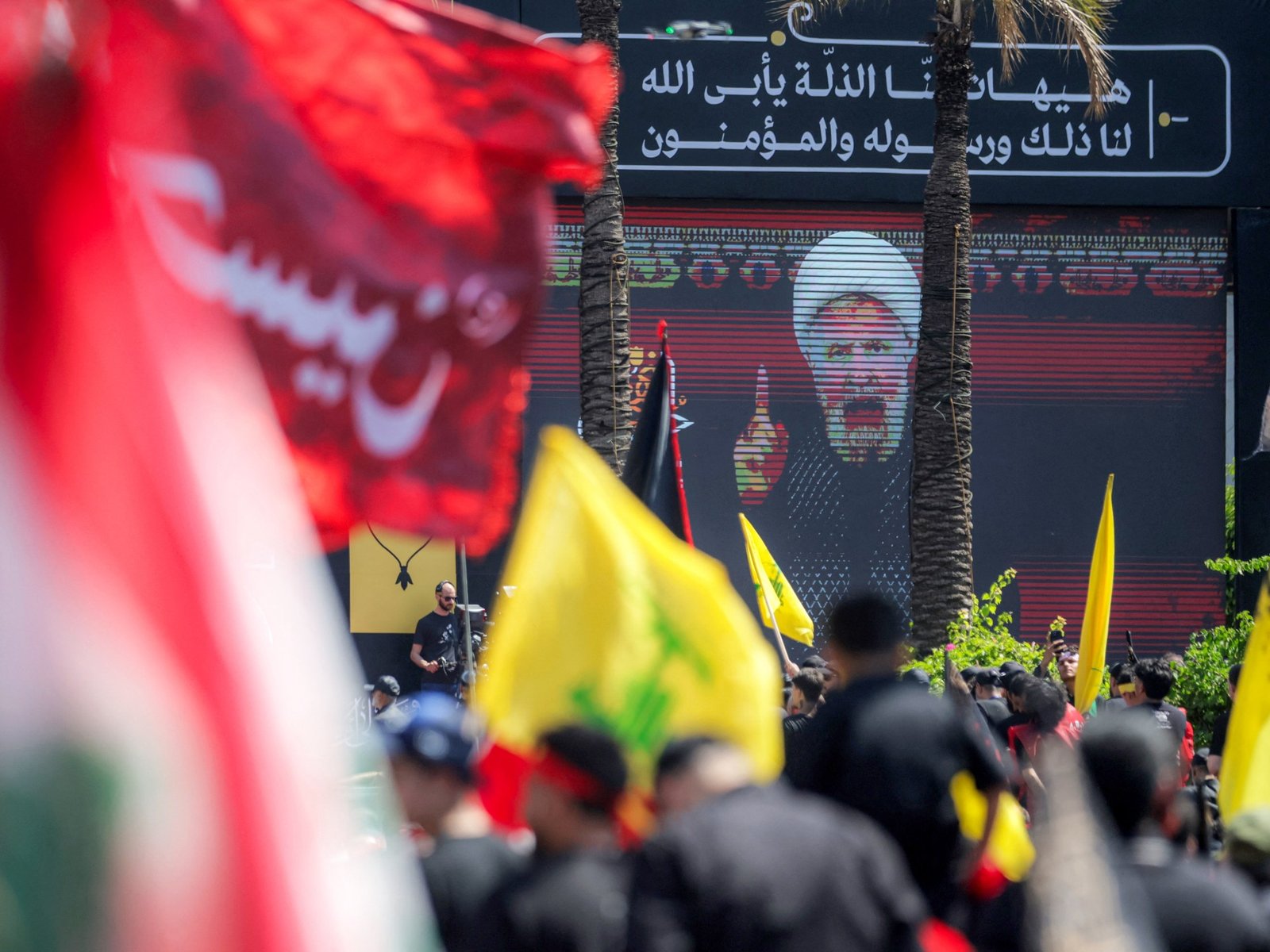
Save Share A crowd watches a televised speech by Hezbollah leader Naim Qassem in the southern suburbs of Beirut, June 26 [AFP] By Al Jazeera Staff and AFP Published On 26 Jun 202626 Jun 2026 Hezbollah leader Naim Qassem has demanded that Israel must pull its troops completely out of Lebanon “unconditionally”.
Qassem delivered the remarks in a televised address on Friday, on the Muslim holy day of Ashura, hours before the latest round of United States-mediated ceasefire talks between Lebanon and Israel concluded with the signing of a framework agreement.
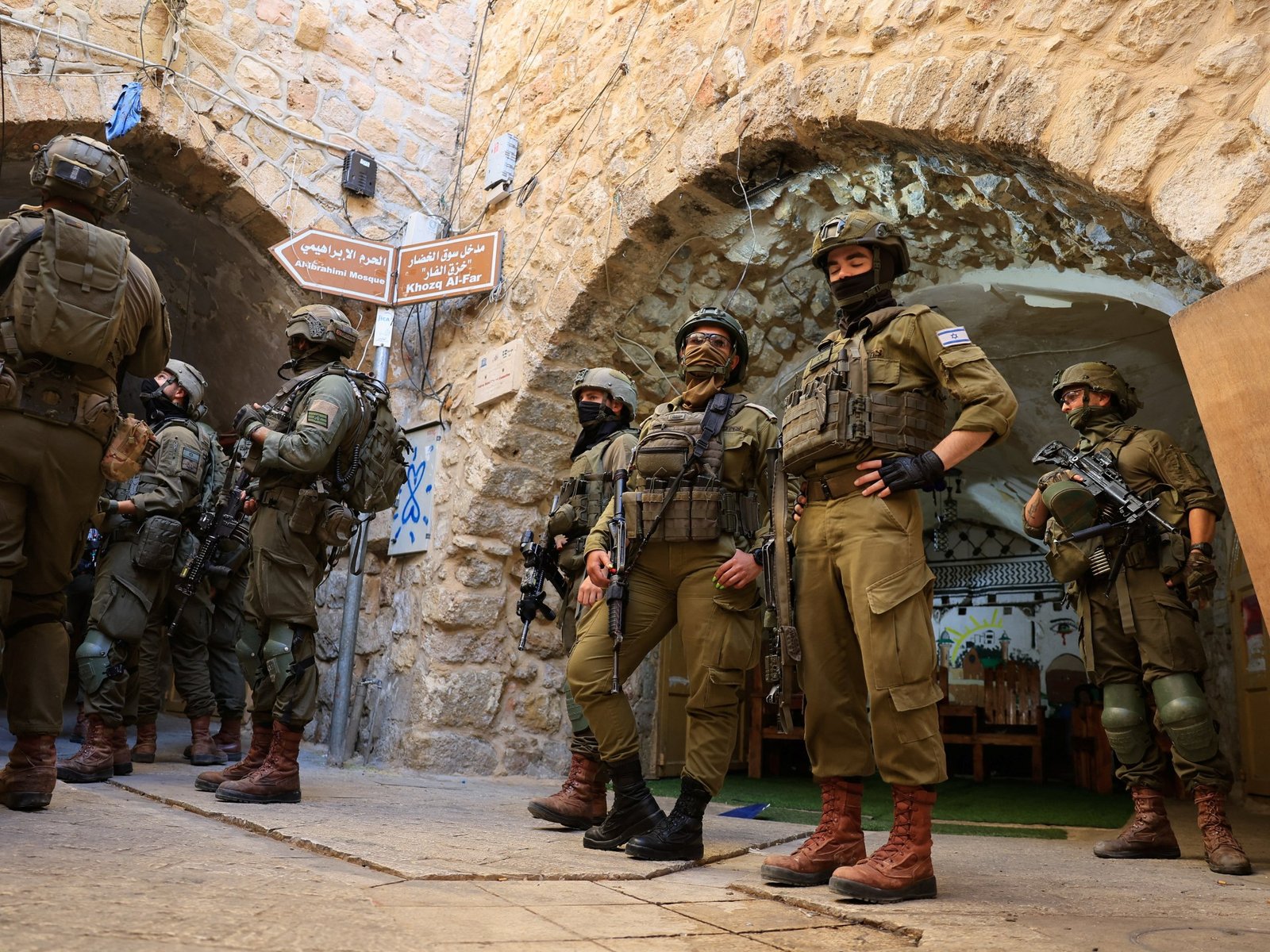
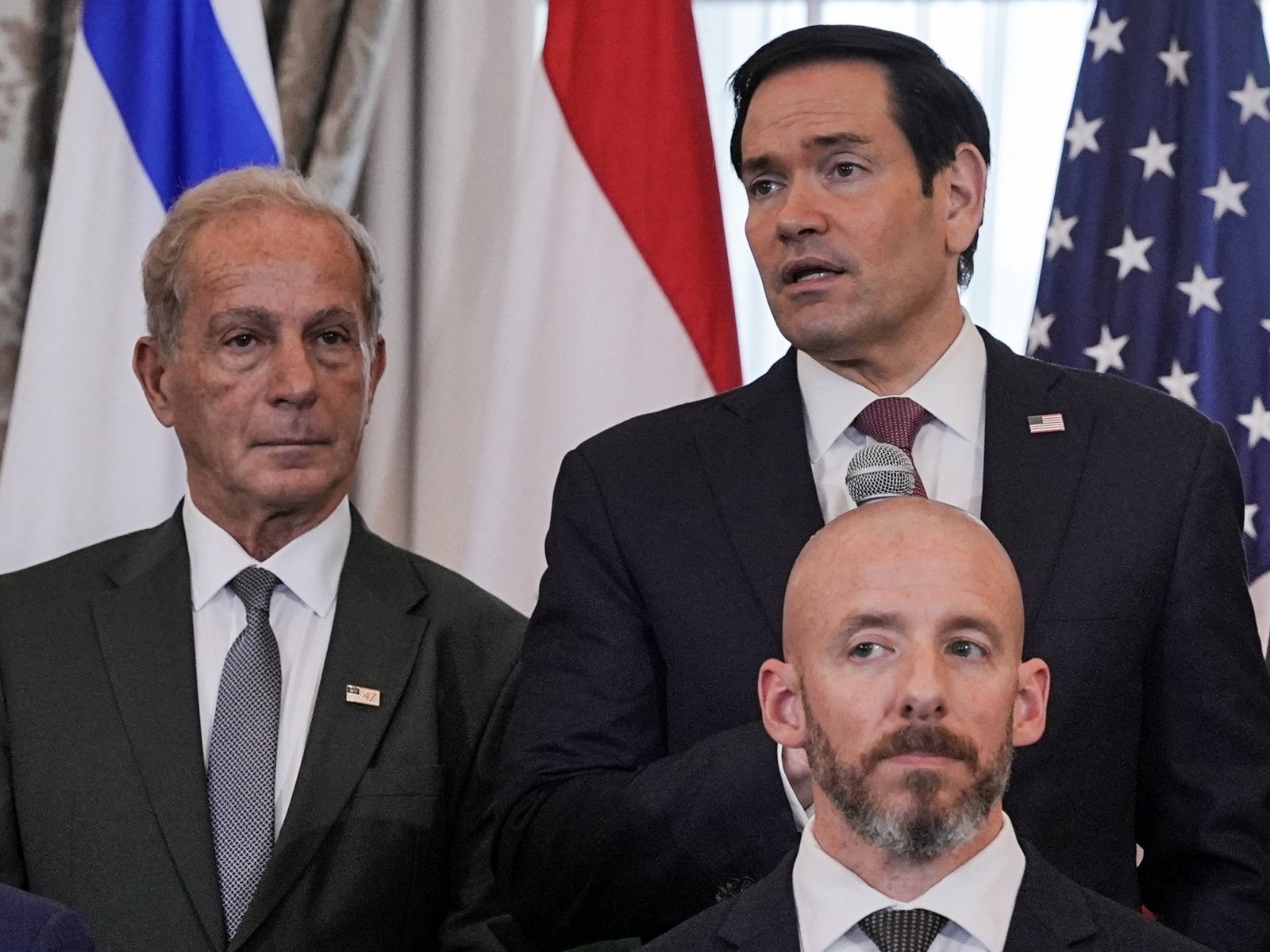
Recommended Stories list of 3 itemslist 1 of 3Israel kills three in Lebanon as Rubio praises progress in Washington talks list 2 of 3Lebanon Latest: Peace talks between Lebanon and Israel, people return south list 3 of 3Netanyahu: ‘We will remain in Lebanon, Syria, and Gaza as long as required’ end of list Hezbollah’s demand comes as Israeli troops remain positioned deep inside southern Lebanon.
Israeli officials insist they will stay in Lebanon, despite Iran saying Israel is obliged to withdraw under the terms of the interim US-Iran ceasefire agreement that also covers Lebanon.
Qassem described the US-Iran agreement as an “official declaration of defeat” for the US and Israel.
“Israel has no option but to withdraw completely from every inch of our Lebanese land,” he said.
“Israel must leave unconditionally.” While Israeli attacks in Lebanon have declined since the renewed ceasefire with Hezbollah started last week, they have not stopped.
On Friday morning, an Israeli air raid hit the town of Nabatieh al-Fawqa, while two people were reported killed by an earlier Israeli raid in the town of Mayfadoun.
Israeli forces later dropped leaflets over the southern town of Mansouri, demanding residents leave, according to Lebanese state media, the first such order issued since the latest ceasefire between Israel and Hezbollah.
An Israeli military spokesperson said the order was a “reminder” to the civilian population that “the area is within the security zone in which IDF soldiers operate” and for civilians to “not to be in the area so they won’t be harmed.” Advertisement Lebanese officials said Israeli troops are enforcing the zone’s northern boundary by firing at anyone approaching it, including both civilians and Lebanese soldiers.
The Israeli army also claimed on Friday it killed seven Hezbollah members who had transferred weapons near soldiers in southern Lebanon.
In a statement on Telegram, the army said it had struck the alleged members near the so-called “security zone” in the al-Manzala area that was used as a “combat and observation post”.
The “security zone” is an area of southern Lebanon that Israeli forces are occupying north of the Israeli border.
Israel’s military also reported that four of its soldiers, including two officers, were injured in close-quarter fighting with Hezbollah in Lebanon’s Beit Yahoun the day before.
“Overall, there has been a reduction of violence, but Israel continues to carry out attacks,” reported Al Jazeera’s Zeina Khodr from Beirut, adding that many of the latest attacks have targeted frontline villages.
Israel wants Hezbollah’s ‘full disarmament’ Lebanese officials began direct talks with Israel in Washington in April.
A fifth round of negotiations began on Tuesday and concluded on Friday with officials from Lebanon, Israel and the US signing a trilateral framework agreement aimed at paving the way for a peace deal between the two long-time Middle East adversaries.
Johnny Tannous, an Al Jazeera correspondent in Lebanon, reported earlier that the talks were meant to have concluded on Thursday, but were extended for an additional day with the aim of reaching an agreement.
Recent discussion has focused on a US-backed proposal for Israeli forces to hand some occupied territory back to Lebanon’s military, according to the Reuters news agency.
A US State Department official told the agency that Israel had taken a “concrete step” towards the proposal by pulling back from a part of a buffer zone in southern Lebanon.
However, Lebanon’s military told Al Jazeera that did not happen.
Zeina Khodr said Israel appears to be conditioning any withdrawal in Lebanon on “Hezbollah’s full disarmament”, while pressing for Lebanon’s army to dismantle Hezbollah infrastructure in areas north of the Litani River, which Israel has been unable to occupy.
Israel believes its continuing attacks on frontline villages gives it more leverage with Lebanon’s government, Khodr cited security sources as saying.
Former Lebanese diplomat Tracy Chamoun told Al Jazeera that Lebanon wants to secure a comprehensive ceasefire that Israel will fully commit to, in addition to Israel’s withdrawal.
Advertisement “I think the meeting [in Washington] is not going very well because the Lebanese delegation is not able to extract any promise or any commitments from Israel on those two points,” said Chamoun.
Hezbollah’s parliamentary bloc has reiterated its refusal to negotiate directly with Israel, and demanded that the Lebanese authorities not grant Israel experimental areas north of the Litani River, Tannous said.
Qassem, who has persistently denounced the Lebanon-Israel talks, said that Hezbollah would accept “no normalisation, no cancellation of the state of hostility, no gains for Israel”.
He urged Lebanese authorities to “unite the ranks against the enemy” and not to follow the interests of the US and Israel.
Lebanon’s “resistance” – a reference to Hezbollah – will stand with the government if it proceeds on the path of Lebanese sovereignty, added Qassem.
Khodr said the statements are “a message to delegates in Washington”.
Amid the international efforts to build a route out of the impasse, France and Italy have put forward an initiative to form an international coalition to help manage security arrangements and support Lebanon’s armed forces following the exit of the United Nations Interim Force in Lebanon (UNIFIL) peacekeeping force, which is due at the end of the year.
Lebanon’s President Joseph Aoun praised the initiative, saying it demonstrated the international community’s commitment to Lebanon’s sovereignty and stability.