The story so far: Less than a month after he signed into law an Act that would see tariffs of up to 100% on countries that import large amounts of Russian oil and gas, U.S. President Donald Trump on October 10, 2026, announced a deal with Russia that would allow it to sell diesel to the U.S. and the global open market. The next day, Mr. Trump also announced an ‘energy ceasefire’ between Russia and Ukraine. All of this has implications for India, its energy sector, and its trade.
Explained | How will the U.S.’s Sanctioning Act affect India?
What is the deal with Russia on diesel?
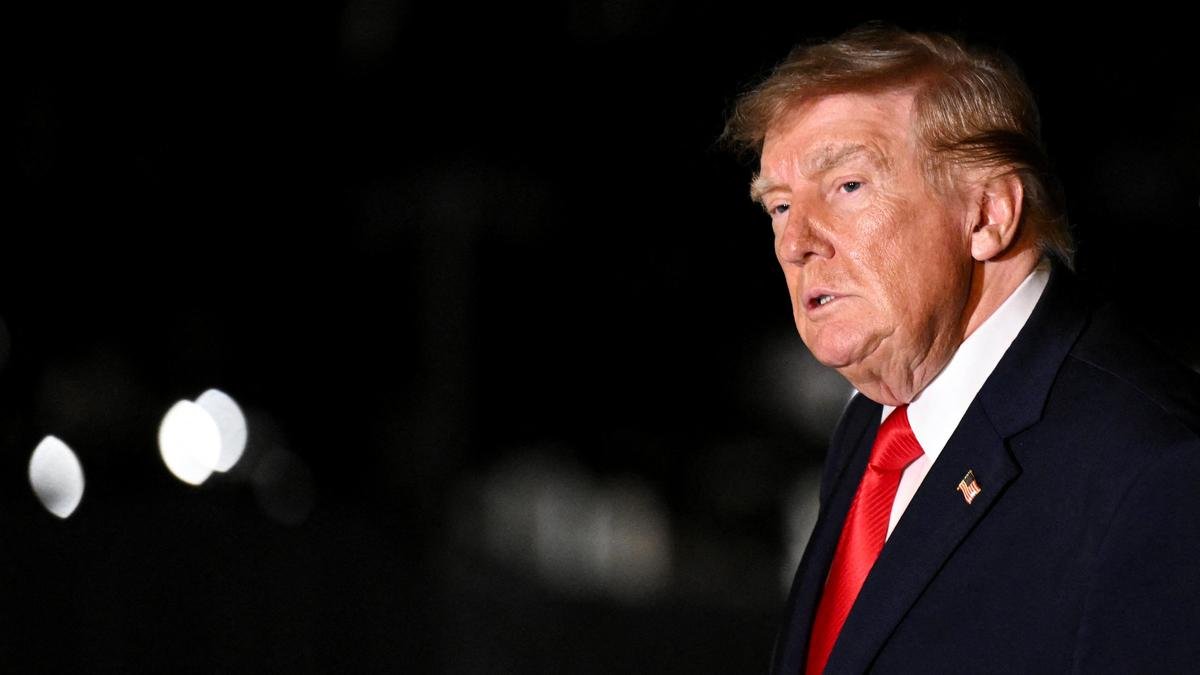
On October 10, 2026, Mr. Trump took to Truth Social to say he has concluded “a highly successful discussion” with Russian President Vladimir Putin in which it was agreed that Russia would “immediately” supply over 300,000 tonnes of diesel to the U.S. and to the global market, another 500,000 tonnes in November, and 1 million tonnes “immediately thereafter”.
Further, he said that, based on the condition of its diesel refineries, Russia will after this schedule deliver another 3 million tonnes of diesel “within a short period of time”.
Mr. Trump’s reasoning for this move was that it would bring down fuel prices for the U.S. and the world. In fact, in response to criticism on the deal, he again took to Truth Social to say that he “made the right choice for the American People — ALWAYS, AMERICA FIRST!”.
The View from India | Punished for importing Russian oil
What are the complications with the deal?
On September 18, Mr. Trump signed into law the Lindsey O. Graham Sanctioning Russia and Iran Act of 2026. This Act had received remarkable bipartisan support across Democrats and Republicans in both the Senate as well as in the House of Representatives.
The precise aim of the law is to clamp down on Russia’s funding for its war in Ukraine, through sanctions on its leadership and companies, and tariffs on its major fuel trade partners. Now leaders on both sides of the political spectrum are saying that this latest diesel agreement undermines the very foundation of the law.
“Through the Lindsey O. Graham Sanctioning Russia and Iran Act, we gave the president significant authorities [sic] and leverage against China and Russia to bring Putin’s war to an end with a negotiated settlement,” House of Representatives member and Republican Michael McCaul of Texas said in an X post.
“Unfortunately, while I understand the desire to bring down diesel prices, I am concerned the lifting of sanctions on Russian oil will only fund the Kremlin’s war machine — emboldening more violence and destruction, as we have seen in recent days,” Mr. McCaul added.
A further complication comes from the fact that the Act itself threatens tariffs of up to 100% on the biggest importers of Russian oil and gas. China and India are by far the largest importers of energy from Russia, but China has struck a deal with the U.S. so that no additional tariffs can be levied on it until early 2027.
That leaves India as the major importer of Russian oil on which these tariffs could be applicable.
What are the implications for India?
India has been trying to conclude a trade deal with the U.S. since February 2025. However, each time progress is made, the U.S. makes a change to its tariff or trade policies that scuppers the discussions. This time will be no different.
While talks were gathering steam in June last year over a ‘mini deal’ on tariffs, the escalation of U.S. tariffs on India to 50% in August 2025 stalled those talks. The reason for that escalation had been India’s imports of Russian oil.
Talks resumed in October 2025 and by February 2026, the leaders of the two countries issued a joint statement saying they had agreed to a framework for an interim agreement on trade. The deadline for this deal was unofficially set as March-April 2026.
However, in March, the U.S. launched investigations into India and several other countries on two counts: whether they had done enough to stop the import of forced labour, and whether they were using structural excess capacity to hurt the U.S. economy. While the forced labour investigation resulted in 10% tariffs on India in July, the excess capacity one is yet to be completed.
Once again, the deal talks slowed down, a situation that was exacerbated by the passage of the Russia Sanctions Act in September.
This latest U.S. deal with Russia on diesel is expected to further complicate matters since the U.S. is indulging in the very actions it is looking to penalise India for. While historical data has shown that India has largely toed the line when it comes to Russia’s sanctions and prohibitive tariffs, the situation this time could be different.
Not only are fuel supplies constrained due to the conflict in West Asia, this seeming hypocrisy on the U.S.’ part is likely to further irritate leaders in India.
What are the implications of the ‘energy ceasefire’?
Mr. Trump did not reveal any details about the ceasefire, its timeline, duration, or extent. In fact, in response to his announcement, Ukrainian President Volodymyr Zelenskyy said that the ceasefire was “news for me”, implying he was not aware of the discussions. However, he later said that he was willing to cooperate.
Ukraine has been successfully attacking Russian refineries to the extent that Russia has been forced to import refined fuel from its partners despite itself having vast amounts of crude oil.
Russia imported a record 172,000 tonnes of oil products in August, according to a report by the Centre for Research on Energy and Clean Air (CREA). The report added that India accounted for 70% of these imports by Russia.
Should an energy ceasefire come into effect, and depending on its duration, Russia will likely be able to repair its refineries and begin its own supplies of fuel. This would mean it would no longer require fuel from India.
However, that ceasefire may remain just a statement. Days after the announcement, Mr. Zelenskyy took to social media to say that “last night, we did not attack any energy facilities on the territory of Russia... while Russia attacked our gas stations, energy infrastructure, and other facilities”.
“The message from Russia was very clear — they don’t know anything about the energy ceasefire,” he added.