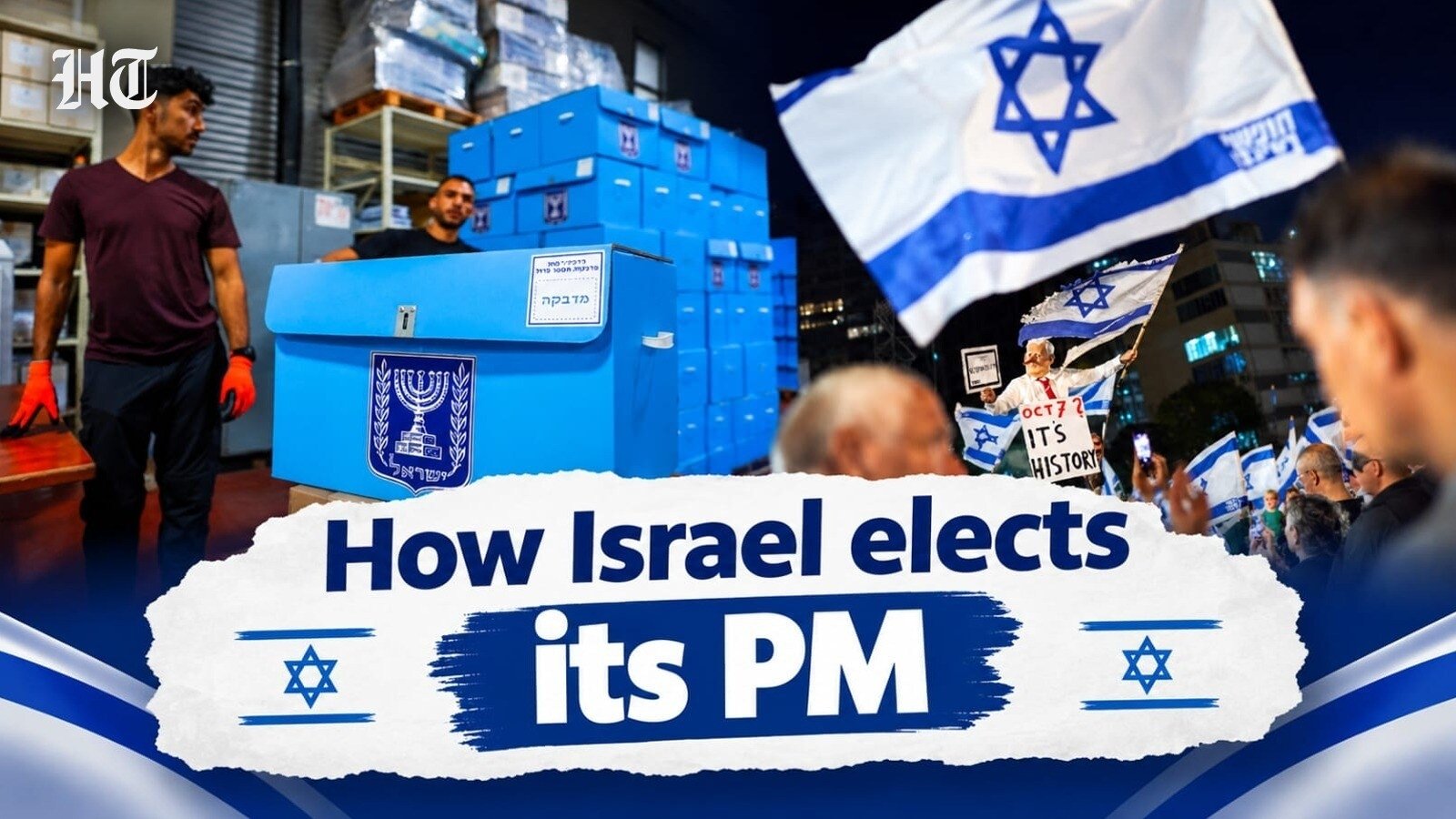
Israelis do not directly elect their PM, they vote for political parties.
Here's how Israel's electoral system works and how a new government is formed.
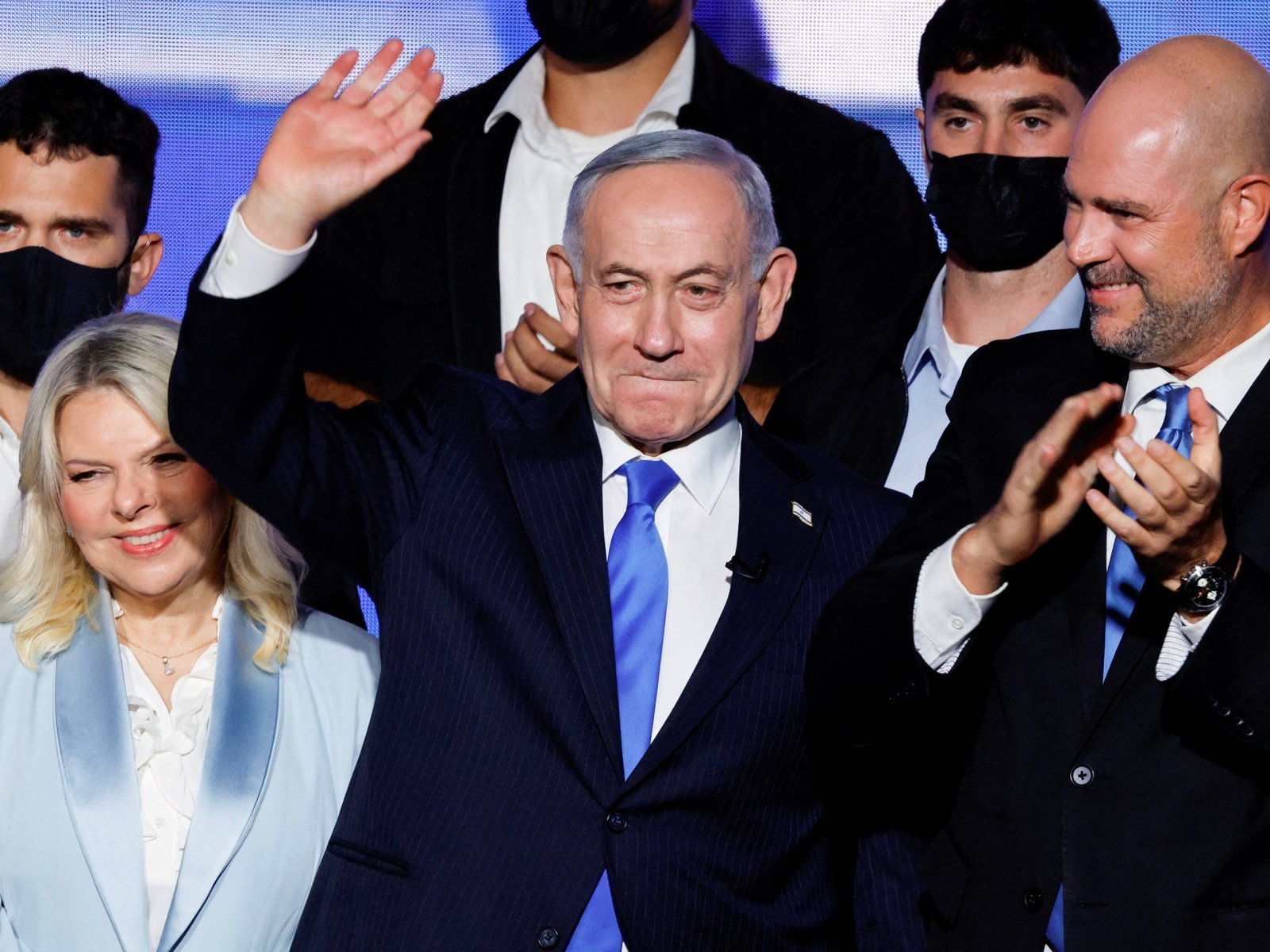
Published on: Oct 25, 2026, 16:56:11 IST By Akanksha Verma, hindustantimes.com Prefer HTon Google Share via Copy link Israel is set to hold parliamentary elections on October 27 to elect a new Knesset, with Prime Minister Benjamin Netanyahu facing the prospect of losing power amid growing public discontent.
The election will be the country's first national vote since Hamas's October 7, 2023, attack and the ensuing wars in Gaza, Lebanon and Iran.
Israel is set to go to polls on October 27, 2026.
Let us find out how the country elects its prime minister. (HT/ agencies) Netanyahu, Israel's longest-serving prime minister, is seeking to remain in office as his government faces scrutiny over the security failures surrounding the October 7 attack and other issues.
The elections are being viewed as a test of his political standing, with recent opinion polls suggesting that his governing coalition could lose power, according to Reuters.
Instead, they vote for political parties, and the country's next leader emerges through a process of coalition negotiations and parliamentary confidence.
Ballot slips are seen at the headquarters of the Israeli Central Elections Committee near the central town of Shoham on October 14, 2026, ahead of Israel's legislative election. (AFP) Israel votes for parties, not candidates Israelis do not vote directly for the prime minister or elect individual lawmakers from local constituencies.
Instead, they cast their ballots for political parties or electoral lists, which submit candidates in a predetermined order.
The entire country serves as a single electoral constituency.
Unlike systems in which voters elect representatives from separate constituencies, Israel allocates parliamentary seats based on the nationwide vote share received by each qualifying party or list.
Israel follows a proportional representation system, under which parties receive seats in the 120-member Knesset broadly in proportion to their share of the national vote.
This system allows multiple parties to enter parliament, making coalition-building central to the process of forming a government.
Israel elections 2026: How the system works (HT photo) How parties qualify for the Knesset A political party or electoral list must secure at least 3.25% of the valid votes cast nationwide to qualify for seats in the Knesset.
This minimum share is known as the electoral threshold.
Seats are distributed proportionally among the lists that cross the threshold.
Those that fail to meet it do not receive seats, and their votes are excluded from the calculation used to allocate seats among qualifying lists.
To form a government, a prospective prime minister must be able to secure sufficient support in the Knesset.
A coalition commanding the support of at least 61 of the 120 lawmakers has a majority.
The party that wins the most seats does not automatically form the government.
A smaller party may be able to assemble a coalition with enough parliamentary support, while the largest party may struggle to find willing partners.
People walk past a Likud party campaign billboard featuring Israeli Prime Minister Benjamin Netanyahu alongside opposition party leaders and bearing the Hebrew slogan "Right or Palestine," ahead of Israel's general election, in Beni Brak, Israel, Sunday, Oct.
25, 2026. (AP Photo/Oded Balilty) (AP Photo) How does voting work in Israel?
Each electoral list submits a list of candidates in a predetermined order.
On polling day, voters select a paper ballot bearing the name and identifying letters of their preferred party or list.
Ballots are placed in envelopes and deposited in ballot boxes.
Voters do not separately choose the prime minister or an individual member of the Knesset.
The seats won by each list are determined by its share of the nationwide vote, subject to the electoral threshold.
The candidates who enter the Knesset are determined by the order in which they appear on their party's list and the number of seats the list wins.
How is Israel's prime minister chosen?
After the election results are published, the president of Israel consults representatives of the parliamentary factions elected to the Knesset.
The representatives can recommend a lawmaker to form the next government.
The president then assigns the task of forming a government to a member of the Knesset considered capable of securing parliamentary confidence.
Although the leader of the largest party is often given the mandate, this is not automatic.
The president has discretion in deciding whom to appoint, taking into account the prospects of forming a government that can win the Knesset's confidence.
The lawmaker given the mandate has 28 days to form a government.
The president can extend this period by up to 14 days.
During this time, the candidate negotiates with other parties to build a coalition, reaching agreements on policy priorities, ministerial appointments and the distribution of government responsibilities.
Once the candidate has assembled a government, it must present its policy guidelines and composition to the Knesset and seek a vote of confidence.
If the Knesset expresses confidence in the government, it takes office, and the lawmaker who formed it becomes prime minister.
If the candidate fails to form a government or the Knesset rejects the proposed government, the process can move to another lawmaker.
If the subsequent attempts also fail, the legal process can ultimately lead to the dissolution of the Knesset and fresh elections.
Why coalition-building matters Israel's electoral system separates the choice of parliament from the formation of the government.
Voters determine the balance of power in the Knesset by choosing parties, but the prime minister is ultimately the lawmaker who can form a government and secure parliamentary confidence.
As a result, winning the largest share of the vote does not guarantee the premiership.
The decisive factor is whether a candidate can bring together enough parties to command the support needed to govern. (With inputs from Reuters, Al Jazeera and The Jerusalem Post) ABOUT THE AUTHOR Akanksha Verma Akanksha Verma is an Associate Editor at the Hindustan Times in New Delhi.
With an experience of over a decade, she has led newsrooms operations and worked on digital content strategies.
She is adept at covering breaking news situations and holds expertise in doing long-form explainers on national, political and geopolitical issues.
Akanksha has previously worked with The Times Of India, Indian Express Online, News18.com, India Ahead and The Daily Jagran.
She has written on key national and global events, including the Lok Sabha Elections, Assembly Elections, US Elections, US-Iran war, Operation Sindoor, Israel-Palestine conflict, Afghanistan conflict, Ram Temple verdict, Ladakh standoff, Abrogation of Article 370 and Demonetisation.
She holds a BA (Hons) in English from Ramjas College, University of Delhi, and a Postgraduate Diploma in English Journalism from the Indian Institute of Mass Communication (IIMC), Dhenkanal, Odisha.
She is proficient in both English and Hindi and has earned a beginner-level certification in Korean.
Beyond her newsroom responsibilities, Akanksha enjoys reading books that explore gender and social issues.