The US have used outside companies, including one measuring players’ brainwaves, to help them determine who will shoot in a shootout
Who would the US need to beat to win the World Cup?
There is perhaps nothing more polarizing in the game of football than a penalty shootout. But however you feel about them, you can’t deny the drama involved, which was on full display in Monday’s last-32 matches.
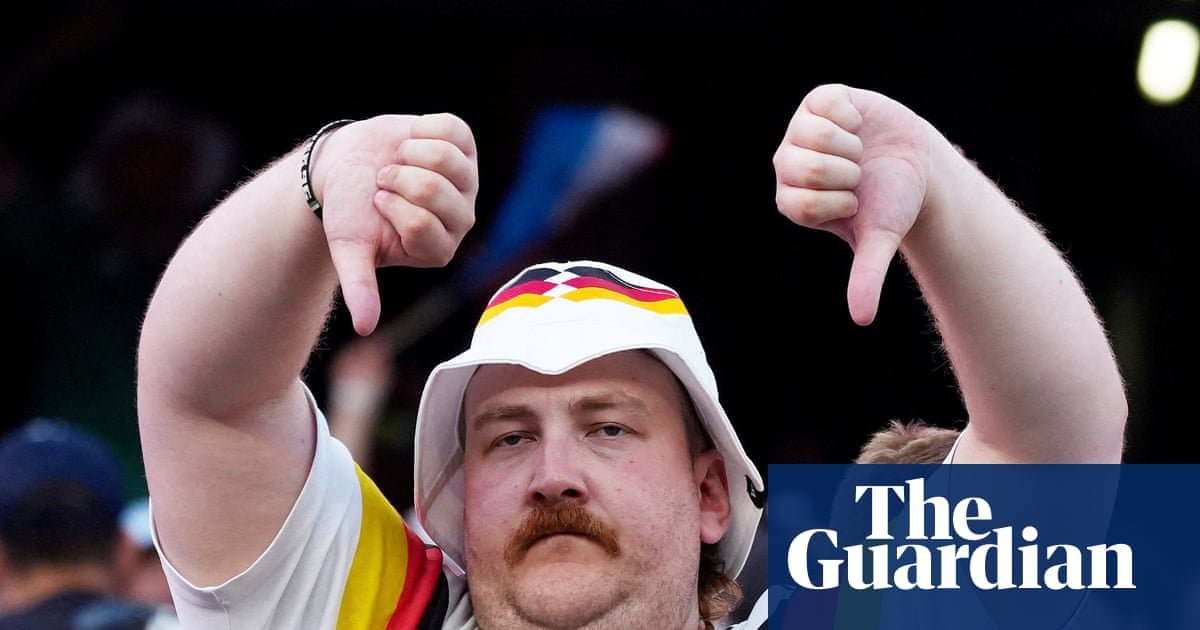
Germany were the first at this World Cup to fall victim to the cruel nature of the procedure, with Kai Havertz, Nick Woltemade and Jonathan Tah all missing from the spot and handing a shock victory to Paraguay. The Netherlands, who have plenty of familiarity with the devastation of losing in a shootout, came next, putting in a poor effort against Morocco, who took full advantage.
Leaving the tournament via penalties was a new concept to the Germans, who had never done so since penalty kicks were added to the World Cup in 1982. In the aftermath of the loss, German media began to report some very grisly details: midfielder Leon Goretzka and defenders Waldemar Anton, Nathaniel Brown and Malick Thiaw had all reportedly declined to take a penalty, leaving the task to Tah, who had never taken one in his professional career. He missed the decisive kick, and Germany were sent packing.
To some, this represents a shocking lack of preparation by Germany head coach Julian Nagelsmann, with many pundits wondering why he hadn’t had a predetermined order.
Mauricio Pochettino’s approach differs. Asked by the Guardian on Tuesday to shed some light on his approach to penalties, the US head coach said his staff had long-ago partnered with an outside firm to analyze penalty kicks and set pieces. He most certainly has a preferred order, but was careful not to give too much away.
“I don’t want to talk too much,” Pochettino said. “But I think we are working [with outside help] because as a coaching staff we believe we can provide some tools to the players to be better and to improve, [to equip] the players to try and find the best way to face this type of situation, while knowing that it is impossible to replicate the emotional stress and the pressure and expectation that they are going to feel.”
Pochettino, then, put a fine point on it.
“It is going to be [the coaching staff’s] decision, the 1, 2, 3, 4, 5. We try to arrive in this moment and not ask the player if he feels confident or not confident.”
The head coach, along with his staff and analysts, had formed a working group some 18 months ago with the goal of helping players maximize their performance on set pieces. They partnered with a pair of companies: Neuro11 and Trackman.
Neuro11 incorporates, among other things, real-time EEG tracking — brainwaves, if you will — into its research. They had previously partnered with Liverpool FC for set-piece coaching under Jürgen Klopp. Their method includes, among other more technical things, strapping a helmet-looking contraption on to players’ heads when taking penalties, as demonstrated in a video produced by Liverpool in 2023.
Trackman uses radar and other sensor data to offer users an unprecedented level of detail in regards to ball movement. US midfielder Sebastian Berhalter had previously credited Trackman as a factor that improved his set piece delivery, which is now among the reasons why he made the World Cup roster.
Penalties are part of the practice routine at this point for the US as they prepare for their last-32 encounter with Bosnia and Herzegovina in the Bay Area on Wednesday. Many of the side’s players watched Monday’s shootouts as a group. The USMNT have never been in a penalty shootout in World Cup play, and as a whole their World Cup experience is almost entirely devoid of important penalty kick moments at all. One exception, perhaps, is Brad Friedel’s heroic save of a penalty against South Korea in 2002.
“It is an extremely hard thing to do, go up and take penalties,” midfielder Christian Pulisic said Tuesday at PayPal Park, for now the USMNT’s training base. “For the people that go up and shoot it takes a lot of courage and it is not easy. Goalkeepers get better and better every year … The guys who feel the most confident to shoot will want to go up and shoot. I think that’s normal. There’ll be some players that don’t practice them as much and don’t feel good, I don’t think that’s necessarily a big problem. I feel it’s a pretty brave, courageous team, and I feel guys will give it a go.”
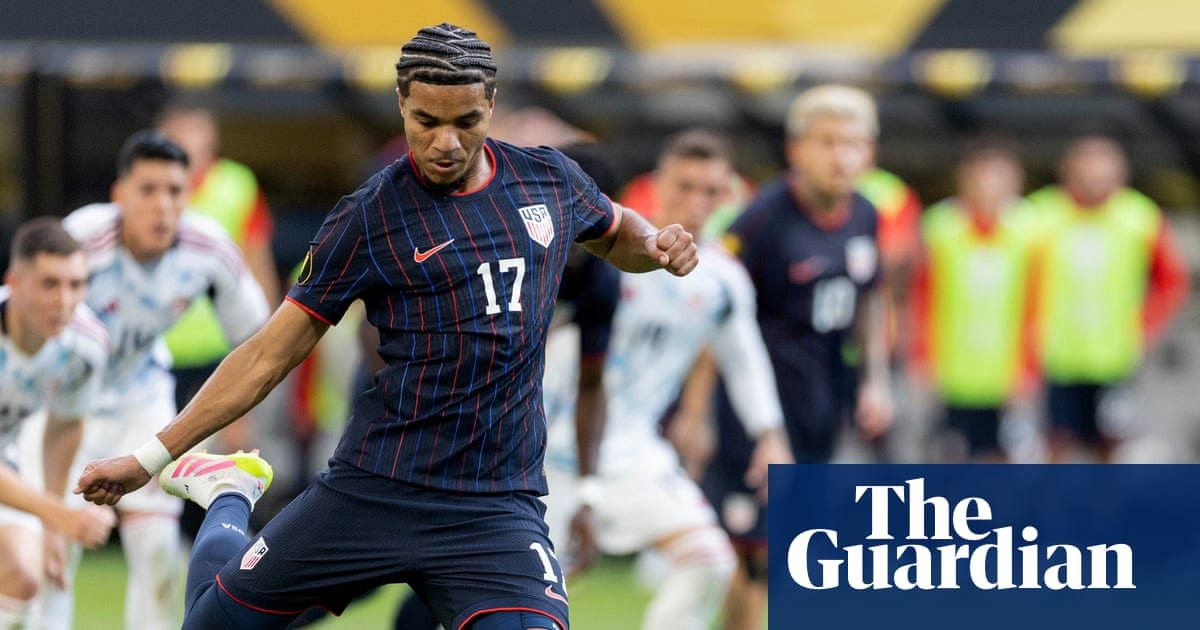
The US have no shortage of competent penalty-takers, with Pulisic at the head of that group. The 28-year-old has never missed in his seven attempts with the senior national team and has rarely missed at club level with Milan. Forward Ricardo Pepi has been similarly lethal, having not missed a penalty since leaving MLS in 2022, as has Haji Wright, who has converted 17 of 19 attempts over the last seven years. Folarin Balogun has taken his share of attempts as well.
Further down the roster, things get murkier, as they do for most teams. US defender Chris Richards laughed when asked about the prospect of hitting a penalty.
“I’m a defender for a reason, man,” Richards said. “We try to not think about the worst-case scenario … In training, though, we prepare for everything, whether it’s penalty kicks or [extra time], we try and not leave any stone unturned. For us it’s just about approaching this game with confidence but also understanding that things don’t always go your way, so be prepared for everything.”
There is also the matter of how, stylistically, the penalties are taken. Both of Monday’s shootouts featured a number of unorthodox approaches, from stutter steps and short run-ups. Several kick takers made attempts across their own bodies, often dragging shots – two attempts hit the post in the matchup between the Netherlands and Morocco.
The US saw all those approaches but few of their penalty takers seemed interested in altering their own techniques. To Pulisic and others, the idea that they’d model any part of their own approach, especially this late in the game, seemed preposterous.
“I think everyone has their own style. I don’t think you watch and can take so much away, or try and change your style in one day,” Pulisic said. It’s just part of the game”
“I don’t have too much attacking in me, so I’m just picking my spot and going with it,” Richards added, laughing.