The story so far: The U.S.
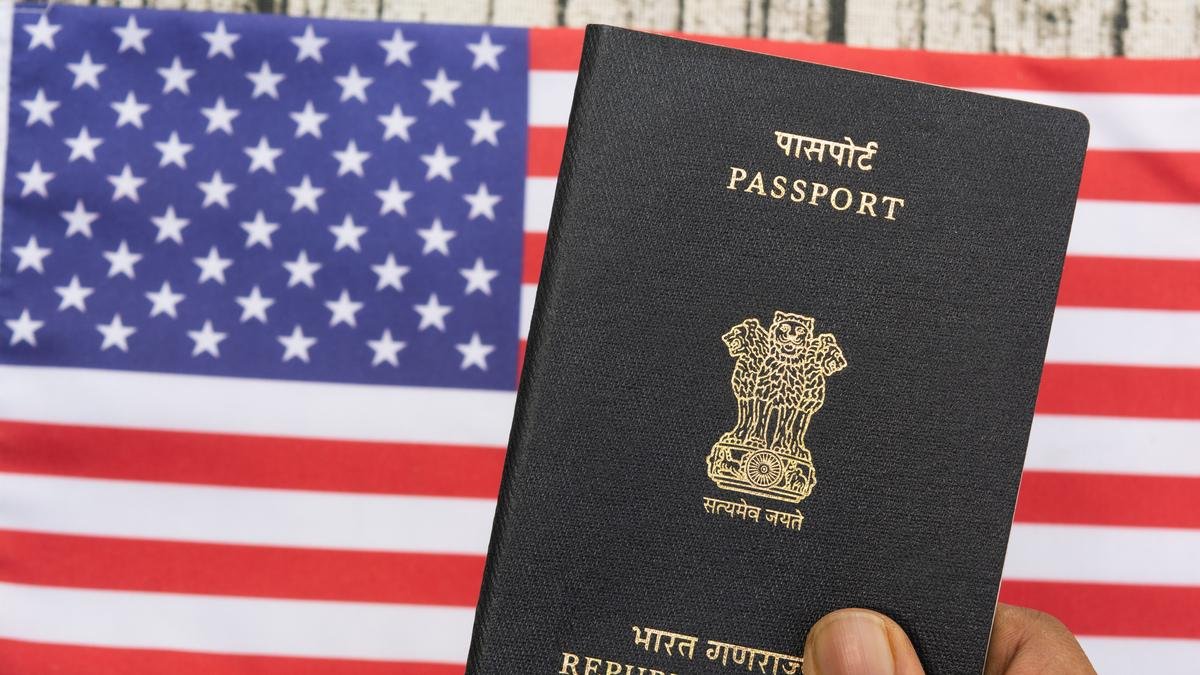
Department of Homeland Security (DHS) on Thursday (July 16, 2026) issued an order announcing amended immigration rules that blamed the so-called “Duration of Status loophole”, which allegedly allowed “foreign students, exchange visitors and media representatives to remain in the U.S. indefinitely without routine government oversight”.
The order will hit the knowledge sector, which has availed U.S. visas liberally so far.
The rules will end that privilege and, most importantly, grant only four years of stay to PhD students.
What does the order say?
The new order introduces a “fixed period of admission” for holders of F, J, and I category visas, which arefor non-immigrants.
Further, it specifically says that non-immigrant students, who hold F visas, and exchange visitors, who are J visa holders, will be allowed to stay for the length of their specific programmes “not to exceed a maximum period of four years”.
Those requiring additional time to complete their academic programmes “must formally apply for an Extension of Stay (EOS)” directly through the U.S.
Citizenship and Immigration Services (USCIS).
Federal authorities will consider this application based on “biometric vetting, background checks and fraud screenings”.
That apart, the 60-day time given to F-1 visa holders (non-immigrant students) for planning for departure, transfer of schools, or change of educational status following their graduation has now been reduced to 30 days.
What are the proposed changes to the U.S.
H-1B programme? | Explained The order says that this will restore “integrity to the nation’s immigration system”, fight visa abuse, and help in ensuring national security.
It says the new rules will ensure that foreign students remain focused on studies, the primary purpose of the J visa.
The new rules now limit the I visas for foreign journalists to 240 days, or 90 days in the case of Chinese nationals.
Who will be affected by the order?
Students, researchers, exchange visitors, and journalists who have benefited from the liberal visa system of the U.S. will be among the first to be affected.
The new order will require extension of visas that will, in most cases, be conditional or depend on further recommendations from authorities, creating uncertainties for students and researchers who will have terms and multiple semesters to complete.
Among those who will be severely hit are PhD students and research scholars who pursue studies and research programmes lasting years, and now they have to conclude their projects within four years.
When questioned about this concern, a U.S. official source said that there was no further information “beyond what is in the document”.
What has been DHS’s response to the criticism that the four-year limit will harm students and PhD scholars?
The order lists criticism made by commenters in the process of consultation for the new rules.
They pointed out that, according to available data, 56% of undergraduate students take more than four years to complete their degree programmes in the U.S., and in case of double majors, the time taken is five to six years, and for those in STEM doctoral programmes, it takes six to seven years to develop mastery of their subjects.
How the new U.S. visa rules affect your online privacy | Explained The DHS recognises the challenge, saying that the responsibility will be on the students, researchers, and educational institutions to take necessary steps for their extended stay as required.
It says, “DHS believes that such burdens are outweighed by the benefits of this rule, which creates a mechanism for DHS to increase vetting, reduce overstays, and determine whether nonimmigrants are complying with the conditions of their nonimmigrant classification.
The requirements imposed by this final rule provide the U.S. government more opportunities to review a nonimmigrant’s records, admissibility, and any possible indicators of fraud, abuse, or national security concerns.” What prompted the latest visa decision by the Trump administration?
From the beginning of the second term of President Donald Trump, immigration has been a major focus area.
There has been stricter control on almost all immigration categories.
The order titled ‘Establishing a Fixed Time Period of Admission and an Extension of Stay Procedure for Non-immigrant Academic Students, Exchange Visitors, and Representatives of Foreign Information Media’ has cited that comments were sought from the general public before finalising the order and, during that process, commenters “raised concerns about the general national security risks posed by foreign students, particularly those from China and India, citing examples of espionage, intellectual property theft, hazardous material transportation, and technology transfer.
Commenters pointed to espionage concerns…”.
In this regard, the document mentions the case involving Chinese national and engineering student Ji Chaoqun, who was alleged to have participated in espionage-related activities while holding an F-1 visa.
Ji Chaoqun was sent to prison in 2023.
Commenters also said that foreign countries could use these visas to place “individuals in sensitive academic fields, potentially for espionage or intellectual property theft”.
The order further claims that a “significant increase” in “F academic students, J exchange visitors, and I representatives of information media” poses a challenge to theDHS’s ability to “monitor and oversee” these applicants.
Did the DHS exempt any group in this order?
Commenters had sought exemption for F-1 visa holders who are parents to U.S. citizens (understandably children born to foreign students on F-1 visas) and suggested that such individuals be given the option of permanent residency.
However, it was not accepted by the DHS on the grounds that it had found “troubling instances of aliens using the F classification to reside in the United States for decades” while enrolling in various schools.
While these examples might not have led to “technical violations of the law”, the DHS expressed concern that such stays “may violate the statutory intent", as the student status was meant to be “temporary” and for the purpose of studying and for “not remaining in the United States indefinitely”.