Review The best baby monitors, from simple audio to smart video models – tested Our tech expert and new mum tested 17 monitors for picture quality, battery life and reliability – here’s what she recommends The best eco-friendly baby products Moving my baby into her own room to sleep felt liberating and stressful.
She was ready for her own space – but was I ready to let her out of my sight?
Well, the first thing I did was buy a video baby monitor, so clearly I wasn’t.
But it meant she could sleep peacefully in her new room and I could sneak a reassuring peek from afar whenever I felt the need.
There’s a huge range of baby monitors, from simple audio-only options to sophisticated video models.
Some even include wearables or other devices to track a baby’s breathing or heart rate, while others offer AI features to analyse sleep patterns.
At their most basic, baby monitors typically consist of a baby unit, which you position near the baby, and a parent unit, which lets you hear and/or see them.
With video models, the baby unit is essentially a camera, while the parent unit is a screen.
Many are also wifi-enabled, meaning you can connect the monitor to your smartphone and view the live feed through an app instead of using a dedicated parent unit (read on for security advice).
With so many types of baby monitors to choose from, it can be tricky to distinguish the useful features from those that are simply nice to have.
To cut through the noise, I tested 17 different models to help you find the best baby monitor for your needs.
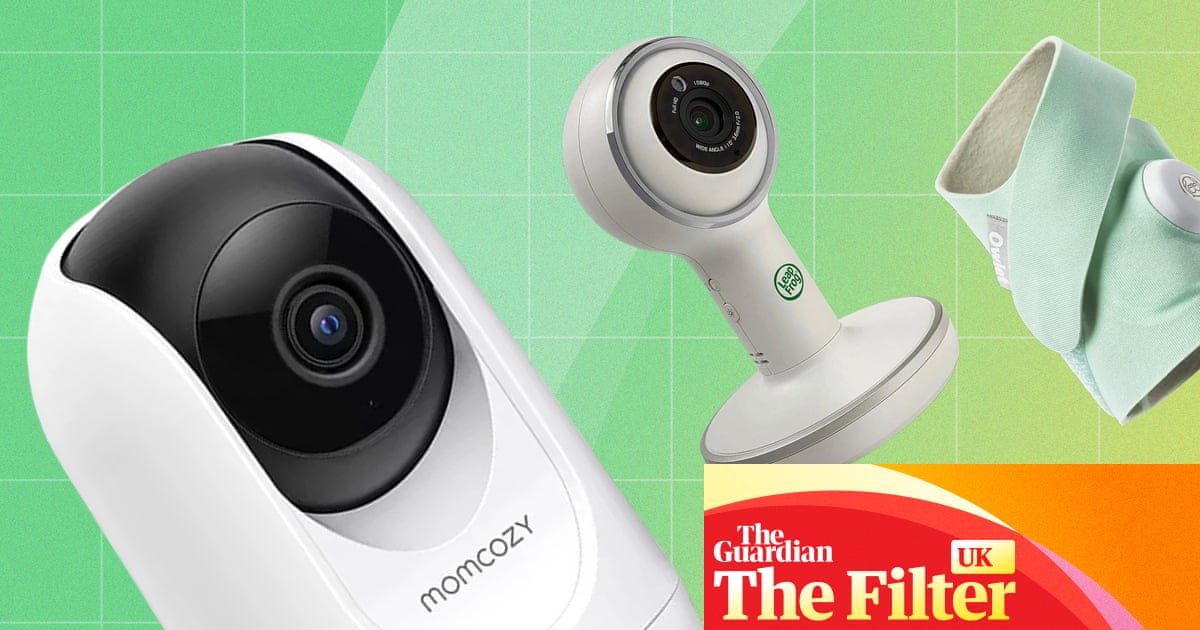
At a glance Best baby monitor overallMomcozy BM04 smart baby monitor £142.49 at John Lewis Best budget baby monitorVTech VM6361HD video baby monitor £79.99 at John Lewis Best over-the-cot baby monitorLeapFrog LF5817HD smart baby monitor £229.98 at John Lewis Best baby health monitorOwlet Dream Sock smart baby monitor £198.99 at Amazon Why you should trust me I’ve been a technology journalist for 15 years, getting hands on with all kinds of consumer gadgets in that time.
When I was expecting my first child, I flexed my product-testing muscles by reviewing pregnancy pillows and, after my baby was born, baby carriers.
Testing baby monitors brings those two worlds together, combining my tech expertise with my experience as a new mum.
To make sure my testing was informed by experts, I spoke with Jenny Ward, chief executive of the Lullaby Trust, for advice on safe sleep, and Alexis Hancock, director of engineering at the Electronic Frontier Foundation, about privacy and security.
How I tested Under surveillance: soft toys stand in for a sleeping baby as our reviewer tests the monitors.
Models were selected to cover a range of prices and features, with most of them including video.
I started by using a stopwatch app to time how long it took to get each monitor up and running.
To test image quality, I set up each camera with a view into my child’s cot, using teddy bears as a stand-in for a live baby.
I compared video streams for image clarity, consistency and colour, and I used blackout curtains to test night vision.
I also placed a wireless speaker among the teddy bears and played a podcast to test sound quality.
While wifi-connected baby monitors should be viewable from anywhere you can connect to the internet, non-wifi models have a limited range.
To test this, I took each non-wifi parent unit on a slow walk down my street and noted how far I got before connection was lost.
To test the battery life of each parent unit – as well as one baby unit that could be used unplugged – I charged each device fully overnight before testing.
I then set the screen to remain on continuously, rather than switching to sleep mode, and checked the parent units at hourly intervals, noting how long each took to run out of power.
Finally, I tested each baby monitor in real-world conditions, using it to keep an eye on my baby during naps and overnight sleeps.
The best baby monitors in 2026 Keeping watch: some of the baby monitors tested by our reviewer.
49 £142.49 at John Lewis £149.99 at Amazon What we loveA top performer for image and sound quality What we don’t loveThe connected app isn’t the best £142.49 at John Lewis £149.99 at Amazon If you’re looking for a baby monitor that excels at the basics, offers wifi and non-wifi connections and doesn’t break the bank, this Momcozy monitor is an excellent choice.
It’s a great all-rounder, coming top of the pack in my side-by-side tests for image and sound quality.
Why we love it I set up this Momcozy monitor with a non-wifi connection in under four minutes: open the box, plug in the camera, and it pairs automatically with the parent unit.
The video appeared crisp, with great colour contrast, and the sound was particularly clear; when I tested it overnight with my baby, it even picked up her hiccups.
I was impressed by the wide range of the camera’s panning function, and it also has tilt and zoom functions.
The parent unit provides decent battery life – about 10 hours with the screen constantly on – and a range that was more than sufficient to cover my house and garden.
This monitor is dual-mode, so you can connect it to wifi and view the feed through the Momcozy app or via the parent device.
The app wasn’t the smoothest to use – the touchscreen buttons to pan and tilt felt clunky – but the image was clear.
It’s a shame that … the app somewhat lets down the smart functionality of the baby monitor.
It seems designed for users who also have other Momcozy products, such as breast pumps, while the sign-up process prompted me to provide more personal info than I’m comfortable sharing, such as the baby’s birth date and milestones.
Wifi/non-wifi: both Screen size: 5in Video resolution: 1080p Momcozy BM04 smart baby monitor from £142.49 £142.49 at John Lewis £149.99 at Amazon What we loveA top performer for image and sound quality What we don’t loveThe connected app isn’t the best Best budget baby monitor: VTech VM6361HD video baby monitor VTech VM6361HD video baby monitor £79.99 £79.99 at John Lewis What we loveGets the basics right at a wallet-friendly price What we don’t loveDoesn’t have the greatest range £79.99 at John Lewis Tech company VTech offers a mind-boggling range of baby monitors.
There are even more budget-friendly models than this one, but I found they compromised too much on quality.
In my tests, this non-wifi baby monitor bested some more expensive options – and it’s still less than £100.
Why we love it If you want the added security of a non-wifi baby monitor, which is less susceptible to remote hacking, or simply aren’t bothered about smart features, this VTech baby monitor is a good bet.
Setup was a breeze, and the image quality was excellent, particularly in the dark.
Despite being a less expensive model, it comes with a 5.5in screen.
The camera features pan, tilt and zoom functions – useful for following a wriggly baby from one side of the cot to the other.
Impressively, the battery on the parent unit lasted more than 12 hours, easily handling an overnight sleep unplugged.
It’s a shame that … this monitor didn’t have the greatest range in testing, losing its connection a couple of houses down the street, although it still adequately covered my entire house.
Wifi/non-wifi: non-wifi Screen size: 5.5in Video resolution: 720p VTech VM6361HD video baby monitor £79.99 £79.99 at John Lewis What we loveGets the basics right at a wallet-friendly price What we don’t loveDoesn’t have the greatest range Best over-the-cot baby monitor: LeapFrog LF5817HD smart baby monitor LeapFrog LF5817HD smart baby monitor from £229.98 £229.98 at John Lewis £229.99 at Mamas & Papas What we loveLarge screen gives a clear view of baby at all times What we don’t loveFloor stand feels flimsy £229.98 at John Lewis £229.99 at Mamas & Papas While many baby units perch on a shelf, over-the-cot baby monitors are designed to be suspended over the baby’s cot for a bird’s-eye view.
Set them up correctly, and you should be able to see the whole cot – ideal for a baby who moves a lot in the night.
This LeapFrog model offers wifi and non-wifi options.
Why we love it You can choose to use the LeapFrog over-the-cot monitor with its accompanying app, or keep it offline and view the video feed on the dedicated parent unit.
I was immediately drawn to the latter, owing to its huge screen – a 7in display that felt like a small iPad in my hands.
This size meant it was easy to get a clear view of the whole cot, with the image displaying good colour contrast, especially in night-vision mode.
The sound was slightly tinny in my podcast test, but there was no doubting its sensitivity: when I tried this monitor with my baby, it picked up seagulls cawing through the window.
The parent unit also scored highest for range, and it had a battery life of more than 12 hours.
It’s a shame that … the floor stand, which holds the camera aloft, felt flimsier than the stands of other over-the-cot baby monitors I tested.
To weight the base, you need to fill it with water – which is a faff.
Wifi/non-wifi: both Screen size: 7in Video resolution: 720p via parent screen, 1080p via app LeapFrog LF5817HD smart baby monitor from £229.98 £229.98 at John Lewis £229.99 at Mamas & Papas What we loveLarge screen gives a clear view of baby at all times What we don’t loveFloor stand feels flimsy Best baby health monitor: Owlet Dream Sock smart baby monitor Owlet Dream Sock smart baby monitor from £198.99 £199.99 at John Lewis £198.99 at Amazon What we loveSmart sleep tracking helps with nap schedules What we don’t loveFiddly to set up £199.99 at John Lewis £198.99 at Amazon First up: unless medically advised, you don’t need to monitor your baby’s breathing, heart rate or other health indicators, and there’s no evidence that doing so reduces the risk of sudden infant death syndrome (Sids).
Some people find it reassuring to track such things; others may find it increases anxiety (see more below).
Nevertheless, these kinds of devices are having a moment: I tested baby monitors that track health metrics via wearables or mattress sensors, and the Owlet Dream Sock was my favourite.
It wraps around baby’s foot with a Velcro-like fastening and includes a sensor that measures pulse rate, oxygen saturation and movement.
Why we love it The Owlet has the air of a luxury tech product, with each item in the box nestled in premium packaging.
The monitor is wifi-connected, so you’ll first need to
The sock connects to a base station that sounds and flashes different alerts to indicate that the sock has lost connection or needs charging, or to show that your child is moving around a lot.
The red alert sounds if your baby’s pulse rate or oxygen level falls outside a preset range.
The sock was easy to put on a wriggling baby and stayed put overnight.
Luckily, I never heard the red alert while testing with my baby, and while the heart-rate and oxygen monitoring appeared to work fine, I didn’t have much use for this data.
Where I found the Owlet monitor excelled was in its sleep tracking.
The Owlet app noted when it thought my baby was awake, or in a light or deep sleep, and suggested nap times.
I could imagine finding this useful for calculating wake windows when my baby was younger.
For more insights, the sock can be paired with the Owlet Dream Sight camera baby monitor (sold together as the Owlet Dream Duo).
It’s a shame that … getting the sock connected took some troubleshooting, so this isn’t something to start setting up when bedtime is looming.
You also need to keep the base station quite close to the sock to avoid the connection dropping.
Wifi/non-wifi: wifi Screen size: not applicable Video resolution: not applicable Owlet Dream Sock smart baby monitor from £198.99 £199.99 at John Lewis £198.99 at Amazon What we loveSmart sleep tracking helps with nap schedules What we don’t loveFiddly to set up The best of the rest Ready to roam: the Hubble’s flexible mount makes it easy to position the camera in different spots, wherever you go.
99 at Hubble £159 at Amazon What we loveFlexible and rechargeable for on-the-go use What we don’t loveParent unit is bulky for packing £179.99 at Hubble £159 at Amazon Best for: travel The Hubble Go Baby Portable was the only model I tested that had an unplugged option for the baby unit.
It comes with a rechargeable battery pack that you can plug in to the camera, making it more easily portable.
The flexible mount also twists into a stand or grip, so you can perch it in different spots while on the go.
This smart version comes with wifi and non-wifi options; I particularly appreciated the physical switch on the camera to turn the wifi connection on and off.
It didn’t make the final cut because … the 5in parent unit is hefty for a travel option, weighing 250g (although you could just use the wifi mode for lighter packing).
The camera battery, while useful, drains fairly quickly – within about eight hours in my tests, which meant it didn’t last a full night’s sleep.
Wifi/non-wifi: both; screen size: 5in; video resolution: 2K camera, 720p parent unit Hubble Go Baby Portable from £159 £179.99 at Hubble £159 at Amazon What we loveFlexible and rechargeable for on-the-go use What we don’t loveParent unit is bulky for packing Nanit Pro camera baby monitor Nanit Pro camera baby monitor from £208.99 £208.99 at John Lewis £209 at Argos What we loveApp designed for tracking lots of data What we don’t loveSubscriptions are expensive on top of the base price £208.99 at John Lewis £209 at Argos Best for: smart tracking The Nanit baby monitor will appeal mainly to the data nerds out there who like to track as much as possible.
An over-the-cot baby monitor, it uses computer vision and machine learning to generate sleep insights for individual sleeps and over the longer term.
I found the app intuitive, despite the large amount of data on show.
The Nanit Pro comes with a “breathing band”, which you place around a young baby’s (0-3 months) chest.
It features a geometric pattern that the overhead camera can use to detect breathing motion.
For older babies, you can buy a sleeping bag separately with the same function.
It didn’t make the final cut because … Nanit’s subscription model didn’t sit well with me.
The hardware isn’t cheap, and you’ll need a paid plan to access the full range of features; it starts with three months free, and then charges £10 a month.
You can cancel the subscription and continue using the camera, but core features are limited mainly to real-time information.
Wifi/non-wifi: wifi; screen size: not applicable; video resolution: 1080p Nanit Pro camera baby monitor from £208.99 £208.99 at John Lewis £209 at Argos What we loveApp designed for tracking lots of data What we don’t loveSubscriptions are expensive on top of the base price Momcozy BM03 video baby monitor Momcozy BM03 video baby monitor from £139.99 £139.99 at Currys £149.99 at Amazon What we loveA high-performing, no-frills non-wifi baby monitor What we don’t loveThe dual-mode Momcozy offers wifi at a similar price £139.99 at Currys £149.99 at Amazon Best for: non-wifi baby monitoring It would be remiss not to mention this Momcozy baby monitor, given it was among the top performers in my tests for picture and sound quality.
It was very easy to set up, taking less than five minutes to get the video feed up and running.
The parent unit had a decent battery life and range, allowing me to walk several houses down my street before it lost connection.
It didn’t make the final cut because … the dual-mode Momcozy BM04 baby monitor is very similar, but comes with the additional option to connect to wifi if you wish.
That said, if you expressly don’t want a wifi baby monitor, this is a solid choice.
Wifi/non-wifi: non-wifi; screen size: 5.5in; video resolution: 1080p Momcozy BM03 video baby monitor from £139.99 £139.99 at Currys £149.99 at Amazon What we loveA high-performing, no-frills non-wifi baby monitor What we don’t loveThe dual-mode Momcozy offers wifi at a similar price VTech DM1212 audio baby monitor VTech DM1212 audio baby monitor from £29.99 £29.99 at John Lewis £30 at Argos What we loveCovers the basics well for a low price What we don’t loveVery few extra features £29.99 at John Lewis £30 at Argos Best for: audio-only baby monitoring An old-school audio-only baby monitor is perfect if you’re looking for something super simple that does the job.
Put the baby unit in baby’s room, keep the receiver with you, and listen in for any sleepy-time upset.
Upmarket brands such as Nanit have created modern-looking, wifi-enabled night lights that have an audio monitoring function, but I found this no-frills – and much cheaper – non-wifi VTech model did just what I needed it to.
I set it up in three minutes and was pleasantly surprised by the sound quality: my podcast had a slightly echoey quality, but was very clear and fuzz-free.
The baby unit has a basic night light and optional starry night ceiling projection, and the parent monitor also displays temperature (as I was testing in a heatwave, it kept flashing a “hi temp” warning).
You can also talk back through the monitor, although my baby found this more unnerving than reassuring.
It didn’t make the final cut because … this is a basic, audio-only monitor, so features are very limited.
It might be more suitable as a backup or travel monitor than an everyday setup.
Wifi/non-wifi: non-wifi; screen size: not applicable; video resolution: not applicable VTech DM1212 audio baby monitor from £29.99 £29.99 at John Lewis £30 at Argos What we loveCovers the basics well for a low price What we don’t loveVery few extra features What you need to know Screen time: choosing the right video baby monitor means weighing up features, security and price.
The most basic is an audio-only monitor.
More common today are video monitors, which include a camera so you can see as well as hear your baby – useful if you want to know when they’re actually asleep, or check on any noises without entering their room.
One key distinction between baby monitors is whether or not they use wifi.
Non-wifi baby monitors come with a parent unit – which includes a screen for video models – while wifi baby monitors can stream images to your phone or tablet via an app.
They offer a much greater range, so you can monitor your baby from anywhere with an internet connection.
They can act as a kind of “nanny cam” if you want to check in on your baby while you’re away.
Some also give other caregivers (grandparents, for example) access to the feed, too.
However, wifi models carry greater security and privacy risks, so some parents prefer non-wifi options.
Wifi baby monitors in particular offer various “smart” features, with newer brands offering AI tools to track your baby’s sleep patterns or wearable devices to monitor breathing or other health stats.
Should you get a wifi baby monitor?
Anything that is connected to the internet presents a risk, however small, of being hacked, and there have been reports of criminals gaining access to baby monitor feeds.
Most hacking incidents concerning baby monitors occur due to account compromise, says Alexis Hancock, director of engineering at the Electronic Frontier Foundation.
“However secure your account is that is tied to the baby monitor, that’s how secure the baby monitor is,” she says.
If you decide to get a wifi baby monitor, Hancock recommends going with a trusted brand and using a strong, unique password – it’s best to use a password manager, so you don’t need to remember it.
Keep the account limited to your baby monitor; if you use it to connect to other devices, such as in a smart home setup, you’re broadening the potential for a security weakness to occur.
A good baby monitor should have a second authentication step, such as sending a one-off code, before logging you in.
“In this day and age, companies should have some sort of two-factor authentication, especially with technology involving our very small children,” Hancock says.
Do you need a baby breathing monitor?
There is no evidence that any type of baby monitor reduces the risk of Sids, says Jenny Ward, chief executive of the Lullaby Trust, which supports families and promotes safer sleep.
Its guidance is that babies should sleep in their parents’ room until they are at least six months old, so you may not need a monitor at all during this time.
That said, breathing monitors can provide reassurance in particular situations: the Lullaby Trust offers certain monitors through a scheme for parents who have previously experienced the sudden death of a baby.
These monitors, such as the Snuza HeroMD, only track movement and sound an alarm if none is detected for a period of time.
But be warned, Ward says: at some point, the alarm will go off, either because of a false alarm or because you’ve forgotten to turn it off after moving your baby out of the cot.
I discovered this at 3am while testing the Angelcare monitor, which uses a pad under the mattress to detect movement.
Thankfully, my baby was fine.
The Lullaby Trust doesn’t offer monitors that track information such as pulse rate or oxygen saturation.
“Sometimes, having more data to look at can be quite anxiety-inducing,” Ward says.
If you choose to use one, make sure you understand the instructions and what is normal for your baby.
Of course, if you are at all worried about your child’s health, seek medical advice – regardless of what the monitor says.
How much do baby monitors generally cost?
Our test included baby monitors from about £30 (for an audio-only monitor) to nearly £400 for a smart monitor with a wearable.
The cheapest video monitors I tested started at about £50, but I found the trade-off in quality was too great at this price point.
The cheapest video model I have recommended here is less than £100.
Some wifi-only models are cheaper than their non-wifi counterparts, often because they don’t include a parent device.
However, many sit at the pricier end of the market, thanks to additional smart features.
Check if a stand or wall mount is included, too, or if you need to buy this separately.
For more: From reusable nappies to wipes: the best eco-friendly baby products Parents on the baby gear they wouldn’t go without The best gifts for kids by age Victoria Turk is a technology and culture journalist.
She spends her days juggling writing and parenting – something that works particularly well when she’s testing baby products.
As a new mum, she’s particularly interested in any consumer device that can help with a good night’s sleep Explore more on these topicsParents and parenting The Filter Gadgets Children's tech Homes Family features Share Reuse this content