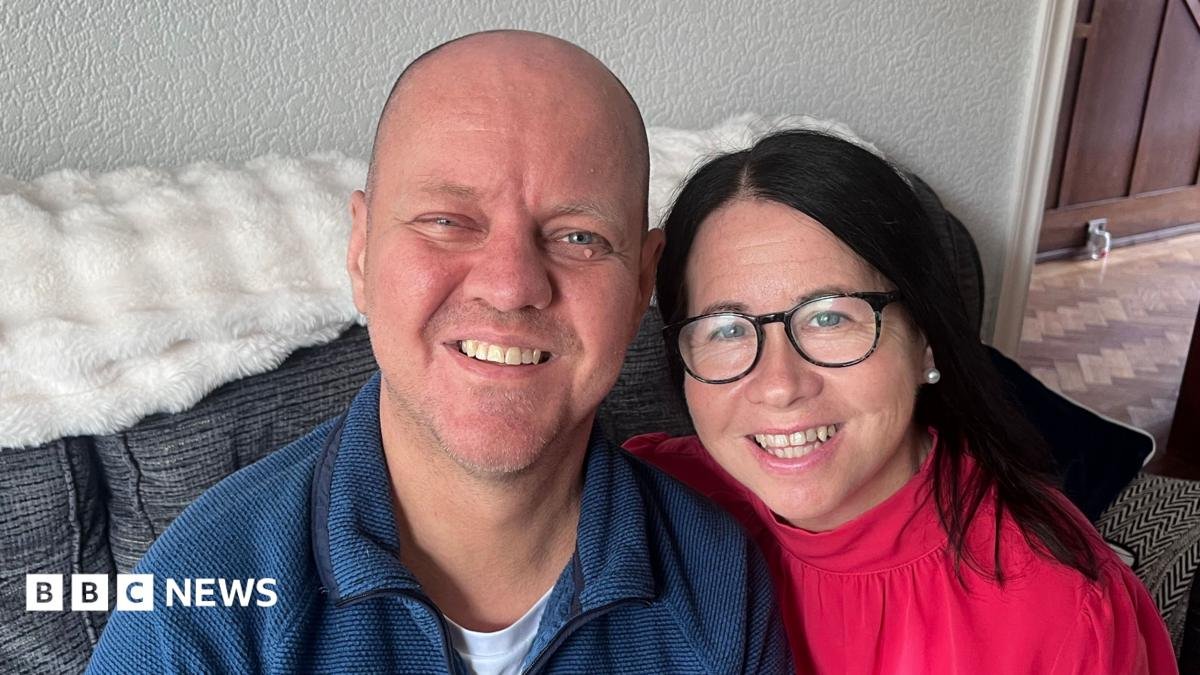
Image source, Andrew Railton Image caption, Andrew understands the pressure within A&E is huge but says the staff are absolutely fantastic ByOwain Clarke Wales health correspondent Published 3 minutes ago A patient spent more than two days waiting in an A&E department on two separate occasions - and says he will never go back.
Andrew Railton, 63, from Rhondda Cynon Taf, said he sat "on the same chair" for more than 50 hours on each visit after suffering first from pneumonia and then dangerously low potassium levels.
It comes as a £23m plan by the Welsh government promises to end A&E corridor care in Wales by 2029.
Senior emergency doctors have warned too many patients in Wales are experiencing "a terrible time" due to emergency care pressures and delays.
Railton attended the A&E department at Royal Glamorgan Hospital in Talbot Green, Rhondda Cynon Taf, after he developed pneumonia.
He said he was "pretty poorly" and sat in the waiting room for around nine hours before seeing a doctor.
"I was put in the chair and obviously put on the drip ... but basically sat in this draughty corridor," he said.
"They brought stools and chairs, and there were people basically just stood around all over the place with drips in them, and it was something Victorian.
I was there for 50-odd hours." A bed was eventually found for him and he stayed in hospital for a further three days.
But a few months later he was told to go to A&E again because of "deathly low" potassium levels.
"Believe it or not, I was put in exactly the same chair that I was in last time.
And I sat in that chair overnight while I had a drip administered to me," he said.
Now Railton says there is "no chance in hell" of him going back to the A&E even if his "leg falls off." Cwm Taf Morgannwg health board said it was sorry for Railton's experience and the distress caused.
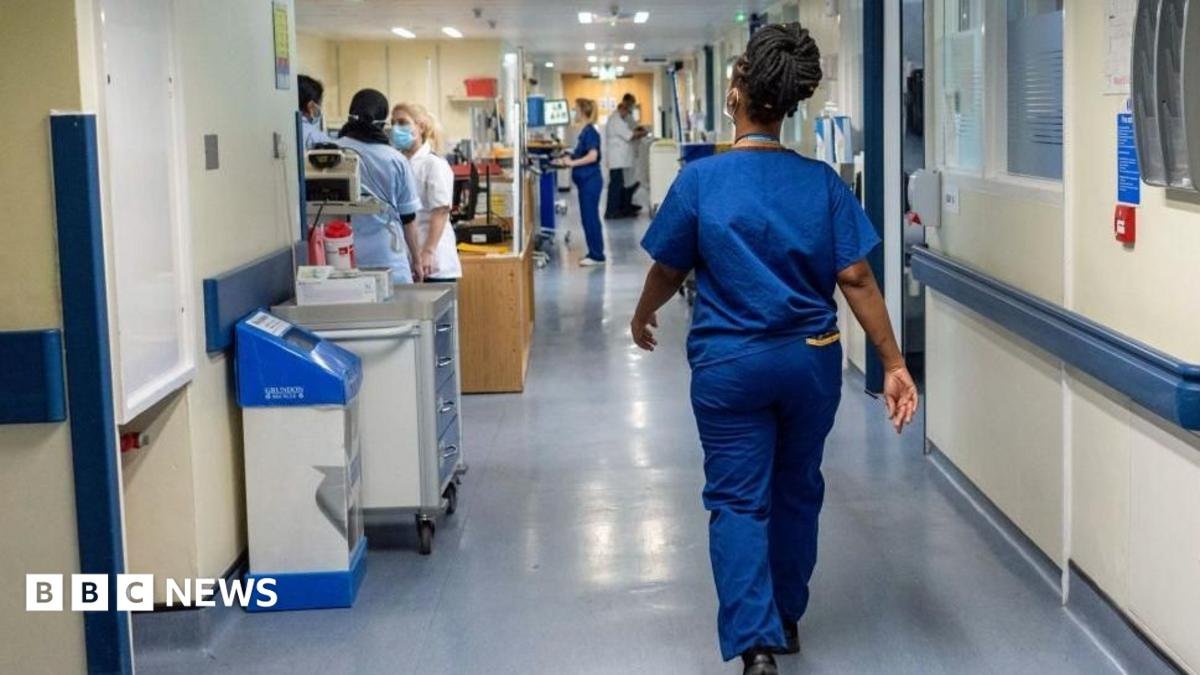
Image source, Andrew Railton Image caption, The corridors in A&E are being used as places to care for patients Why is change needed?
The Welsh government's new emergency care plan points to delays and problems in 2025-26: Ambulances took an average of two hours and 24 minutes from arrival in hospital to transferring their patients, resulting in 184,850 "lost hours" Patients aged 85 or over spent an average of seven hours and 13 minutes in A&E with 15% of all cases waiting more than 12 hours 62,346 people admitted as an emergency stayed more than 21 days in hospital There are around 1,400 patients, at any given time, occupying beds that are clinically ready to leave With each bed occupied costing £500-£600 a day, the bill to the NHS was £172m Image caption, Mabon ap Gwynfor says when someone needs emergency care, they should know help will come quickly What's in the plan?
The new plan sets goals for the "whole journey" of the patient - from the scene of the emergency, through to recovery at home.
One of the key milestones is that A&E corridor care or care in other unsuitable spaces should be eliminated by 2029.
Mabon ap Gwynfor, Cabinet Minister for Health and Care, said: "When someone needs emergency care, they should know help will come quickly, they will receive the right care, and they will spend only as long in hospital as they need to.
"Too many people do not experience this consistently today and that must change." Emergency doctors have frequently warned that patients too often face harm because they are being treated in unsafe spaces in A&E.
Speaking to Politics Wales, Dr Katja Empson, of the Royal College of Emergency Medicine, warned that too many patients were experiencing "terrible" conditions.
"They're often spending a very long time waiting for a bed, and often in a very inappropriate area," she said.
"We are causing harm because people are delayed in the emergency department." Return home within 72 hours The plan sets out an "ambition" to discharge patients from hospital, where possible, within 72 hours.
It includes making sure patients get early assessments from a senior clinicians, receive quick diagnostic tests and get rapid support from pharmacy and therapy and rehabilitation teams.
Planning for a safe transfer home should happen from the moment a patient arrives, the plan says.
'A nation of life-savers' The plan also aims to address relatively poor survival rates for people having cardiac arrests in communities.
It notes that of the 2,800 out-of-hospital cardiac arrests that occur each year - just one in 20 in Wales (5%) survive compared to 8% in England and 10% in Scotland.
There is an ambition for Wales to become a "nation of life-savers" by 2029 by training people to be more confident in cardiopulmonary resuscitation (CPR) and raising awareness among children and young people.
New technology will be explored such as drones carrying defibrillators that can save lives.
Image caption, Ed Grant says everyone should be taught CPR 'I'm living proof that CPR works' The "nation of life-savers" aim is supported by Ed Grant, a Welsh Ambulance community first responder who was himself saved by CPR.
The 73-year-old from Barry spent 50 years volunteering in various emergency services.
"I'm actually living proof that CPR works," he said, recalling how his wife kept him alive after he suffered a cardiac arrest at home three years ago.
"Luckily my wife knows CPR because I taught her... she started CPR on me, called the ambulance and called one of my responders as well." He said community responders can often reach patients first, particularly in rural areas.
"We work very much in tandem with the ambulance service... we can get there first and start dealing with it, keep the person alive and well until the ambulance can arrive," he said.
Image caption, Dr Siobhan Lewis said as that hospital is not always the best place to be but is there if you need care around the clock New targets The plan will include new set of measures and targets which will be recorded and reported on annually from spring next year, with a review in 2030.
These will include measures of patient survival and recovery as well as people's experience of care including corridor care.