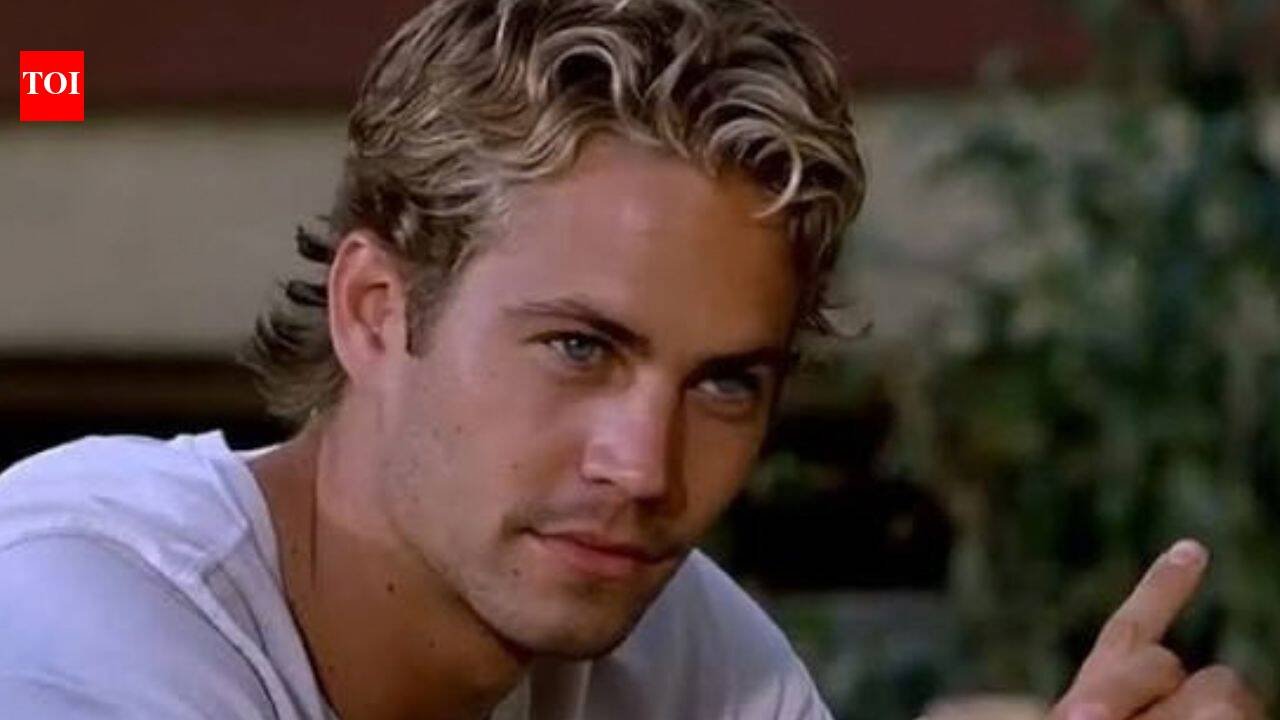
Long before Paul Walker became remembered not only as the star of the Fast & Furious franchise but also for his humanitarian work, the actor had been looking for ways to help people affected by natural disasters.
That instinct turned into something much bigger after the devastating earthquake that struck Haiti in January 2010.On January 12, 2010, a magnitude 7.0 earthquake hit Haiti, with the epicentre near the capital, Port-au-Prince.
In the days that followed, Walker gathered a group of friends and first responders and travelled to Haiti with medical supplies and other essentials.
According to Reach Out WorldWide (ROWW), the organisation he later founded, the trip became the first unofficial deployment of what would become the disaster-relief group.Walker did not want to help from a distance Walker had already spoken about wanting to be directly involved when disasters struck.
In a 2010 Men’s Health interview, he described himself as a “do-er” and recalled his desire to help after disasters including the tsunami in Sri Lanka and the earthquake in Indonesia.
He said he wanted to be able to gather people with useful skills and go where they were needed.The Haiti earthquake gave him the opportunity to act on that idea.
Walker and his friends put together a team and supplies before travelling to the disaster zone.
Contemporary accounts say the group brought items including medical equipment and water-filtration supplies.The team reached Haiti five days after the earthquake.
They were dropped by helicopter at an orphanage roughly 20 miles outside Port-au-Prince and immediately began assisting with patient treatment and transportation, transporting supplies and establishing shelters and tents.The experience changed the way Walker viewed disaster relief What Walker encountered in Haiti was more than the destruction shown in news reports.
He and the team saw first-hand how difficult it could be to get appropriately skilled people and resources into the areas where they were most urgently required.
Following the Haiti response, Walker founded Reach Out WorldWide.
The organisation was built around a simple idea: quickly bring people with specialised skills to communities affected by natural disasters and work alongside existing local resources.Walker also remained personally involved.
He funded deployments, travelled with teams and participated in relief work himself.
Later in 2010, he travelled to Chile following the earthquake and tsunami there, where his organisation delivered water and medical aid.
In 2011, he joined relief efforts in Alabama after devastating tornadoes, helping clear damaged homes and debris.A different legacy from his Hollywood career For Walker, the work was not simply about attaching his name to a charitable cause.
People who worked with him repeatedly described him as someone who wanted to be physically present and contribute.His friend Jesse Brisendine, who was part of the early Haiti effort, later recalled seeing Haitian families who had lost their homes yet were grateful for whatever they had managed to salvage.
He remembered Walker watching as people gathered together, describing the moment as one in which Walker could see the impact of what the group had set out to do.Walker died in November 2013 at the age of 40, but the organisation that grew out of that 2010 Haiti mission continued his disaster-relief work.
ROWW remains focused on deploying medical and disaster-relief professionals to communities affected by natural disasters.The Haiti earthquake therefore became a defining turning point in Walker’s life away from Hollywood.
What began as a spontaneous decision to gather friends, supplies and skilled responders for a disaster thousands of miles away ultimately became the foundation of an organisation built around the very thing Walker believed in: showing up when people needed help most.
Claim your exclusive TOI Masterclass spot today!