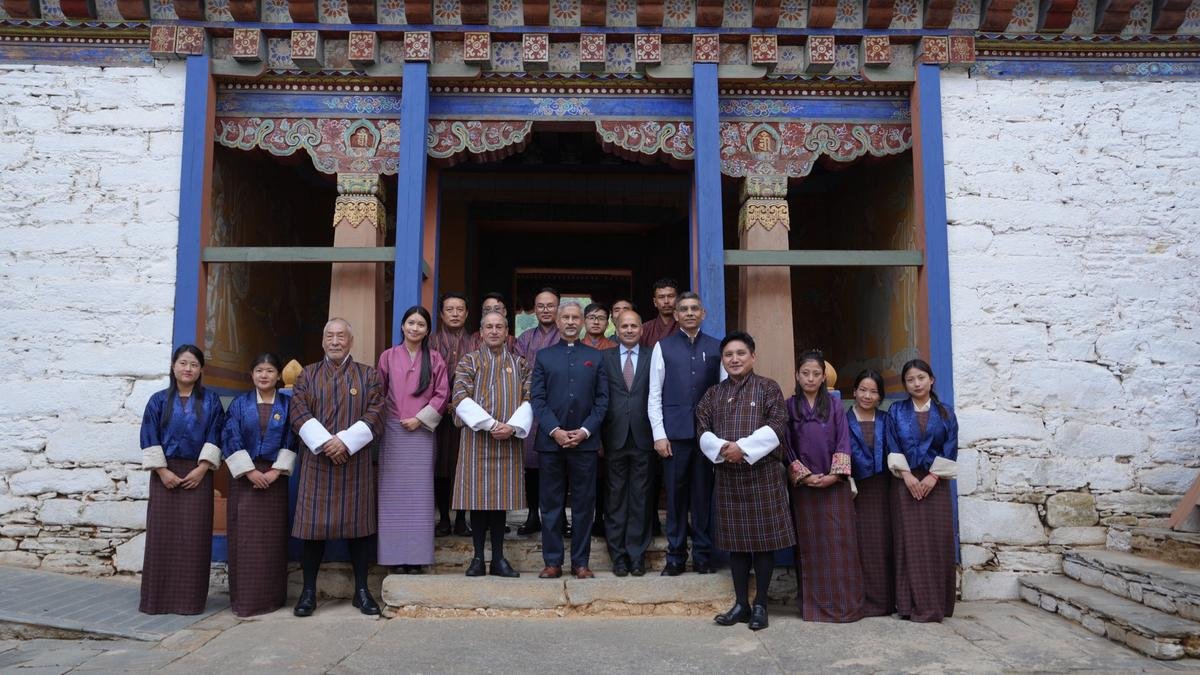
External Affairs Minister S.
Jaishankar arrived in Thimphu on Wednesday (September 16, 2026) for a two-day visit to discuss India’s development assistance, while Nepal Finance Minister Swarnim Wagle will arrive in Delhi on Thursday (September 17, 2026) for talks that are expected to discuss India’s support for Nepal’s reconstruction post-floods, as the government intensifies its outreach in the neighbourhood.
Last week, Defence Minister Rajnath Singh travelled to Colombo, in the first such visit by an Indian Defence Minister in nearly four decades, to strengthen strategic ties.
Mr.
Jaishankar met with Bhutan Foreign Minister Lyonpo D.N.
Dhungyel for bilateral discussions at Bumthang in central Bhutan.
“Our conversation focused on advancing our multifaceted engagement in development partnership, energy, trade, connectivity, culture, and people-to-people ties,” Mr.
Jaishankar said in a post.
The Ministers also laid the foundation stone for a hydropower project, and inaugurated a bridge and a hospital in different parts of the country.
On Thursday, he will meet Bhutan’s fifth King Jigme Khesar Namgyel Wangchuck and call on Prime Minister Tshering Tobgay, the Ministry of External Affairs (MEA) said in a release.
Meanwhile, Mr.
Wagle will land in Delhi on Thursday (September 17, 2026) for talks with Finance Minister Nirmala Sitharaman and other Ministers.
He will also meet a number of diplomatic and economic experts and academics during his two-day visit.
Wagle’s visit comes two weeks after Nepal’s deadly flash floods, which claimed nearly 1,400 lives and caused major infrastructural damage.
India despatched more than 130 tonnes of relief material and 54 expert personnel from India to support Nepal’s ongoing rescue, relief and forensic operations.
The government also approved the export of power to the flood-hit areas.
Wagle will also be expected to clarify Nepal Foreign Minister Shishir Khanal’s remark that India, China and the U.S., as “climate polluters”, should pay “compensation” to “countries like Nepal that have faced the impact of global warming, which is now a regional threat.
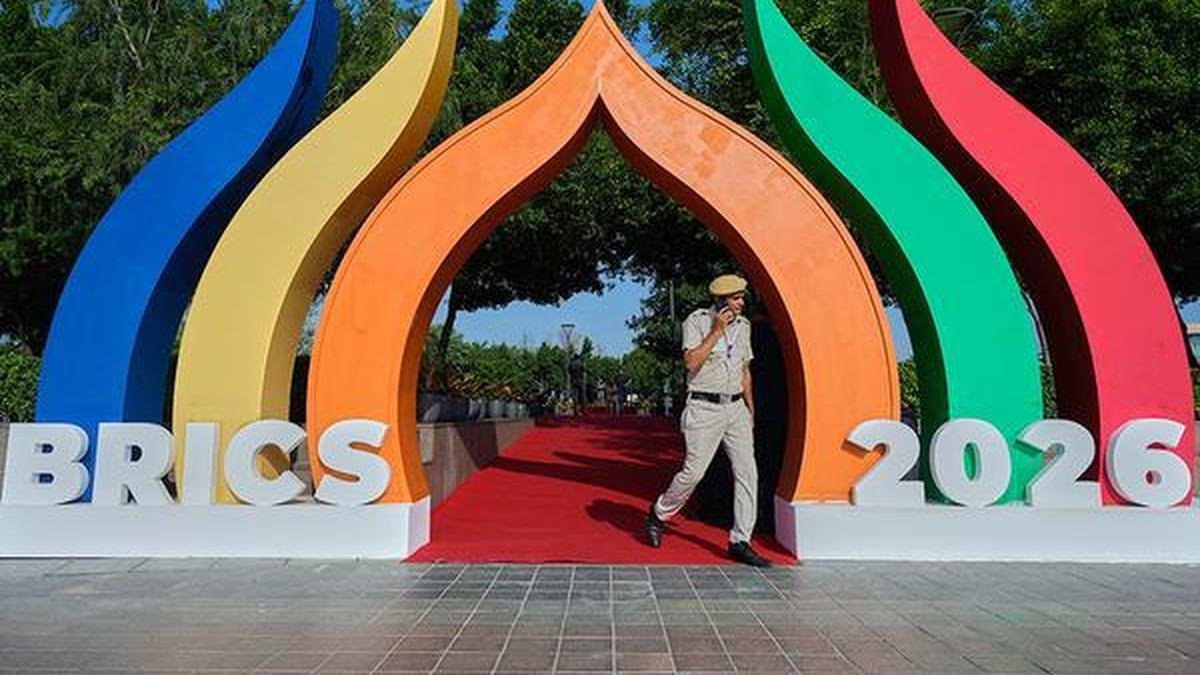
Trade between BRICS countries shows marked increase Missed opportunity The visits come within days of the BRICS Summit, where the government hosted leaders from more than 20 countries, but none from India’s neighbourhood, which commentators described as a missed opportunity.
The lone South Asian invitee, Bangladesh Prime Minister Tarique Rahman, declined the invitation due to tensions between the two countries.
While Dhaka questioned the nature of the invitation, which was addressed only to Mr.
Rahman in his capacity as chair of the BIMSTEC regional grouping, the MEA clarified on Tuesday that a separate invitation had also been sent to Prime Minister Rahman.
The absence of a regional leader at the BRICS summit was in contrast to all previous such summits.
At the BRICS Summit in Goa in 2016, Prime Minister Narendra Modi had hosted all leaders of BIMSTEC countries, including Prime Ministers of Bangladesh, Bhutan, Nepal, Sri Lanka and Thailand, at the outreach session.
Many neighbourhood leaders were invited to the G-20 Summit in 2023, and also to the AI Summit in February this year.
Asked about the lack of South Asian countries, MEA officials said India’s focus during the BRICS Summit preparations was on representation from “Global South” countries.
Apart from 10 BRICS “partners”, the government had invited regional grouping chairs from the developing world, including Philippines (ASEAN), Burundi (African Union), Bahrain (GCC), and Uruguay (CELAC), apart from BIMSTEC.
Experts said not inviting more leaders from neighbouring countries was a missed opportunity.
“India’s neighbours should have been called for the ‘party’,” said former High Commissioner to Pakistan and Canada Ajay Bisaria, speaking at The Hindu’s weekly ‘Parley’ discussion.
“I think it would have been a much better situation if the BIMSTEC neighbours, if not the SAARC neighbours, were present,” he said, pointing out that Bangladesh-India tensions and possibly the floods in Nepal precluded a larger regional representation.
Academic and commentator Happymon Jacob said that it was a “shame” that India had not convened a regional mechanism on the sidelines of the BRICS Summit.