More than 40 crore Indians — over a quarter of the population — are caught in a healthcare gap -- too well off to rely on government subsidies, but not financially secure enough to absorb the rising cost of private care, a Parliamentary Standing Committee on Health and Family Welfare has flagged.
Its latest report, ‘Affordability and Accessibility of Healthcare Facilities in Public and Private Sector,’ presented to the Parliament last month, makes 368 recommendations on affordability, accessibility and regulation.
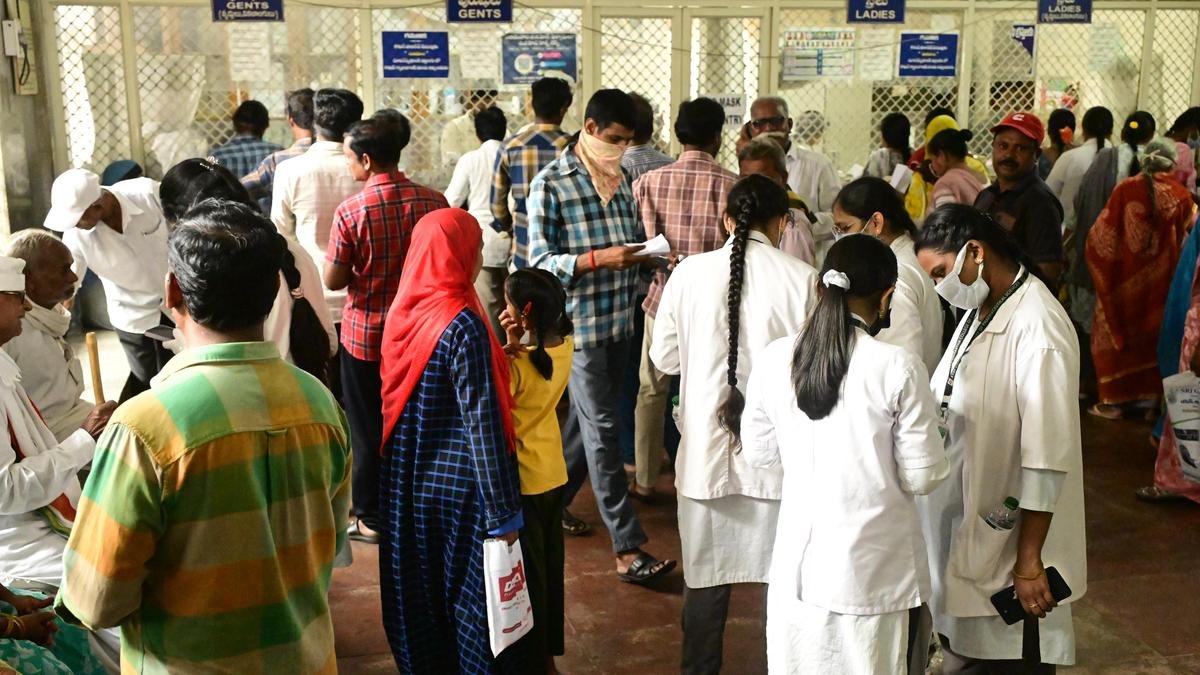
National Health Accounts figures indicate high burden of health care costs on people Where care is sought The vulnerability is rooted in where Indians seek care, states the report, with more than 60% of inpatient care and 70% of outpatient care delivered by the private sector, leaving households without comprehensive financial protection exposed to private prices.
The burden extends beyond hospitalisation, with medicines accounting for nearly 30% of current health expenditure, according to the Committee.
More worryingly for people with diabetes, hypertension or cardiovascular disease, medicines, consultations and diagnostic tests can become a lifelong expense given that India is registering a steady increase in non-communicable disease burden.
This exposes a structural fault line in India’s healthcare system where the poorest have government protection; the affluent can buy private care, but the vast group in between is increasingly exposed to high costs without adequate financial protection.
For the missing middle, the threat may therefore not be a single catastrophic medical bill, but the slow erosion of household income through medicines, consultations, tests and repeated treatment.
How opaque healthcare pricing burdens patients in India Low public health spending The Committee has linked this vulnerability to low public spending on health.
Government health expenditure is 1.43% of GDP, against the 2.5% target under the National Health Policy, 2017.
Health spending as a share of total government expenditure also fell from 6.12% in 2021-22 to 4.89% in 2022-23, below the 5.02% recorded in 2019-20.
The consequences are visible in the cost of care.
Average out-of-pocket spending on childbirth is ₹37,630 in private facilities against ₹2,299 in public facilities — more than 16 times higher.
Government schemes such as Ayushman Bharat–PM-JAY provide hospitalisation protection to vulnerable households, but the missing middle often falls outside fully subsidised coverage.
Private insurance, meanwhile, can leave households facing premiums, exclusions, waiting periods and co-payments.
Double health budget, lower out-of-pocket spends What is needed The Committee has therefore argued that insurance alone cannot close the gap.
It has called for stronger public healthcare infrastructure, nationwide implementation of the Clinical Establishments Act, mandatory quality standards and greater price transparency in private facilities.
It has also flagged retail pharmacy practices, including excessive trade margins and the non-prescription sale of antibiotics, recommending stronger audits and enforcement.
The Committee’s recommendations point to a problem larger than insurance coverage.
India has expanded financial protection for its poorest households while private providers have become the principal source of care.
The unresolved question is how to protect the millions who fall between the two.
For this group, financial vulnerability may accumulate not through one medical emergency but through the ordinary cost of staying healthy, state experts.