Updated on: Jul 06, 2026 5:58 PM ISTBy Shishir Gupta Prefer HTon Google Share via Copy link India’s diplomatic map is being redrawn in real time, and New Delhi is placing itself firmly at the centre of an emerging Indo-Pacific security and economic architecture shaped by China’s rise, America’s recalibration, and regional anxieties.
In the Point Blank conversation, Executive Editor Shishir Gupta underlines a key shift in Asia’s balance of power.
India–Japan: From trust to convergence In the Point Blank conversation, Executive Editor Shishir Gupta underlines a key shift in Asia’s balance of power: the India–Japan partnership has moved from “strategic trust” to “strategic convergence.” This convergence is anchored in a shared vision of a “free and open Indo‑Pacific,” where the South China Sea is not treated as China’s exclusive domain but remains open to all navies and commercial shipping.
Beijing’s reaction to Japanese Prime Minister Sanae Takaichi’s visit to India is telling.
China publicly warned that India–Japan ties “should not be targeting a third country,” thinly veiled code for itself.
Chinese propaganda outlets even resorted to trivial jibes-such as claims that Takaichi would not drink Indian water-in a bid to denigrate the visit and play down the relationship in domestic and international media.
Gupta situates this in a wider context: with President Trump having “virtually withdrawn” from broader East and Southeast Asian security management and Washington now directly focused on China, the first island chain countries-Japan, Taiwan, the Philippines, Indonesia-must increasingly look after their own security.
Against this backdrop, India–Japan convergence is deeply unsettling for Beijing, which still sees itself as the hegemon in the South China Sea and interprets almost any Indian move-whether the Quad, ties with Japan or outreach to Indonesia-as inherently anti‑China, even as it quietly uses Pakistan and other neighbours to pressure India.
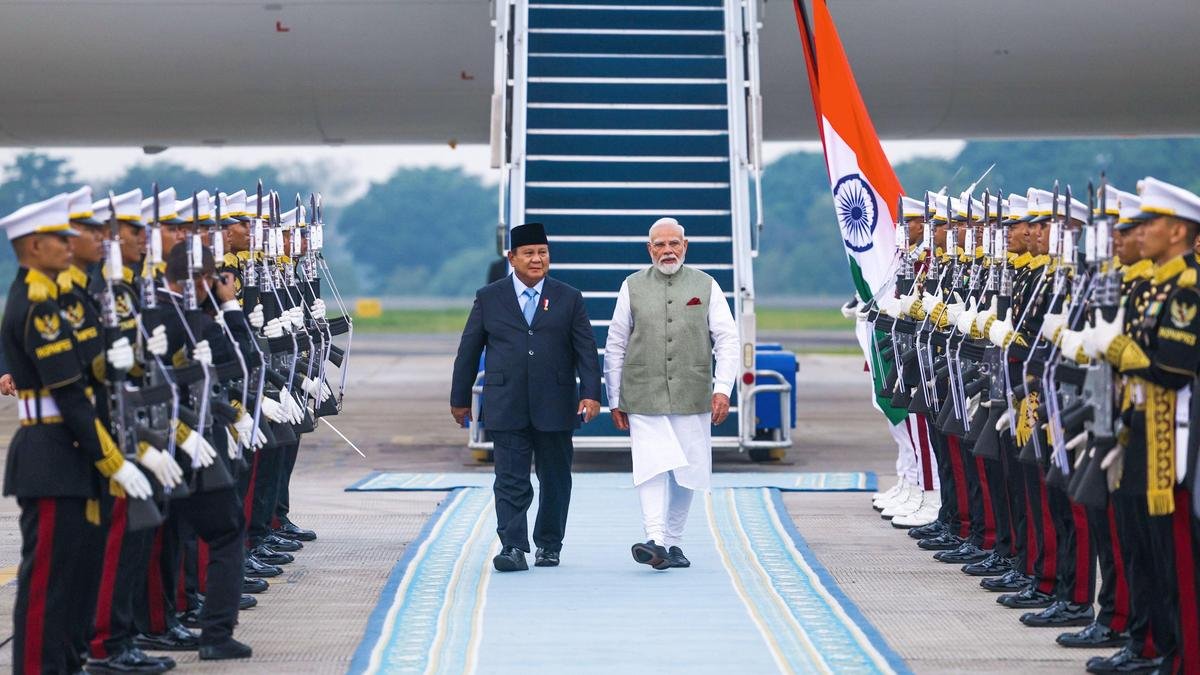
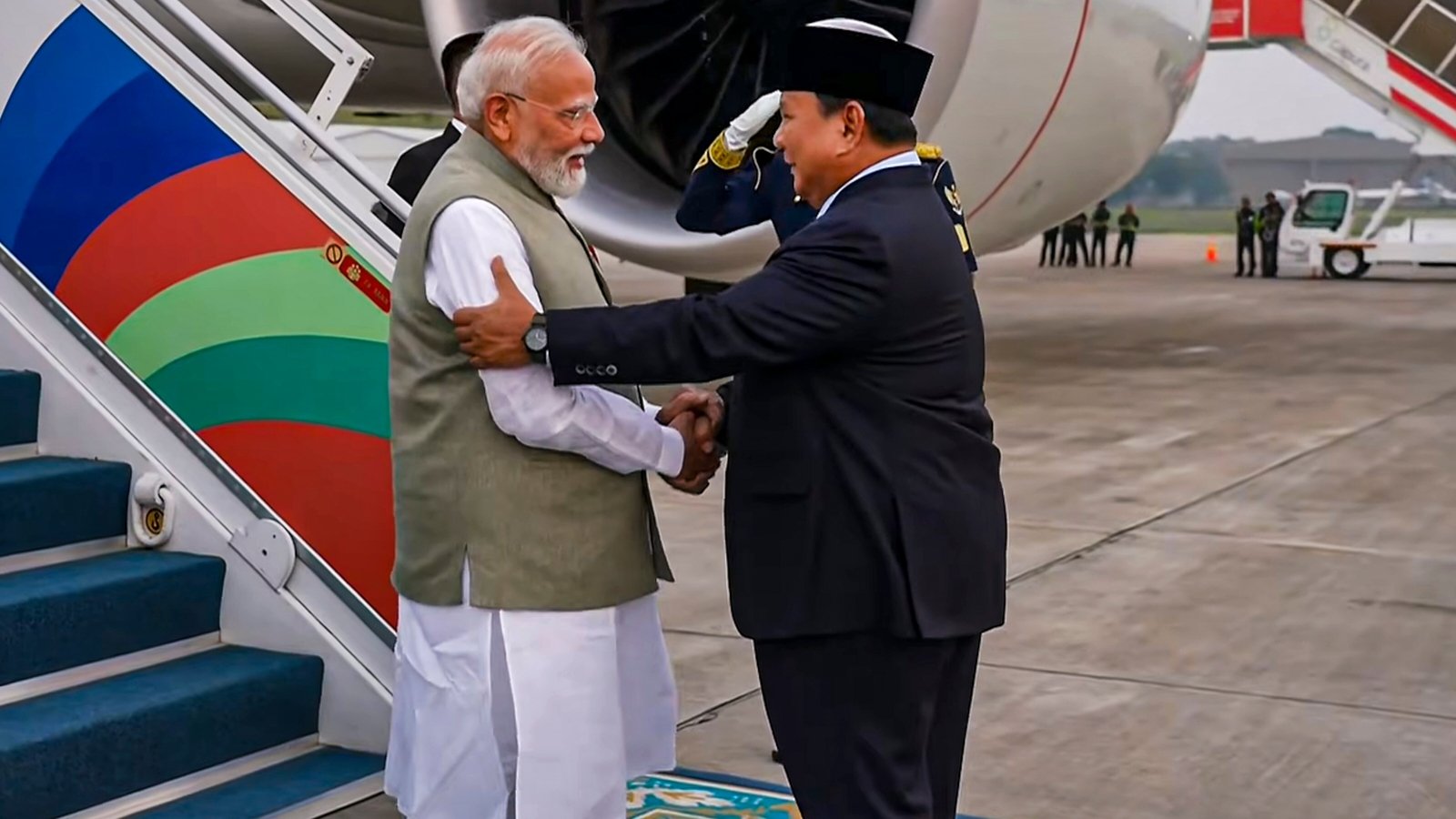
The first island chain: Modi’s five‑day outreach Prime Minister Narendra Modi’s five‑day tour of Indonesia, New Zealand and Australia, following the Japanese PM’s successful visit, illustrates New Delhi’s effort to engage the first island chain and the wider Pacific on its own terms.
Indonesia is more than a friendly ASEAN partner; it is a near‑neighbour in geographic and strategic terms.
Indira Point, India’s southernmost tip in Great Nicobar, lies barely 140–145 kilometres from Banda Aceh in Sumatra, tying the two countries together across a narrow maritime gap.
Indonesia virtually controls the ingress routes into the South China Sea via the Malacca, Sunda, Lombok and Ombai‑Wetar straits, dominating three of four major choke points for global commercial shipping.
For India, building close defence ties with Jakarta-potentially including a roughly 100‑million‑dollar sale of a BrahMos missile battery-is about securing these arteries and shaping the rules of access in a theatre where China seeks exclusive influence.
Australia and New Zealand represent a different but complementary axis: resource security and long‑term economic integration.
Canberra is rich in critical minerals and a potential uranium supplier, but Indian access at scale hinges on finalising a comprehensive economic partnership agreement that remains under discussion, layered over an existing FTA.
New Zealand already has a free trade agreement with India, and New Delhi is eyeing a deeper FTA in future.
Together with Indonesia and Japan, these partners form the backbone of India’s attempt to weave independent alternate global supply chains-for resources, energy and food-reducing dependence on any single external guarantor.
Building India’s own security network Gupta’s “big picture” is clear: India is systematically engaging the first island chain and adjoining theatres not as part of someone else’s containment strategy, but to build its own secure network.
Japan sits at the northern end, where strategic convergence now guides ties.
The Philippines is already part of this emerging arc, having received BrahMos missiles from India.
Indonesia is next in line, bridging the Bay of Bengal to the South China Sea.
Australia and New Zealand extend the arc into the Pacific Rim, linking defence, trade and resource partnerships.
Crucially, Gupta stresses that India is not “targeting any country” through these moves.
Instead, New Delhi is focused on comprehensive security-resource, energy, food-so that it is self‑sufficient and not beholden to a single power or supply chain.
The message is that while the US now engages China directly, India cannot and will not outsource its China problem-or its wider maritime security-to any third power.
Bangladesh, Myanmar and the Bay of Bengal gambit The conversation then pivots to the Bay of Bengal, where Bangladesh Prime Minister Tariq Rahman’s outreach to Beijing opens a new front of concern for India.
During his June trip to China, Rahman sought Chinese assistance to develop the Teesta River and discussed a China–Myanmar–Bangladesh economic corridor.
Teesta is hydrologically and strategically sensitive.
The river rises in Sikkim; the majority of its course lies in India, with only about 105–120 kilometres in Bangladesh before draining into the Jamuna.
Inviting China to build infrastructure along this stretch raises red flags in New Delhi because the area lies close to the “chicken neck”—the Siliguri corridor, India’s narrow land bridge to its northeast.
Under Sheikh Hasina, India had offered to develop Teesta infrastructure itself; Rahman’s reversal in favour of China is thus read as a serious concern, even though India is currently in a “wait and watch” mode.
The proposed Myanmar–Bangladesh–China corridor, Gupta argues, is more “pipe dream” than imminent reality.
Myanmar recently bombed Rohingya militia camps across the Bangladeshi border, highlighting the poor state of bilateral relations.
Internally, Myanmar’s eastern regions are effectively fragmented, controlled by militias such as the Buddhist Arakanese Army, the Chin and Kachin groups, and the Brotherhood Alliance, leaving the state far from exercising full authority.
Meanwhile, the Rohingyas themselves have been infiltrated by Pakistan‑based and Bangladeshi jihadist groups, making the targeted coastal area highly unstable.
Gupta recalls India’s own experience: a port project at Sittwe, linked through the Kaladan corridor, has remained incomplete for 25 years despite being conceived in the early 2000s.
Against this backdrop, he believes Rahman will have to rethink both the Teesta plan and the corridor idea, especially as Myanmar is not fully comfortable with China and has begun re‑engaging India to break out of pariah status.
China’s “string of pearls” and India’s island counter In the Indian Ocean, China’s port‑building spree-often described in India as a “string of pearls”-is seen as an attempt to strategically encircle and potentially choke India in its own maritime backyard.
Gupta frames this as part of the PLA Navy’s shift from a predominantly land‑based doctrine to a sea‑based expansionist doctrine.
Chinese projects span Cambodia, attempted facilities in Myanmar and Bangladesh, Hambantota in Sri Lanka, ventures in the Maldives, a base in Djibouti, Gwadar in Pakistan, Jask in Iran, and interests in the UAE, as well as ports along the eastern African seaboard.
Many of these have underperformed: Gwadar is still not fully functional as envisioned; Hambantota is widely cited as a “disaster” with massive infrastructure and even an airport that barely operates.
Yet, taken together, they represent Beijing’s ambition to secure turnaround points for its warships across the Indian Ocean and extend reach in the Pacific beyond the first island chain towards Guam and ultimately the US west coast.
India’s response has been to quietly build its own maritime grid.
New Delhi is pushing a major project in Great Nicobar and reinforcing its strategic posture in the Andaman and Nicobar Islands, which sit astride crucial sea lanes.
It is investing in Lakshadweep, leveraging a network of around 162 islands, and exploring bases such as Agaléga with Mauritius.
Security advisers have been placed in key regional organisations, and India is actively engaging Sri Lanka and the Maldives.
Gupta cautions that India cannot afford complacency; the Chinese navy is growing “by leaps and bounds,” and the string of pearls must be “carefully monitored” and countered.
At the same time, he insists India will not take Chinese manoeuvres-whether via Pakistan, Bangladesh, Nepal, Sri Lanka or the Maldives-lying down.
India is not a mere regional power, he argues, and deserves to be treated with respect commensurate with its weight.
Nuclear signalling in the Far Pacific In the final segment, Gupta addresses reports that China is set to test a nuclear‑capable missile soon after Australia and Fiji concluded a new defence alliance.
He interprets this as multi‑layered signalling.
China has already forged a defence alliance with the Solomon Islands, near Fiji, anchoring a small cluster of Far Pacific partners.
A missile test in this context shores up Chinese allies, sends a warning to Australia-now bolstered by AUKUS alongside Japan and the US-and reminds Washington of China’s reach towards Guam, the key American base in the Pacific.
This is, in Gupta’s view, classic posturing.
China’s substantial nuclear and intermediate‑range missile arsenal sits largely outside any formal arms‑control pact or treaty, giving Beijing wide latitude for such demonstrations.
The underlying message is simple: “I am there and you better take note of me before you start to do anything else.” Taken together, the themes running through the Point Blank discussion-India–Japan convergence, first island chain diplomacy, concern over Chinese ingress via Bangladesh and Myanmar, responses to the string of pearls, and the Far Pacific missile signalling-sketch an Indo‑Pacific where India is increasingly proactive, constructing its own security architecture rather than merely reacting to China or relying on distant guarantors.
ABOUT THE AUTHOR Shishir Gupta Author of Indian Mujahideen: The Enemy Within (2011, Hachette) and Himalayan Face-off: Chinese Assertion and Indian Riposte (2014, Hachette).