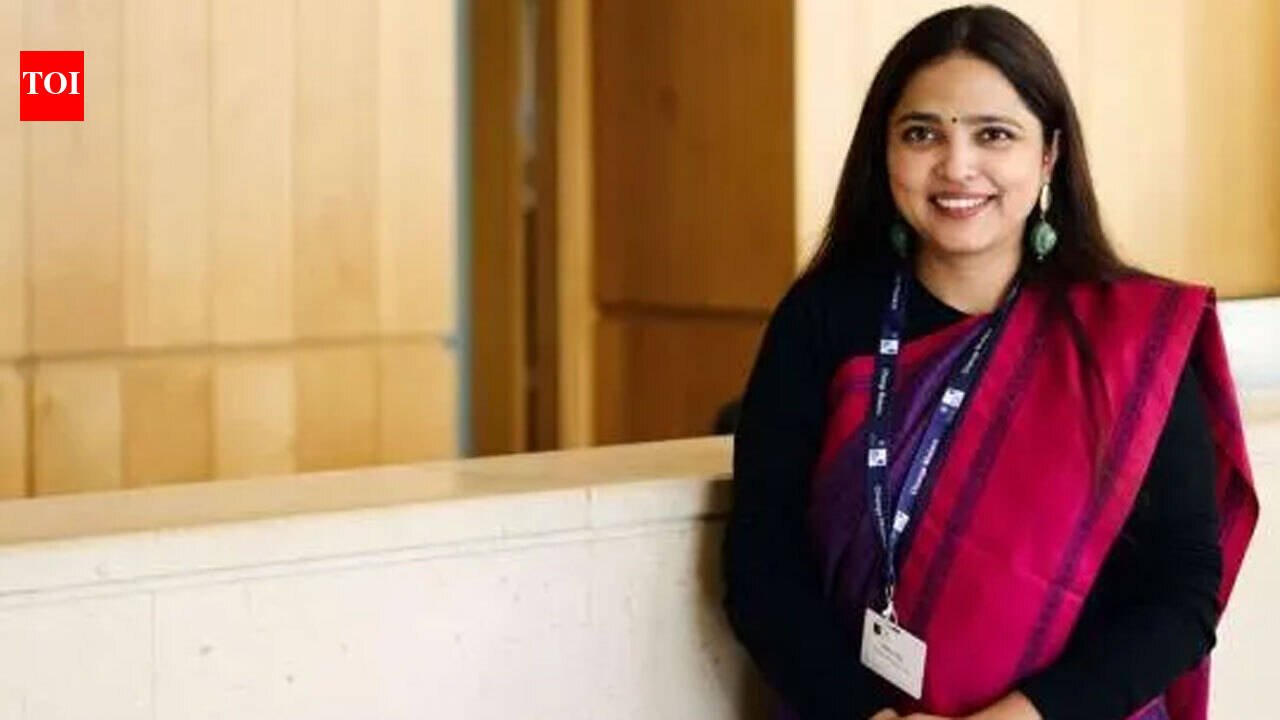
Mariya Shah bags Oxford Saïd Global Climate Tech Challenge 2026.
An Indian teacher has brought two subjects rarely discussed together in classrooms, menstrual health and climate change, into a single teaching programme.
Her initiative, which examines the environmental impact of menstrual products alongside period education and waste reduction, has won the teacher category at the Oxford Saïd Global Climate Tech Challenge 2026.Mariya Shah of Prerna Girls School, Study Hall Educational Foundation, Lucknow, was named the winner for her project, Break the silence: Zero waste periods to combat climate change.
The winners were announced by Oxford Saïd Business School on October 30, following the international finals held in Oxford on October 25.
The competition brought together five student teams and five teachers from nine countries.How Mariya Shah connected periods with climate education Mariya’s lesson plan explores how the use and disposal of menstrual products relate to wider environmental concerns, including plastic pollution, waste generation and climate change.
Instead of limiting the discussion to scientific concepts, the programme brings menstrual health education into the conversation and encourages students to examine the environmental consequences of everyday choices.The initiative combines environmental science, period education, waste reduction and community action.
Its approach is designed to help students understand the subject through classroom learning as well as activities beyond school.
According to the Oxford Saïd announcement, students move from lessons to community research and awareness activities.
These include making posters, holding conversations and using street theatre to communicate what they have learnt.The programme therefore places students in the role of participants who can take ideas from the classroom into their communities.
It also brings a subject with social and cultural dimensions into environmental education, encouraging students to discuss menstrual health while considering more sustainable practices.Why the Oxford judges recognised the project Dr Pegram Harrison, Senior Fellow in Entrepreneurship and Academic Director for Youth Education at Saïd Business School and lead judge, highlighted the importance of connecting environmental learning with social realities.“Her approach reminds us that environmental education cannot always be separated from social and cultural realities,” he said.He added that students need more than scientific knowledge if they are expected to influence behaviour.
“If we want students to influence behaviour, we must help them develop not only scientific understanding, but also the confidence and sensitivity to communicate with others.”The recognition places Mariya’s work among the international projects selected for the 2026 challenge.
As part of her award, she will receive a place on an Oxford Saïd programme in Oxford in 2027.A global challenge for students and teachers The Oxford Saïd Global Climate Tech Challenge invites high-school students and teachers from around the world to develop technology-based ideas, creative solutions and lesson plans addressing climate-related issues.
Participation is free, and the challenge covers areas such as air pollution, extreme weather, food security, biodiversity and water scarcity.The 2026 student category was won by Team ReSpring from Motherland Secondary School in Nepal.
Its project, the ‘spring revival grid’, uses freely available satellite data to identify potentially suitable locations for groundwater recharge ponds in communities that depend on natural springs.
The winning team will receive a full scholarship to an Oxford Saïd Youth Education summer school in 2027.Mariya was joined in the teacher category by runner-up Maryam Muddesar from Riyadh School, Misk City, Saudi Arabia.
Other finalists represented countries including Azerbaijan, India, Turkey, the UAE, Vietnam, the UK and the United States.At the opening of the finals, Jo Fawkes, Director of Global Inclusion and Youth Education at Saïd Business School, emphasised that young people should have a role in shaping responses to global challenges while they are still in school.“Young people have something valuable to contribute to conversations about our collective future, not simply at some distant point when they have completed their education, but today,” she said.For Mariya, the winning project brings that idea into a school setting by giving students a way to examine an everyday health issue through the wider lens of environmental responsibility.
Its approach also shows how schools can connect scientific learning with subjects that affect students’ lives and the communities around them.