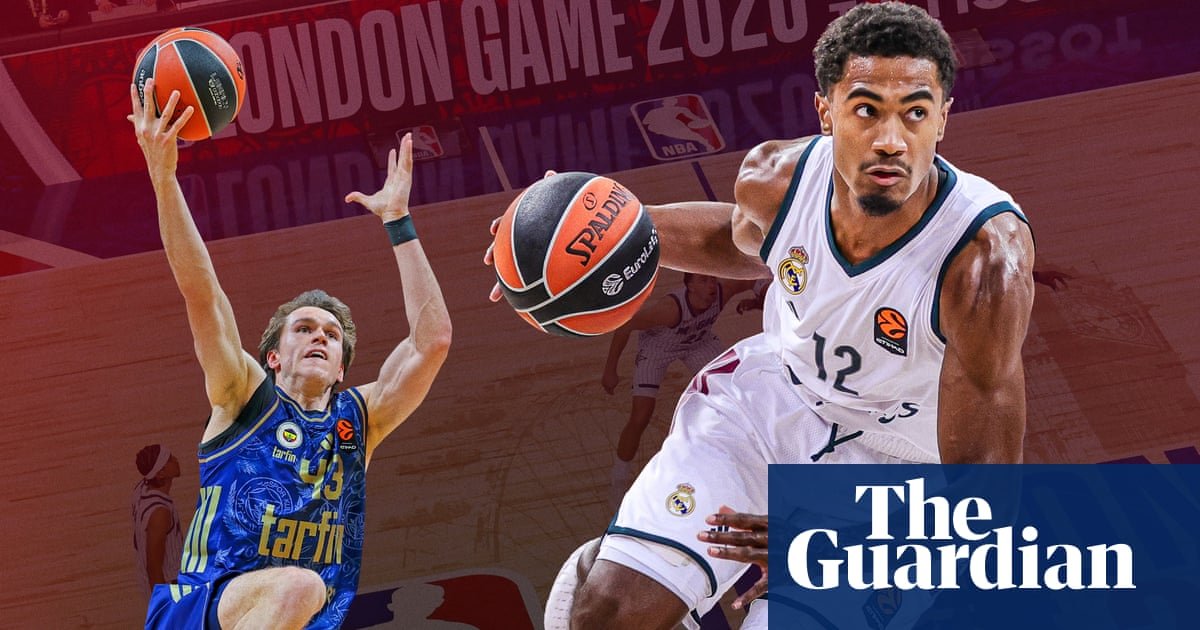
Some of the biggest names in European football will bid for a franchise in ESL-style league, now due to launch in 2028
The launch of NBA Europe will be delayed 12 months until 2028, with a pre-qualifying competition planned for next year to find four temporary members to join the 16-team league’s inaugural season alongside 12 permanent franchises.
The NBA is planning to invest about $10bn (£7.6bn) over 10 years in what sources have described as the sporting world’s biggest-ever startup competition. It is understood to have received multiple offers for the 12 franchises that exceed their targets, with prices expected to range from $500m to more than $1bn for the London franchise.
Many of the winning bids are expected to come from the owners of football clubs that compete in the Champions League, with the deputy commissioner, Mark Tatum, holding talks with senior executives from Barcelona, Real Madrid, Paris Saint-Germain, Bayern Munich and Milan last week.
London, Manchester, Rome, Athens, Istanbul and Lyon will also get permanent franchises, topped up by four qualifiers from within European basketball’s existing structure.
The London franchise is understood to have attracted several bids in excess of $1bn from some eye-catching investors including the former Chelsea chair, Todd Boehly, a consortium involving the former Tottenham chair Daniel Levy and MSP Sports Capital, as well as Saudi Arabia’s Public Investment Fund.
Buss Sports Capital, the US investment group that sold their 17.8% stake in the Los Angeles Lakers to Joshua Kushner earlier this year, are believed to have submitted an offer for the Manchester franchise, but City Football Group (CFG) has not bid despite having close links with the NBA, which has agreed to set up a new global academy in Abu Dhabi as part of a $300m partnership.
While the NBA has not committed to a timeframe it is understood they hope to announce the identity of the new franchise owners later this year.
“We’ve got people who are well-capitalised investors who don’t own any basketball franchise, but they want to get into basketball,” Tatem said at last week’s general assembly of European Football Clubs.
“We’ve got existing basketball clubs in the ecosystem that have submitted bids, and we have football clubs, some that have their own basketball teams today, and some that don’t and want to get involved in basketball.”
The level of the bids indicates that the NBA has succeeded in winning over some of Europe’s biggest football clubs and powerful US institutional investors, but they are continuing to encounter resistance from within basketball.
At a meeting in Lake Como this week, the EuroLeague clubs voted to reject the NBA’s initial offer of investment in favour of pursuing their plans to expand from 20 to 24 clubs, although NBA sources insist the talks will continue.
“Our vision for basketball is to bring everybody with us – EuroLeague, the governing body, Fiba, and the clubs – to revamp the European basketball scene,” Tatem said. “One of the things that we’ve learned from European football is the power of the pyramid. In football every single club understands the clear pathway to play at the top level. That doesn’t exist in basketball.”
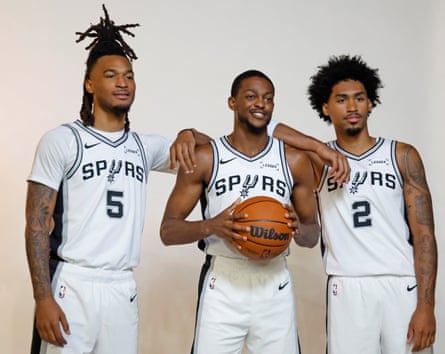
The NBA’s decision to seek a partnership with EuroLeagues rather than go it alone was taken during the summer, when they settled on a hybrid model representing Europe and North America’s sporting cultures.
In a structure that echoes football’s toxic and swiftly abandoned European Super League (ESL), NBA Europe will have 12 permanent members, with four temporary members admitted annually.
While the mechanism for promotion is to be confirmed, NBA sources say there will be two entry routes: the top two ranked sides from a new second-tier European competition called the Basketball Champions League, and two finalists in a separate tournament for all of Europe’s domestic champions.
In another nod to greater upward mobility, the highest ranked non-franchise club that reaches the end-of-season playoffs would keep their place in NBA Europe the next season, with the other three sent back to the play-in competition, so there would likely be a regular turnover of entrants outside the permanent 12.
While there are billions of reasons that big European football clubs want a slice of the NBA, there are suspicions that some may have ulterior motives.
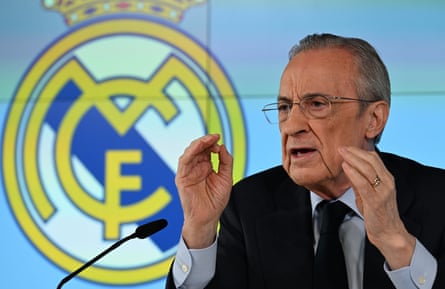
Several sources involved in the discussions said Real Madrid’s president, Florentino Pérez, seems particularly invested in NBA Europe, eager to establish the principle of a semi-closed league in Europe in case the prospect of a breakaway football league returns.
Real only formally withdrew from the ESL last year, four years after the project collapsed, and their commercial partners A22 continue to pursue Fifa and Uefa in the courts for allegedly abusing their dominant position by banning clubs from signing up.
The Madrid commercial court and Spain’s high court of justice have both ruled in Real’s favour over the past two years, with Pérez seemingly determined to keep the club’s options open.
“Florentino has been very involved in NBA Europe,” a senior source at a EuroLeague club said. “He wants it to happen quickly and is constantly asking for updates.
“The Super League may be dead for now, but it’s not difficult to imagine a world where the biggest Champions League clubs demand permanent qualification and look to restrict access. A semi-closed Champions League would protect them from domestic failure, so NBA Europe could be very useful.”
Despite the club staying out of the auction the Manchester City issue remains a potential complication for the NBA, however, as CFG are 50% owners alongside Oak View Group of Manchester’s biggest area, the 23,000-capacity Co-op Live, which has been earmarked as the most likely venue. A regular-season NBA game between San Antonio Spurs and the New Orleans Pelicans will be staged there in January.
“We want to bring on partners who are going to invest in basketball development,” Tatem said. “Academies, indoor arenas. When you think about all of Europe there’s probably only a handful of what I would consider world-class indoor arenas. These arenas provide an economic engine to cities, but we don’t have that in Europe. And so that is the investment that we’re looking to create.”
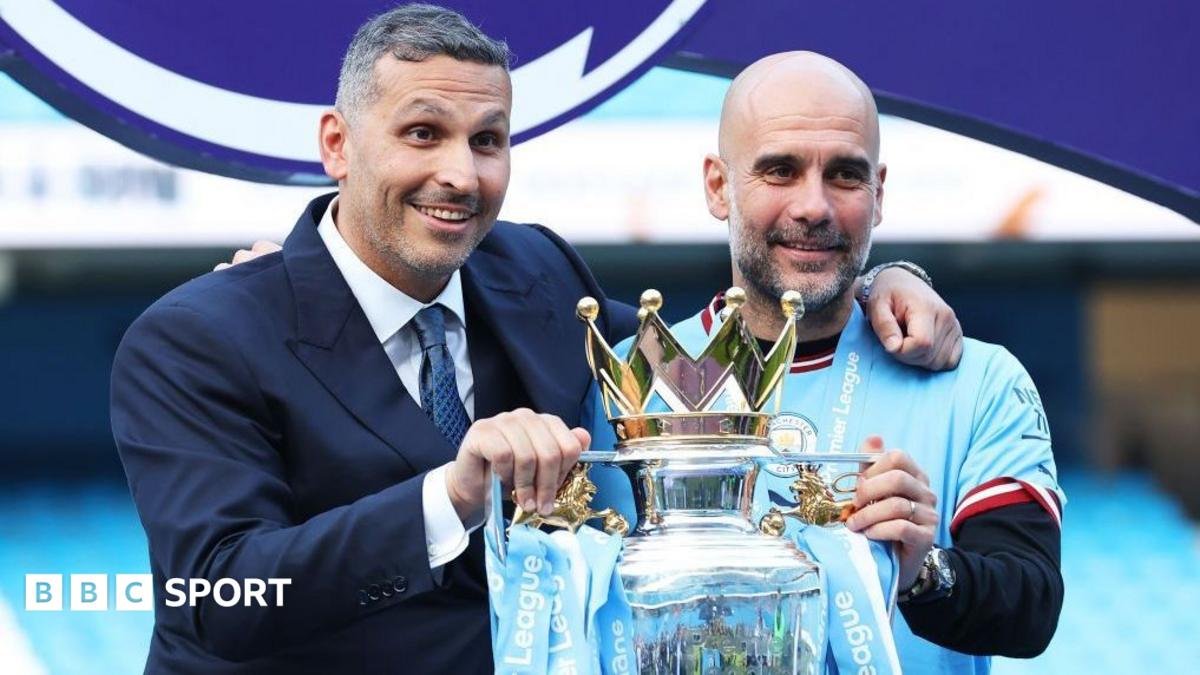
Tatem has close relations with CFG, whose chairman, Khaldoon al-Mubarak has been a basketball fan since attending a Boston Celtics’ game while studying at Tufts University in the 1990s.
Al-Mubarak has played an important role in forging a relationship between the NBA and Abu Dhabi’s department of culture and tourism, culminating in a nine-year partnership that for the last four years has led to NBA pre-season games in Abu Dhabi.
That deal will remain in place despite the fallout from Manchester City being found guilty by an independent commission of over 100 charges of financial cheating, although the NBA may be slightly relieved that the club is not part of the franchise bidding process.