What if the stories hidden in Visakhapatnam’s streets, buildings, traditions and natural spaces could be told through the eyes of its schoolchildren? This is the idea behind Filmit India, an initiative that is bringing young storytellers and heritage together through the lens of a camera.
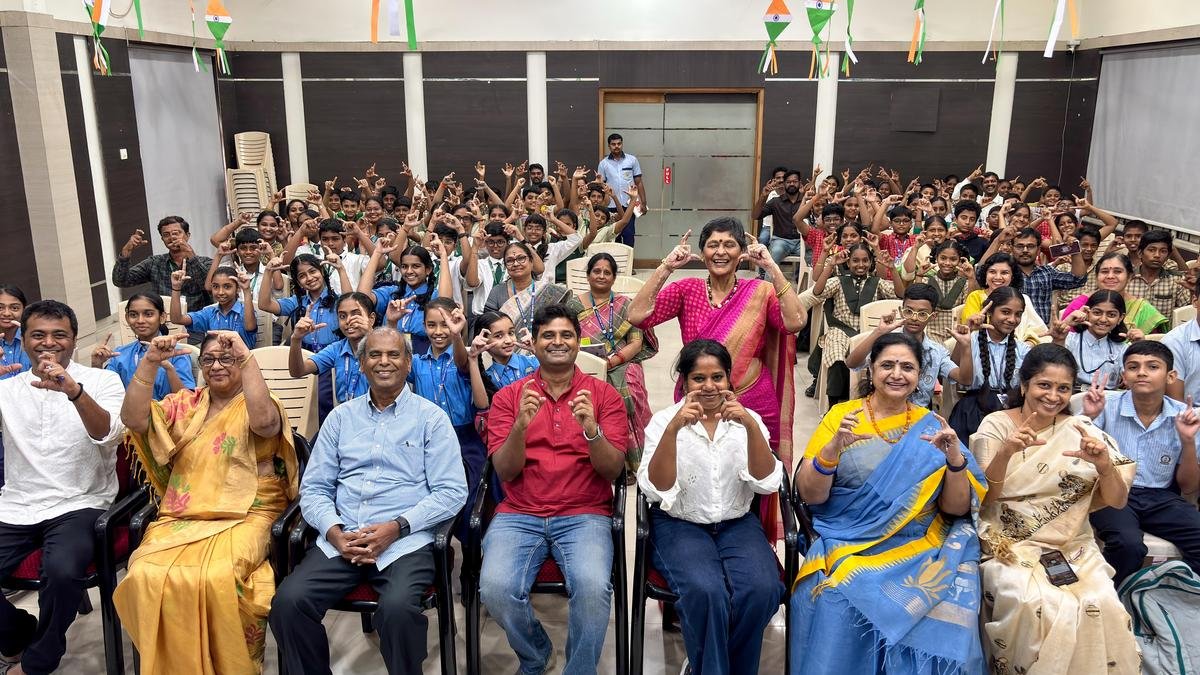
The Visakhapatnam Chapter of the Indian National Trust for Art and Cultural Heritage (INTACH), along with its HECS (Heritage Education and Communication Service) Division and Tuning Fork, organised a one-day Filmit India 2026 workshop at Sri Prakash Vidyaniketan on August 20.
The workshop, that was held in Visakhapatnam for the first time, brought together nine schools, with each school represented by eight students and two teachers. The programme focused on introducing students to the basics and nuances of making one- to two-minute films on the cultural and natural heritage of the environment in which they live.
The idea is to help students move beyond simply documenting what they see and instead build short, engaging narratives that can be shared online with schoolchildren in other parts of the country.
“The objective of the workshop is to train students in the nuances of making one- to two-minute-long short films on the cultural and natural heritage of the environment in which they live that can be shared through the internet with schoolchildren in other parts of the country,” says Dr D Rajasekhar Reddy, convener, Visakhapatnam Chapter, INTACH.
From streets to family stories
The Filmit India programme has been conducted by the INTACH HECS Division for the past 19 years across different parts of the country. Around 7,000 student-made films have so far been uploaded on YouTube as part of the programme.
The 2026-27 themes cover a wide canvas of heritage. Students can explore natural heritage through stories of saving trees and animals or sustainable kitchen gardens; built heritage through distinctive architecture, historic markets and sustainable homes; and neighbourhood heritage through street histories, local food and sounds. Other themes include traditional communication, accounting and measurement systems, unique journeys, and personal and family heritage.
The workshop guidelines emphasise making films no longer than two minutes, with a subtle message, humour and a dramatic touch where appropriate. Students are also encouraged to use original music suited to their films. According to the 2026-27 Filmit themes document, the use of AI is not permitted. Schools are required to make a minimum of four films, with two themes to be taken up between August and October and two more between November and December.
A film festival ahead
The Visakhapatnam chapter expects the initiative to continue in the coming years, creating a growing archive of student perspectives on the city and its heritage.
The films produced by participating schools through the workshop are expected to be screened at an INTACH Film Festival, likely to be held in February 2027, giving the young filmmakers an opportunity to showcase their work to a wider audience.