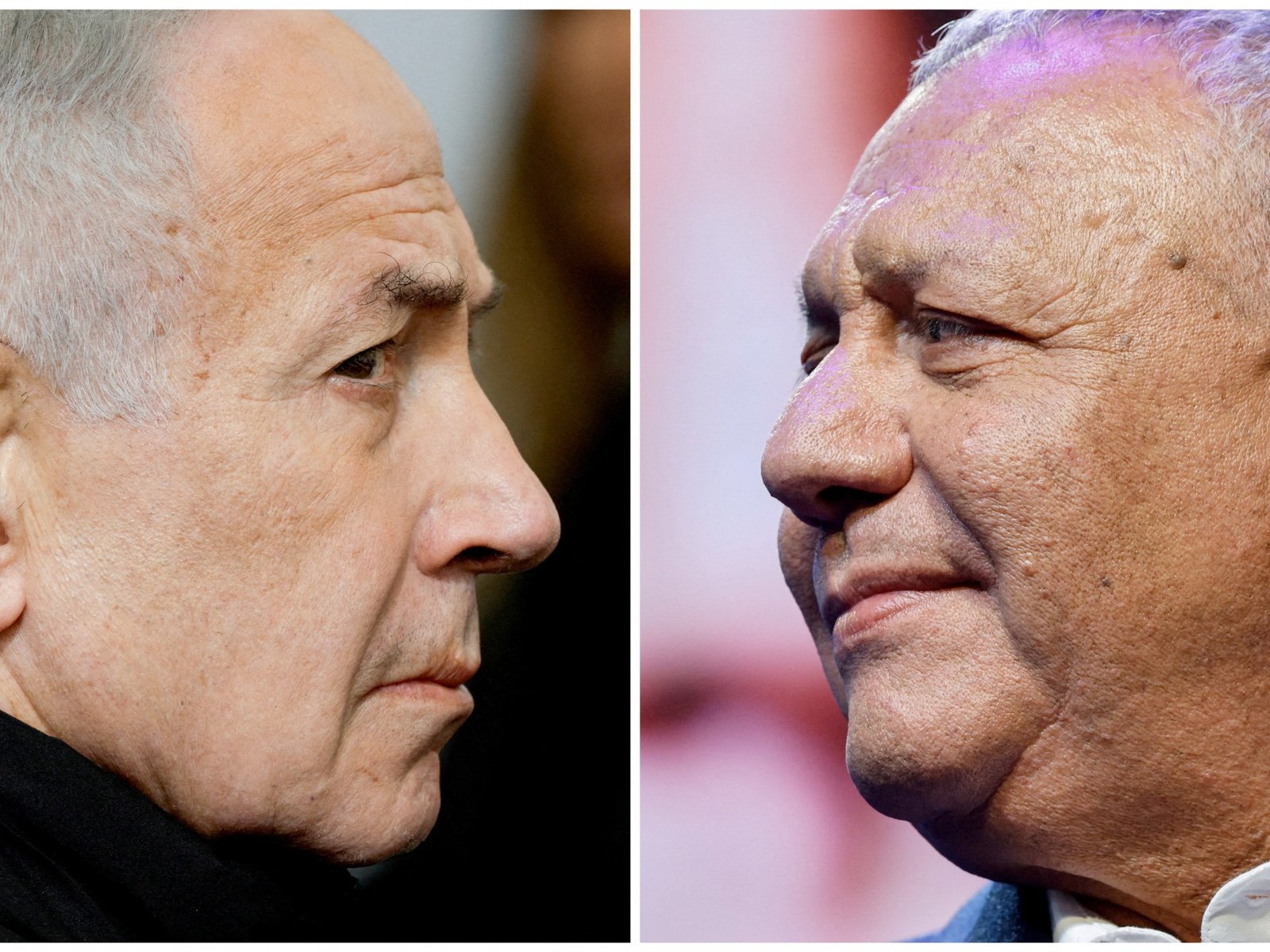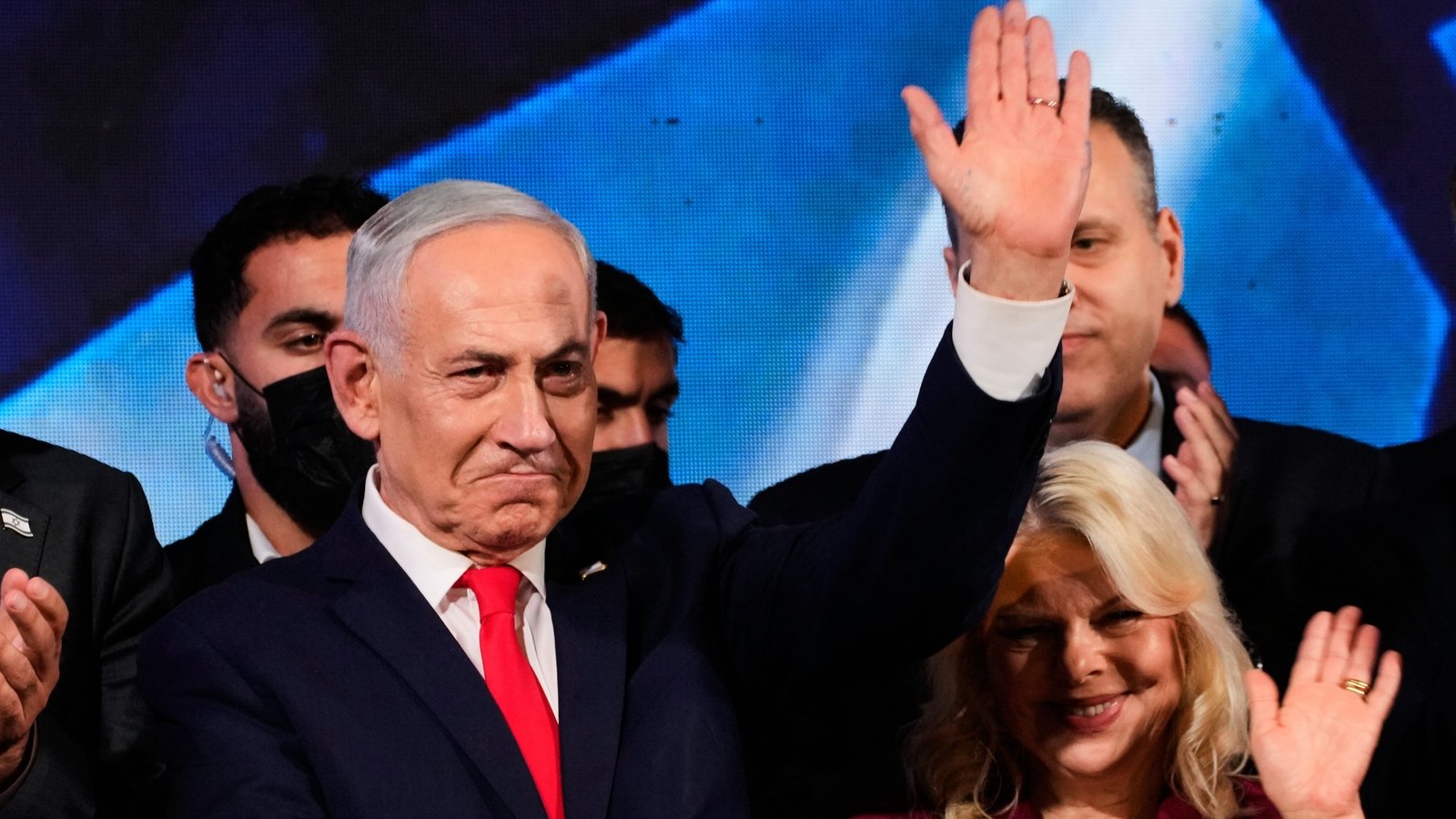
Israel election results LIVE: The results show that the Netanyahu bloc holds 53 seats, compared with 48 for opposition leader Gadi Eisenkot’s camp and 19 for the Arab parties. Overall turnout stood at 77.9 per cent of eligible voters.
36 Sec agoNetanyahu bloc loses its Knesset majority
4 Mins ago‘Great victory’ Argentina President congratulates Netanyahu
6 Mins agoNetanyahu’s longtime ultra-Orthodox allies considering to offer support to Eisenkot
7 Mins ago100% votes counted
Israel election results LIVE: Israel’s Central Elections Committee has released the final results of the national election. According to the final tally, Benjamin Netanyahu's Likud secured 27 seats, followed by Yashar with 21, and Joint List with 11.The Democrats and Ra’am each won 8 seats, while Yisrael Beytenu, United Torah Judaism and Otzma Yehudit received 7 seats each. Shas and Religious Zionism have finished with 6 seats each, Times of Israel reported....
The results show that the Netanyahu bloc holds 53 seats, compared with 48 for opposition leader Gadi Eisenkot’s camp and 19 for the Arab parties. Overall turnout stood at 77.9 per cent of eligible voters, with a total of 5,716,665 votes recorded.
Results expected to be presented to President on November 4
The final results are expected to be formally presented to President Isaac Herzog on November 4, after the completion of any investigations into possible errors or submitted queries. The newly elected 26th Knesset is scheduled to be sworn in on November 10.
Meanwhile, three electoral lists failed to meet the required 3.25 per cent threshold to enter parliament. The Reservists received 2.7 per cent of the vote, the People of Israel secured 1.7 per cent, while the Charedi Public garnered 0.2 per cent.
Israelis do not vote directly for PM
Israelis do not vote directly for the prime minister or elect individual lawmakers from local constituencies. Instead, they cast their ballots for political parties or electoral lists, which submit candidates in a predetermined order.
The entire country serves as a single electoral constituency. Unlike systems in which voters elect representatives from separate constituencies, Israel allocates parliamentary seats based on the nationwide vote share received by each qualifying party or list.
Israel follows a proportional representation system, under which parties receive seats in the 120-member Knesset broadly in proportion to their share of the national vote. This system allows multiple parties to enter parliament, making coalition-building central to the process of forming a government.
Political parties, electoral list must secure at least 3.25 per cent of valid votes to qualify for Knesset
A political party or electoral list must secure at least 3.25 per cent of the valid votes cast nationwide to qualify for seats in the Knesset. This minimum share is known as the electoral threshold.
Seats are distributed proportionally among the lists that cross the threshold. Those that fail to meet it do not receive seats, and their votes are excluded from the calculation used to allocate seats among qualifying lists.
To form a government, a prospective prime minister must be able to secure sufficient support in the Knesset. A coalition commanding the support of at least 61 of the 120 lawmakers has a majority.
The party that wins the most seats does not automatically form the government. A smaller party may be able to assemble a coalition with enough parliamentary support, while the largest party may struggle to find willing partners.
Each electoral list submits a list of candidates in a predetermined order. On polling day, voters select a paper ballot bearing the name and identifying letters of their preferred party or list. Ballots are placed in envelopes and deposited in ballot boxes.
Voters do not separately choose the prime minister or an individual member of the Knesset. The seats won by each list are determined by its share of the nationwide vote, subject to the electoral threshold.
The candidates who enter the Knesset are determined by the order in which they appear on their party's list and the number of seats the list wins.
Israel election results LIVE: Netanyahu bloc loses its Knesset majority
Israel election results LIVE: Even when Benjamin Netanyahu's Likud is the largest party coming out of the election, the bloc of coalition parties lost its Knesset majority as it could not reach the 61 seat majority.
Israel election results LIVE: ‘Great victory’ Argentina President congratulates Netanyahu
Israel election results LIVE: Argentinian President Javier Milei congratulated Prime Minister Benjamin Netanyahu on “the great victory” of the Likud party in the Israeli election.
In a post on X, Milei said the Likud “has once again become the leading force in Israel".
“Once more, you have demonstrated the strength of your leadership, even in the face of polls and predictions against you. Argentina and Israel will continue to be strategic allies against those who challenge our Western values,” Milei posted.
Israel election results LIVE: Netanyahu’s longtime ultra-Orthodox allies considering to offer support to Eisenkot
Israel election results LIVE: One of Netanyahu’s longtime ultra-Orthodox allies is considering a major political shift, offering to support opposition leader Gadi Eisenkot as prime minister in exchange for legislation exempting ultra-Orthodox Jewish men from compulsory military service, Ynet news reported.
Israel election results LIVE:100% votes counted
Israel election results LIVE:As per Central Elections Committee, 100 per cent of votes have been counted in the Israel election with Prime Minister Benjamin Netanyahu’s bloc securing 53 seats, while opposition leader Gadi Eisenkot’s camp won 48. Arab parties won 19 seats combined, leaving both blocs short of the 61 seats needed for a majority in the 120-member Knesset. The two Arab parties are projected to win a combined 19 seats, Times of Israel reported.