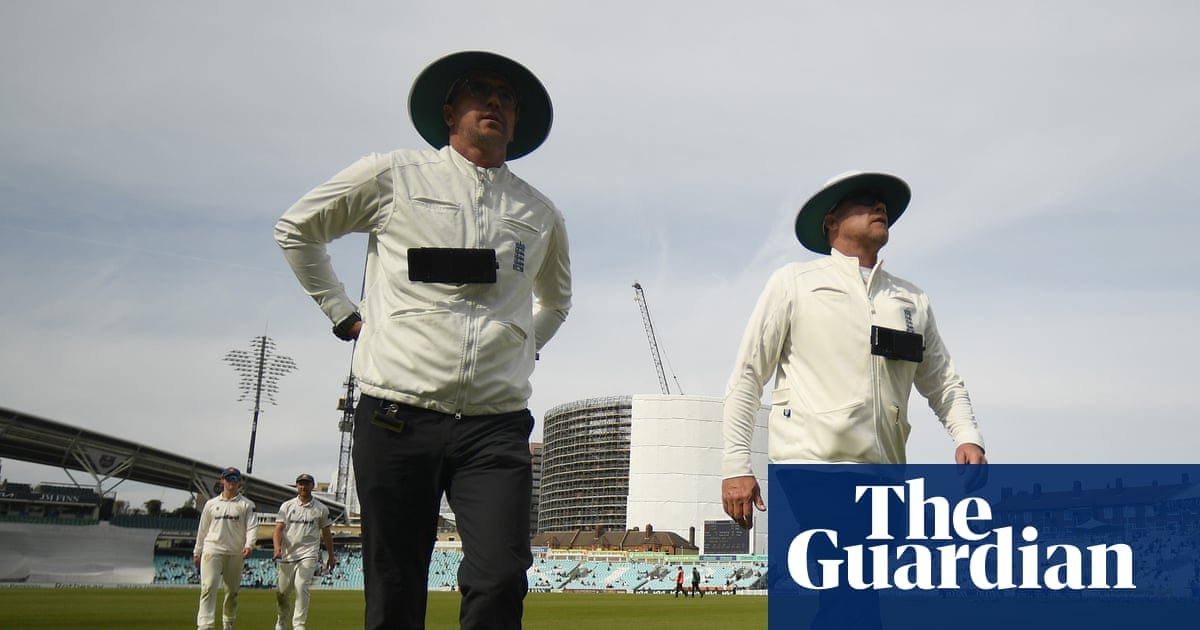
Four umpires discuss how they deal with players, why they avoid social media, how technology is changing cricket and why umpiring beats being a football referee
Last summer, sat in a quiet ground at the fag-end of a four-dayer, with a few souls still kicking around and a clutch of cameras streaming what was left of the day live on YouTube, it struck me again what a great, strange sanctuary this place is, out there on the edges of the modern world. The game is trying to move, albeit at its own pace. Later that night, the day’s highlights would be landing on social media, available to all, for the game’s devotees to pore over and pick apart.
More people are watching the County Championship than ever before. Streaming numbers show a growing audience in the UK and a widening uptake across the cricketing globe. The numbers aren’t yet earth-shattering, but how could they be, with such eccentric fare?
No matter, I tell myself. This is our place, our haven unspoiled ... until a marginal umpiring decision gets posted online, often from an official club account with a few eye emojis, and we’re forced to confront a different truth: that county cricket is not quite a sanctuary after all, but just another thing to be fed through the unrelenting shredder. Never before have umpires been subjected to such scrutiny, nor had to weather such criticism. Yet there they stand, hour after hour, day after day, counting to six and searching for grace. This is their story.
What is the job like today?
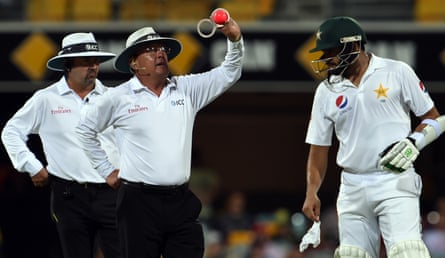
Mike Burns: It’s a bit different to when we were playing! There’s a lot more scrutiny now. And the players, because of all the videos, are a lot more likely to question things. I also think when people see how officials get questioned in football, they feel that that’s acceptable in cricket. I’m not saying they are anywhere near as bad, but that’s definitely changed.
Michael Gough: When I started [in 2013] we had no match referees. Cameras were 100 yards away, there was nothing to zoom in on. We were pretty much our own bosses back then. We filled out our own match report. You look around the grounds now at some of the counties and they have six, seven or eight cameras at each match.
MB: You’ve got to be more open to being questioned and having answers to those questions. You can’t just say “Oh, this didn’t look right” or “It’s just that’s what I decided”. You’ve got to have answers. I gave a decision a few years back and I went on social media and got down a rabbit hole and I’ll never do it again. You’ve got to stay away from it. That’s all you can do.
MG: I think it’s important as umpires that we don’t engage in any social media at all.
Neil Bainton: There are cameras at every game. There are cameras now at minor counties games, and even club games have got the livestream now, which is frightening. Talk about the abuse some of these club umpires are getting ...
Jack Shantry: There certainly is scrutiny, as there should be in professional sport. Every decision is graded as either correct or incorrect, even with wides and no-balls. Literally everything. There’s pressure on the job, people’s careers are riding on it, and there’s a lot of money involved now, but you’d expect nothing less.
NB: The introduction of match referees has been good. Nowadays, when a county coach isn’t happy, they will go and bang on the referee’s door, whereas years ago they’d be banging on our door. The referees have taken some flak away from the umpires, but the scrutiny the umpires are under has increased considerably over the years.
How do you manage the players, especially with all these clips going online?
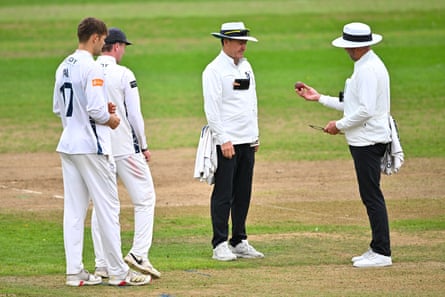
MG: You have to remind them to be mindful that other people are going to watch how they react, even when they might be joking with you, because on social media people will just go, “Well, that’s a terrible decision by the umpire”. Often the players just think they’re having a bit of banter, but they don’t see the bigger picture that we have to deal with.
JS: You have to calm players down from time to time. If it’s in the middle of an over and they’ve maybe crossed a line, then you’ll wait a beat before defusing it. It’s an art more than a science. The people, like Goughie, who go right to the top, are all excellent man-managers.
MB: You’ve got your characters that you know you have to look out for. We did MI London versus London Spirit last year and you’ve got Liam Livingstone on one team and the Curran boys on the other. It kicked off a little bit, and it can get out of hand if you don’t nip it in the bud.
JS: The vast majority of the time the players are fantastically respectful. As a game we’re very lucky. You might get the occasional comment from the captain at mid-off, “What’s that missing?” And you’ll give them an honest answer and nine times out of 10 they accept it.
MB: There are a certain number of us who have very good relationships with players and there’s a few that are struggling still. I think you’ve got to show empathy to the players, let them know that you’re enjoying being there, but you can’t let them just walk all over you.
JS: Thankfully our game isn’t like football. A few years ago, just after I’d started umpiring professionally, I refereed some amateur-level football during the winter, and I took more shit doing Sunday league football than I ever have in games where players are getting paid many thousands of pounds.
Can you have friendships with them outside of the game?
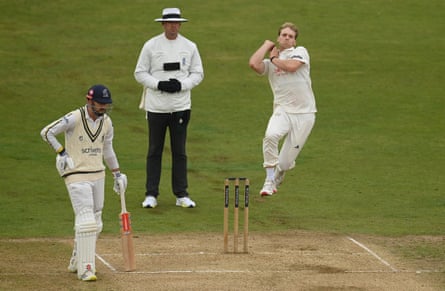
MB: Some players you just warm to, they’re good characters and you find yourself talking to them a lot. So you’re as friendly as you can be given the circumstances. But you’ve got to remember you’re going to have to give them out. I think you can become friendly with them without being “friends” as such.
Cameras are here to stay. Can we expect to see more developments?
NB: There are developments being discussed. Currently the umpires wear cameras on their chests. We’d like to take them away. We now have better cameras off-field, though it needs some budget being thrown at it – it won’t be cheap to set up at 18 first-class grounds. But the quality of the cameras that we’re seeing off the field are much better these days, and would certainly be able to give line decisions, for run-outs and stumpings.
JS: If some form of DRS was introduced – certainly for line calls – then absolutely we’d welcome it. No umpire wants to influence the game negatively with an incorrect decision. And then the players will be more accepting of decisions if they have a right to reply.
Have your decisions ever been affected by the possibility of online criticism?
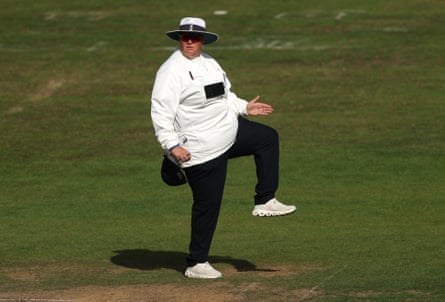
MB: I don’t think that’s ever been at the forefront of my mind. I’ve never thought about social media, or any stuff like that, when I’ve actually been out there.
MG: There are no other factors that go into your mind other than whether you’re making the right decision at the time.
JS: It doesn’t impact my decision-making. I have seen some comments online about certain decisions, but the frame-rates of many of the cameras that we use aren’t great – so if we’re talking about marginal calls, freeze-framing can give an inaccurate picture of what’s really happened. Or the cameras aren’t perfectly behind the bowler’s arm, which again can give a misleading impression. It’s also worth saying that the umpire in that clip will be working at more than 90% correct decisions but the algorithms aren’t interested in the good ones.
How do you live with bad decisions?
NB: Fortunately, they’ve all got a coach now. So they would speak to their coach, and to other umpires. I think everyone knows you’re not going to get every decision right. We’re doing end-of-season reviews at the moment and our umpires’ percentages for the season are very high, but they will all still be thinking about the bad decisions. I used to give Vikram Solanki out every game. If I gave a wrong decision, it was always Vikram Solanki. As long as you’re not apologising to the same player every day, you can develop a relationship.
MB: Yeah, we’ve got umpire coaches who are mostly ex-umpires. We’ve got four coaches: Ian Gould, Rob Bailey, Tim Robinson and Dennis Burns, and we work with those guys.
MG: Sometimes giving a bad decision is not the worst thing in the world. I gave Dean Elgar out once at Taunton to Simon Harmer. It was pitching outside leg stump by about three feet. It was the worst decision that I’ve ever given in my life. But on the flipside of that, I remember saying to Elgar the next morning: “Dean, really sorry about that. I’m seeing it on the screen. It’s a really poor decision.” A few months down the line, I’m in South Africa to do a Test match against India, and Elgar has said to their guys: “I’ve had Goughie in county cricket. We’ve had a conversation. He came up to apologise.” And all of a sudden you get a way in, and people start to talk to you like a human being.
Do you go in and out of form?
MG: Absolutely. I did a Test match in Sri Lanka, which is the graveyard of cricket as an umpire. It’s the most difficult place in the world to umpire. I think I was four or five errors down on day one. I sat down with my fellow umpires that night and said, “What am I doing wrong? What am I doing right? How’s my body language?” And they said, “You know what? Just factor in ‘not out’. Sometimes in these conditions where you are guessing most of the time, just factor in maybe not ...” And from then on in, I had a good Test match.
JS: You certainly have days when your tracking of the ball is a bit off. Like anyone, you have good days and bad days, when you feel a bit out of nick and you can’t get into a rhythm. But more than anything, you don’t want to ruin anyone’s day or impact negatively on their career. Regardless of whether it’s a Hundred final or a second XI Championship match, it’s always somebody’s very big game, so you have to keep your processes the same regardless. As a player I used to get infuriated at what I perceived as an injustice, so I’m very mindful of that. I don’t want to be pinned in the middle of their dartboard.
Who is the top guy among you?
MG: It’s difficult to say. You look at the experienced group, you look at Gouldy, Neil Mallender, Bailey, Robinson, the people who I learned a lot from. So I wouldn’t say there’s one. However, Chris Kelly and Richard Illingworth are the two biggest influences on my umpiring career to date.
JS: Illy [Illingworth] has been fantastic as a mentor. He’s the umpire I most enjoy standing with, just watching him go about his business. He’s incredibly calm and he’s very supportive to young umpires. He’ll often lead from behind, giving the younger guys more responsibility. You’ll never know if he’s had a good day or a bad one, but invariably he’s had a good one. You feel taller when you’re around him.
Who’s a bit tasty to manage on the field?
MB: I can say this because we’re from the same town: Liam Livingstone would start a fight in an empty house. You put him in a team playing against the Currans and there’s some egos flying around. And one of England’s greatest can be a pain!
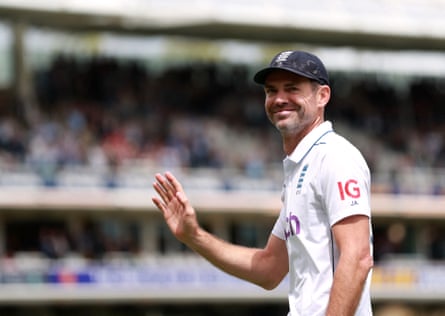
Yeah, I was going to ask about standing at Jimmy’s end ...
MB: He nearly runs on the pitch all the time, so you’re talking about that to him and then he’s just abusing the batters with no comedy whatsoever. There’s no hint of trying to be funny! Bless him.
JS: He was good as gold with me, but he does like to get stuck into the youngsters in the opposition. Then you have a quiet word with him, he apologises, and we move on.
What is the most rewarding aspect of the job?
MB: Well, it’s better than having a proper job! We’re all very, very lucky to be involved for as long as we have been in professional cricket. It is quite stressful at times, and it is hard, but it’s rewarding. I want the players to enjoy me being there and I want my colleague to enjoy me being there with them. And if I’ve done that, then I’ve had a decent day.
JS: I feel more comfortable umpiring than playing. As a player, people would say, “Go out and express yourself”, but for me, bowling 75mph off the wrong foot was the only way I could express myself as a player! But as an umpire, you’re there to do a job and do it well. As a player I had a ceiling, but as an umpire I don’t have the same limitations – all your limitations will yield to hard work and experience and incremental improvements. I feel there’s a route into international cricket with umpiring that there wasn’t through playing.

MG: All I’d say is we do very well as umpires. We get very well looked after. We’ve always been very well looked after. It’s a great job to be involved in.
MB: Literally all you’re doing is trying to get through the game without fucking up! That’s pretty much it.
This is an article from Wisden Cricket Monthly. Save £10 on an annual digital subscription.