The meeting comes days after US President Donald Trump signed the Lindsey O.
Graham Sanctioning Russia and Iran Act into law.
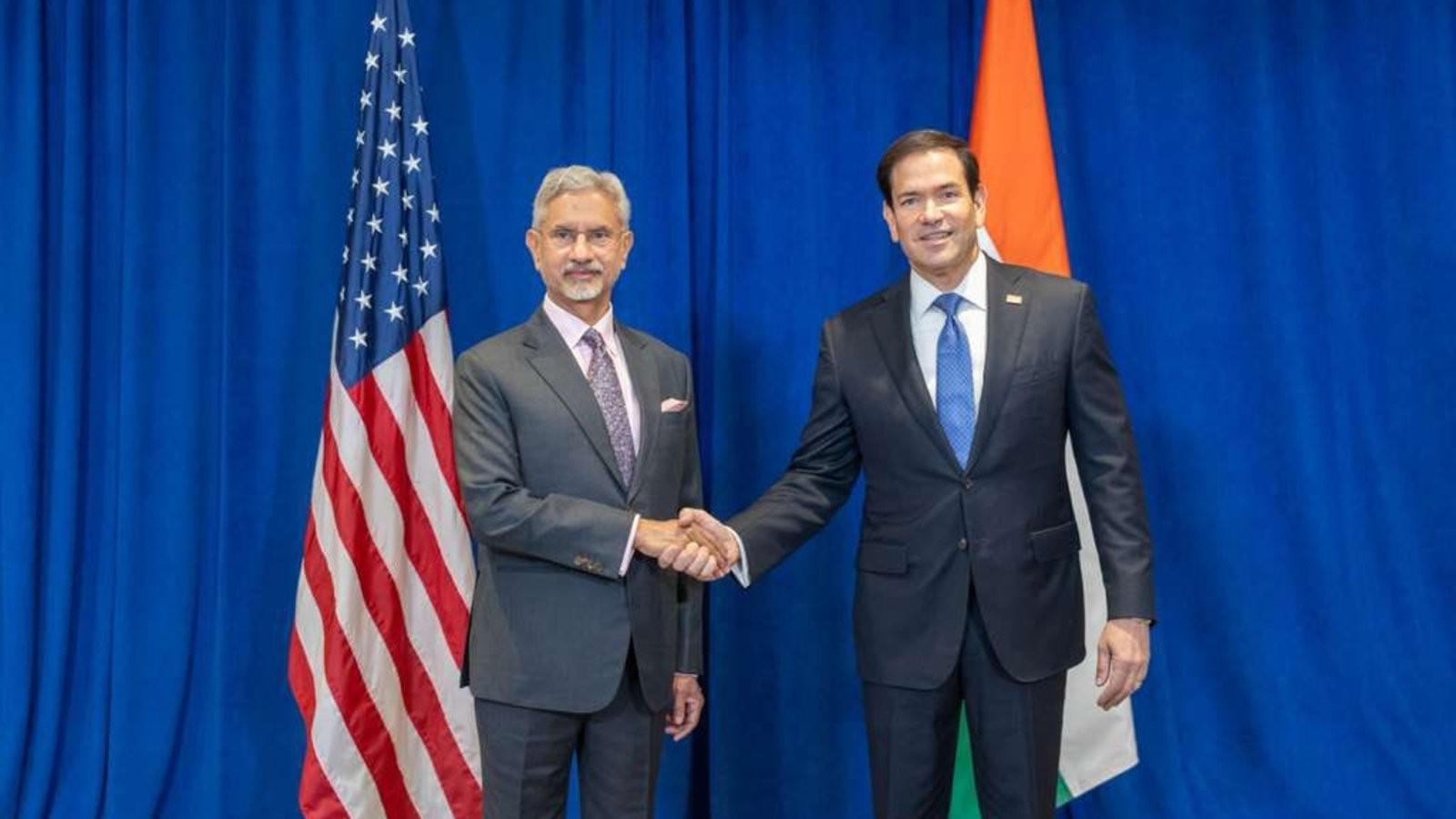
Updated on: Sep 23, 2026, 20:33:21 IST By HT News Desk Prefer HTon Google Share via Copy link External Affairs Minister S Jaishankar met US Secretary of State Marco Rubio on the sidelines of the UN General Assembly and raised India’s “interests and concerns” regarding the Russia sanctions act.
Jaishankar meets Rubio at UNGA, raises concern over 100% Russian oil tariff bill (X/@DrSJaishankar) Jaishankar said in a post on X that the two also discussed the situations in the Gulf and Ukraine.
Good to meet @SecRubio of the US during #UNHighLevelWeek.
Reiterated India’s interests and concerns with regard to SRIA.
Also discussed the Gulf and Ukraine situations,” he said.
Jaishankar arrived in New York City Sunday.
He is leading the Indian delegation for the 81st session of the UN General Assembly.
Graham Sanctioning Russia and Iran Act into law, giving him expanded authority to impose tariffs of up to 100% on imports from the top five buyers of Russian oil and gas, a list that currently includes India.
The legislation had been passed by the US House of Representatives two days before Trump signed it into law.
The Lindsey O Graham Sanctioning Russia and Iran Act of 2026 cleared the House on Wednesday by 262-159 margin, after passing the Senate 86-11 on August 7.
It grants Trump the authority to impose tariffs of up to 100% on goods from the five largest purchasers of Russian crude oil and natural gas — a list that, by current import volumes, includes China, India, Slovakia, Hungary and Azerbaijan.
India's reaction to Russia santions bill Hours after the US House of Representatives passed the legislation and sent it to President Donald Trump’s desk, India warned that the sanctions bill, which authorises tariffs of up to 100% on the five largest buyers of Russian oil, could have implications for bilateral ties as well as the global energy market.
India’s external affairs ministry said the government was determined “to take all necessary measures to protect its trade and economic interests” and would work closely with trade and industry bodies to address the fallout.
New Delhi has discussed the bill “at high levels in recent months with various US interlocutors,” the ministry said, adding that India had “very clearly articulated” its potential implications, “for not just the bilateral relationship but also the international energy market.”
“India remains firmly committed to ensuring energy security for its 1.4 billion people,” it said, adding that the country would continue sourcing energy through “diversified sourcing and on the basis of evolving market dynamics.” ABOUT THE AUTHOR HT News Desk
Operating round the clock, the desk brings together experienced editors, reporters and correspondents to deliver fast, accurate and contextual reporting across subjects that influence public policy, governance, business, society and international affairs.
The HT News Desk covers politics, elections, government policies, the economy, business and markets, science and technology, the environment, law and order, infrastructure, education, climate issues and geopolitics, while closely tracking developments across states, institutions and global capitals.
The team also leads coverage of major breaking news events, policy announcements, court proceedings, natural disasters, public emergencies and significant international developments.
Reports published by the newsdesk are based on information gathered from reporters on the ground, official statements, government agencies, court records, regulatory filings, recognised institutions and other authoritative sources.
Stories undergo editorial scrutiny and verification processes to ensure accuracy, fairness and relevance, and are updated as events evolve and additional information becomes available.