CEO’s affair and resignation has brought company’s murky corporate contracts and supply chains into sharp focus
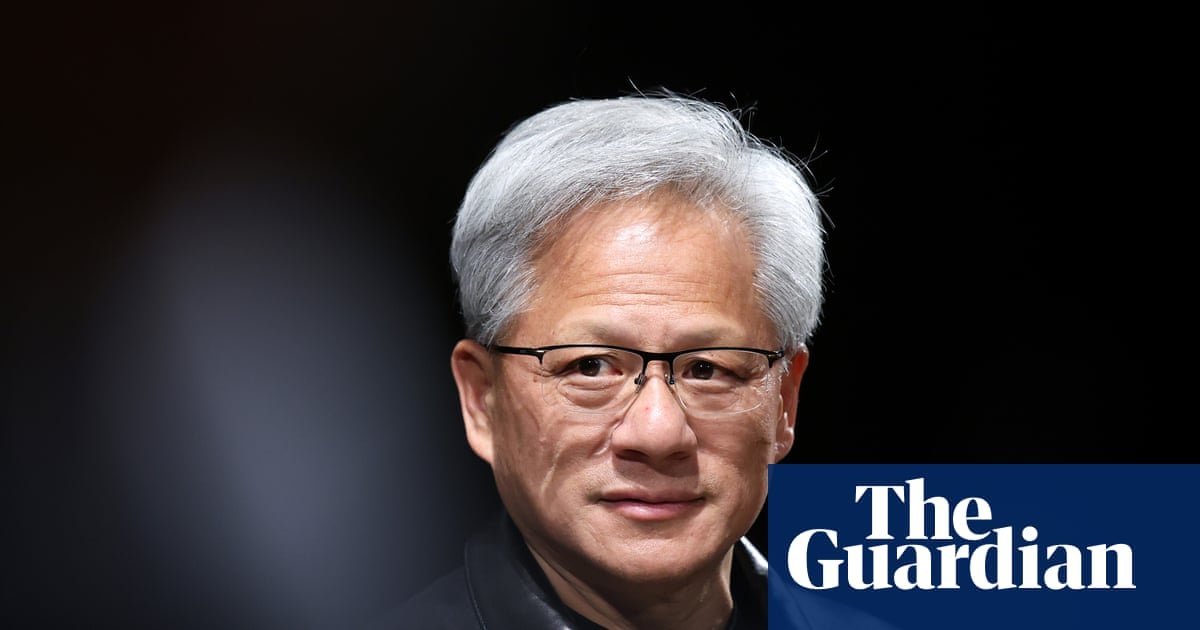
Can the AI economy survive without its “central bank”? What does Jensen Huang’s fall mean for the world’s second-most valuable company, and what might a tremor in its fortunes mean for the world?
Nvidia’s sky-high valuation is based on the fact that it designs and sells the advanced AI chips – called graphics processing units (GPUs) – that underpin the AI economy. Without these, AI models such as ChatGPT and Claude could not be trained and would not run.
This has made the chipmaker arguably the most important player in AI, and – at times – the most valuable company in the world. Huang’s departure sent shares in Nvidia plunging 13% in early trading.
Nvidia is not the only company in the world that designs these chips. Most leading tech companies, including Microsoft, Meta and Google, are trying to make their own lines of AI chips. Some of these, like Google’s tensor processing units (TPUs), appear to be at least as good as Nvidia’s, and even better for certain purposes.
What makes Nvidia irreplaceable – and far more integral to the AI economy – is its web of relationships, most of these led by Huang himself.
One aspect of this is Nvidia’s complex web of ties with the companies actually building AI infrastructure, a mess of circular finance that implicates US tech giants and many of the world’s governments.
In recent years, Huang has been the kingmaker when it comes to AI. In 2025, he met numerous world leaders – including Mohammed bin Salman, Keir Starmer and Emmanuel Macron – persuading them of the urgency of developing “sovereign AI” with his product. His presence served as a guarantee of those nations’ AI plans. These meetings were followed by deals in which Nvidia announced that it had arrangements to supply those governments with precious, hard-to-get chips.
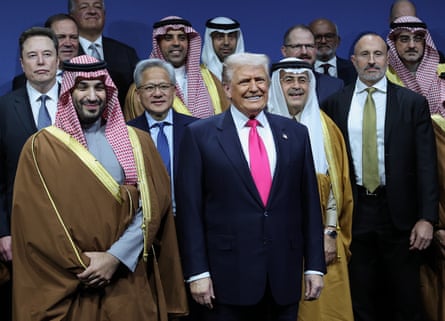
None of these agreements were particularly transparent. While Nvidia appears to have promised 260,000 advanced chips to South Korea, for example, it was never immediately apparent when these chips would be delivered, who would pay for them and on what terms.
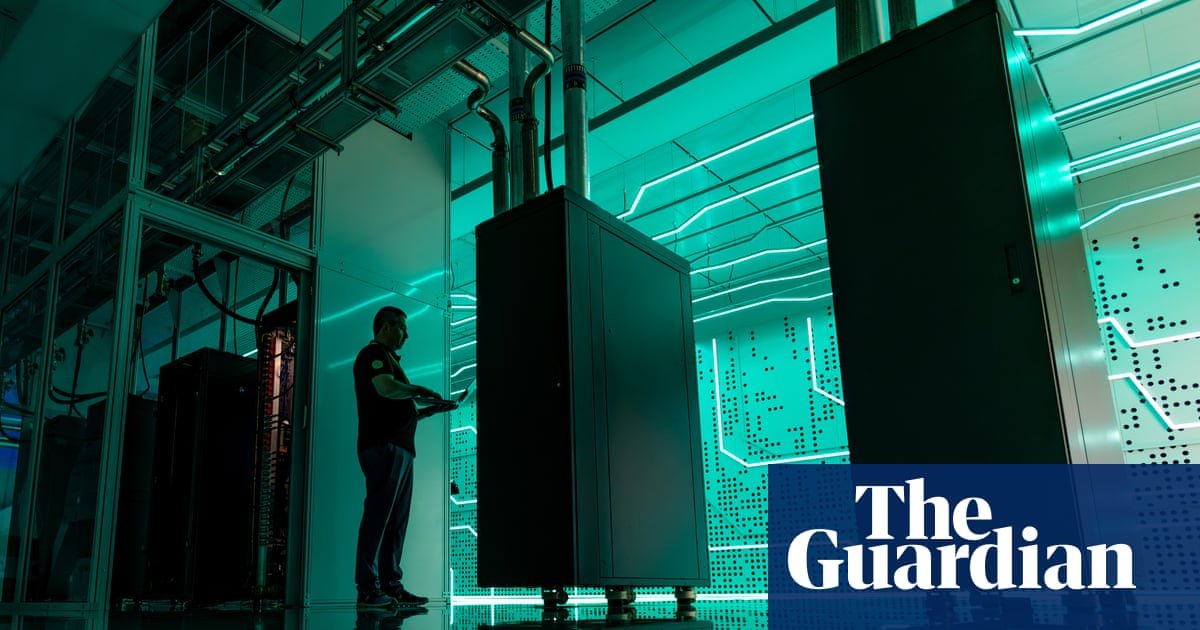
Meanwhile, Nvidia financed a web of companies – called “neoclouds” – to buy its chips and put them in datacentres, there to be rented to the world’s biggest AI companies. These neoclouds have done wonders for Nvidia, propping up demand and keeping the risk associated with building datacentres and finding customers for them off of its balance sheets.
These neoclouds are not the only thing Nvidia financed. It has become known as the “central bank of AI” because, at this point, it is enmeshed in almost every layer of the AI economy. Nvidia has invested in a spate of AI startups that could become future customers. It has offered massive sums of cash to companies like OpenAI, to be used for the purposes of purchasing its chips. All this investment runs to hundreds of billions of dollars – Nvidia’s money, circling again and again through a limited set of accounts.
Then there is Nvidia’s relationship with a Taiwanese company called TSMC, the Taiwan Semiconductor Manufacturing Company. TSMC is the company that makes the world’s AI chips, churning them out across several fabrication plants on the north-west side of the island.
As far as geopolitics goes, TSMC is arguably more important than Nvidia or any other chip designer on earth. Companies other than Nvidia can design AI chips. But TSMC manufactures the overwhelming majority of them, and has no real competitor. This is because manufacturing AI chips is one of the most expensive and challenging industrial processes humanity has ever created.
Each chip is etched with nanometre lines by lasers working in the extreme ultraviolet spectrum, which cost billions of dollars and two decades of research to develop. While TSMC has itself refined its process to make these chips for over two decades, it still has only a 60% yield rate for its most advanced chips, which means that 40% of the chips that come off its production line have defects. It’s a staggeringly high rate for one of the most expensive technologies in the world.
Nvidia has worked extremely closely with TSMC, and played a unique role in its position as the world’s unrivalled producer of GPU chips. It has helped TSMC develop its processes and products. Lore has it that Huang wrote the chief executive of TSMC a personal letter introducing himself in 1997, nearly 30 years ago. Other companies can’t match this. These are high-trust relationships built over decades.
Will it all be the same without Huang? This question is almost impossible to answer because Nvidia’s relationships are so opaque. Investigators following the supply chain of its chips run up against secretive corporate contracts and tangled export records. There is known to be a years-long queue from the company’s customers to obtain its chips – but questions regarding who is in it, in what order, and how many of Nvidia’s chips have been shipped remain open.
This murkiness was brought into sharp focus by Megaspeed, a small Singaporean company that was getting access to lots of cutting-edge GPUs, even as other companies struggled. One of Megaspeed’s executives, Alice Huang, was later revealed to be having an affair with Nvidia’s chief executive, and to be an alleged Chinese spy. This relationship appears to have allowed Megaspeed to secure roughly $7.5bn (£5.67bn) worth of Nvidia chips, which were allegedly smuggled in to China.
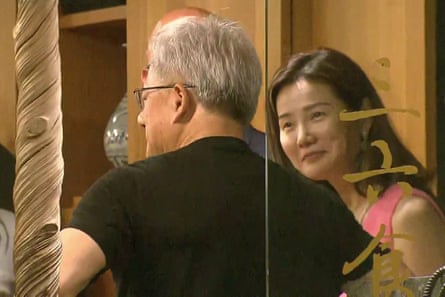
Was Huang and his glad-handing a source of this opacity? Perhaps a new chief executive would bring some transparency and predictability to all of this – at least in terms of chips contracts and supply chains.
But what else would be laid bare if the “central bank of AI” grew more transparent, or were subject to the harsh light of external scrutiny? Lots of questions are shrouded within its contracts and relationships. Lots of elaborate debt structures and handshake agreements might yet have to be uncovered.
Huang dazzled the world in his leather jacket; he convinced heads of government that his technology held the keys to transformation and to power. When the patina wears off, will this still seem the case?