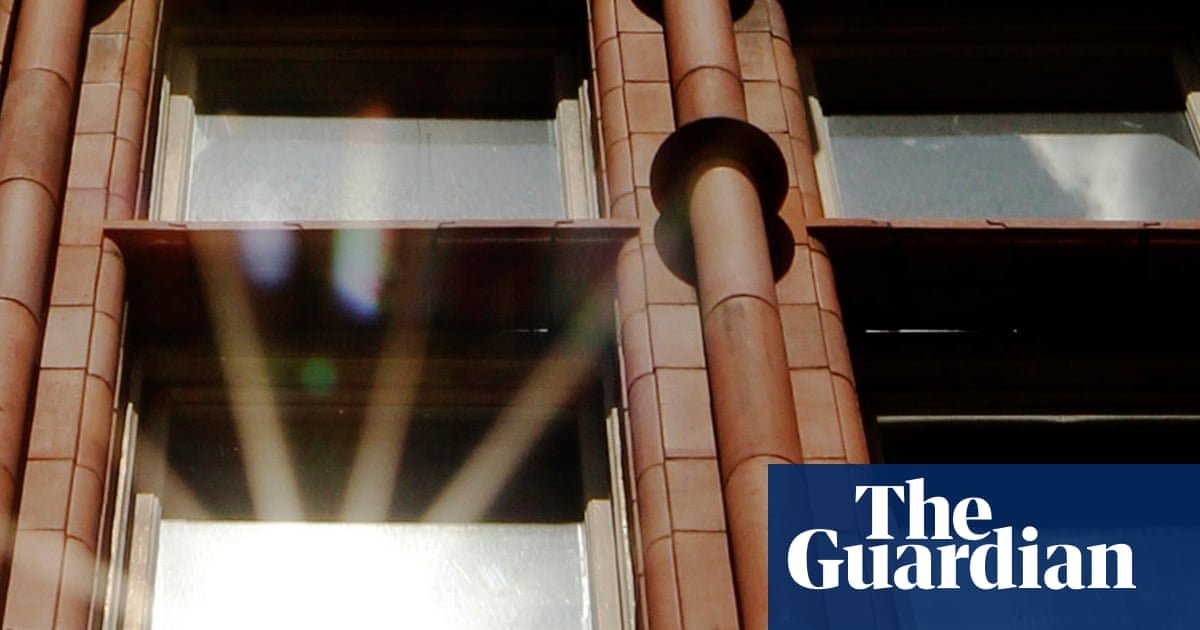
The sun reflecting off an ordinary window.
If the glass of a low-E window is slightly bowed it can concentrate the reflected sunlight on to a particular spot, such as the neighbours’ wooden decking.
Low-emissivity windows also keep houses warm in winter, but use on bowed glass can have magnifying-glass effect Low-emissivity or low-E window glass is a useful green technology for keeping buildings warm in winter and cool in summer … but a rare side-effect can set the neighbours’ property on fire.
The glass is coated with a thin layer of metal or metal oxide which lets visible light through but acts like a mirror in the infrared.
Heat from the interior is reflected back in, retaining warmth in winter, while unwanted solar radiation is repelled in summer.
But that reflected heat must go somewhere, which may be a problem if the glass is slightly bowed.
The curved window acts like a magnifying glass, focusing heat on a spot or along a line.
There have been instances when concentrated reflected sunlight has scorched wooden decking, melted artificial turf and damaged plants.
In one extreme case, a series of fires were traced to the neighbours’ newly fitted low-E windows.
After three fires in one week, the affected homeowner moved a propane tank that was close to the focal point. skip past newsletter promotion after newsletter promotion Several high-profile cases mean architects now know to avoid the curved reflecting glass that can produce “skyscraper death rays” in larger buildings.
But the small domestic version may be less obvious, as any low-E window could potentially be a firestarter if it is poorly manufactured.
Explore more on these topicsEnergy Weatherwatch Construction industry features Share Reuse this content