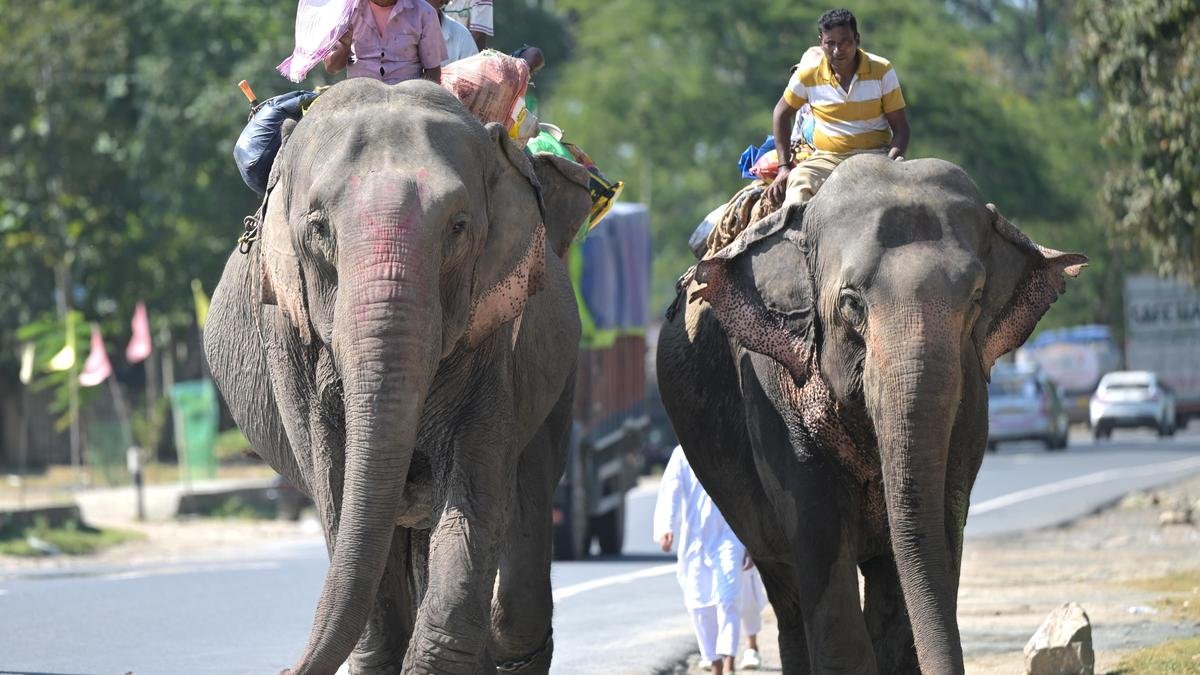
The Madras High Court on Thursday (October 1, 2026) dismissed a writ petition, which sought a direction to a Supreme Court-appointed high-powered committee in New Delhi to examine the legality of the transfer of juvenile elephants from Assam to various temples in Tamil Nadu.
The First Division Bench of Chief Justice Sushrut Arvind Dharmadhikari and Justice G.
Arul Murugan pointed out that the petitioner, Mridula Gopalakrishnan, of Chennai, had rushed to the court the very next day of submitting her representation to the high-powered committee.
Supreme Court panel urged to halt transfer of Assam elephants to Tamil Nadu “The petitioner approached this court less than 24 hours after submitting her representation to the administrative authorities, without affording the competent authority even a single business day to examine, evaluate, or act upon the request,” the judges wrote.
The Bench said that the High Courts had been empowered to issue a writ of mandamus under Article 226 of the Constitution to enforce the performance of a public duty where a statutory authority, despite being formally called upon to act, had either expressly refused performance or by inaction demonstrated an unmistakable failure to perform its statutory obligation.
Young elephant ‘Durga’ from Assam to reach Madurai Meenakshi temple; activists raise concerns over transfer “A prerequisite for seeking mandamus is the existence of a prior demand for justice and its subsequent denial or inaction within a reasonable timeframe...
In the absence of an actual or implied refusal, the essential prerequisite for invoking Article 226 of the Constitution of India remains unfulfilled.
Flinging a representation to an authority one day and filing a writ petition the very next morning degrades the judicial process into a routine post-office exercise,” the judges said.
They went on to add that the authorities concerned must be given reasonable lead time to apply their technical expertise especially when complex factual and statutory evaluations such as verifying provenance, conducting genetic profiling, and determining ownership status of the captive animals had to be done.
Tiruvannamalai Arunachaleswarar Temple receives eight-year-old elephant Hiralal from Assam “Approaching the court prematurely bypasses this established statutory mechanism and asks the Court to assume the role of a primary tribunal of fact before the expert body has even had an opportunity to open the file.
It deprives executive agencies of the statutory window required to process administrative applications on their merits.
Premature litigation of this nature adds unnecessary burden to the court docket and cannot be entertained,” the Bench concluded.