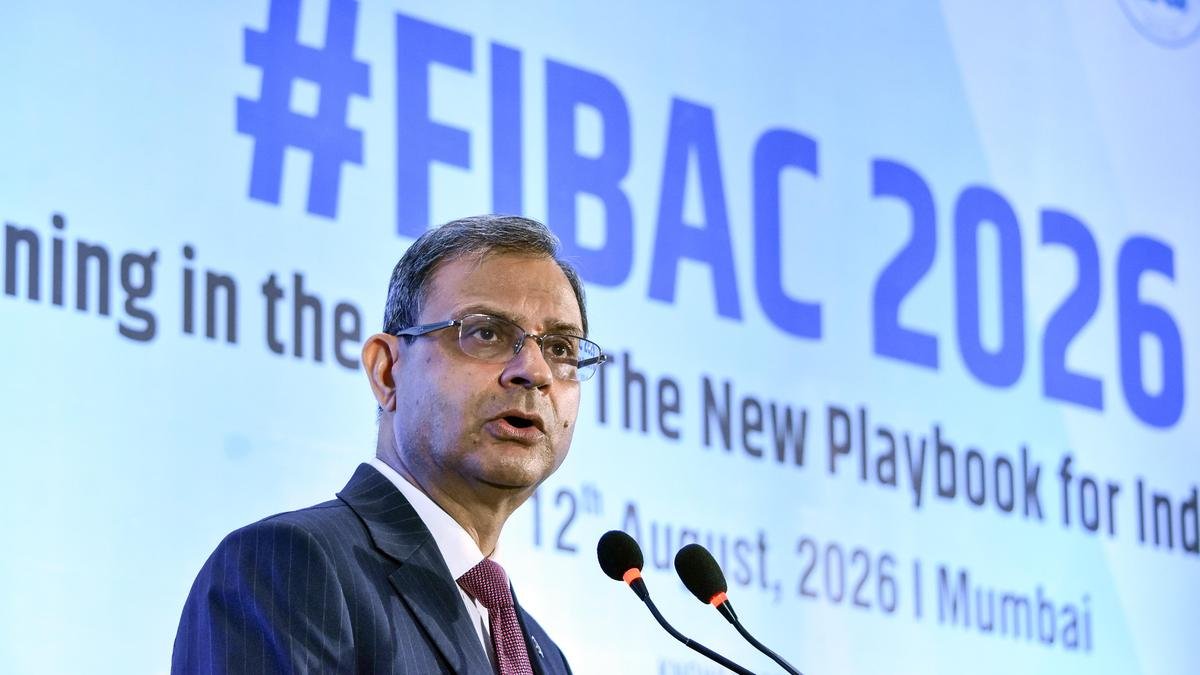
The biggest risk of deploying Artificial Intelligence (AI) in banks is the erosion of human judgment and accountability, Reserve Bank of India (RBI) Governor Sanjay Malhotra said on Tuesday.
“No matter how sophisticated the [AI] model, the responsibility for a bank’s decisions rests with the bank, not with its algorithm. “The model decided” can never be an acceptable answer to a customer, an auditor, or the Reserve Bank,” he cautioned.
“Meaningful human oversight – the ability to explain, to intervene, and, where necessary, to override – must remain a design principle, not an afterthought,” Mr. Malhotra said while delivering the inaugural address at the FIBAC 2026 Conference, Mumbai on the theme “Winning in the AI Era: The New Playbook for Indian Banks”.
Urging every institution to maintain a complete inventory of every AI system in use – including those embedded in vendor products – so that neither the banks nor the RBI are ever surprised by what is running inside the institution; he said all banks must establish board-approved AI governance policies, with clear accountability for outcomes, not merely for technology procurement.
He said banks must build the capacity to explain AI-driven decisions that materially affect a customer, particularly in lending and fraud outcomes.
“Red-team and stress-test AI systems before deployment and periodically thereafter, just as you would stress-test any other material risk,” he suggested.
“Preserve meaningful human oversight at every point where an AI system’s error could cause material harm to a customer or to financial stability,” he said, adding the RBI would stay engaged with the banking industry.
“We also remain committed to providing the regulatory sandbox as a safe space for testing innovative use cases. We shall continue to facilitate and catalyse development of common utilities such as MuleHunter and the proposed Digital Payments Intelligence Platform to strengthen fraud detection and safeguard the system,” he said.
The Governor said AI would define this decade of Indian banking as decisively as liberalisation defined the 1990s and digitalisation defined the 2010s.
Highlighting that AI, deployed well, can close existing gaps in financial inclusion faster than any preceding generation of technology, he said “deployed carelessly, it can also entrench new forms of exclusion and instability at a pace regulators and banks may struggle to keep up with.”
Stating that AI is a new way of doing business, of running a bank, he said it is a shift in how banks evaluate risk, serve customers, price capital, and organise institutions.
“Many banks are already deploying AI, and many more are considering it. The only question is whether you shape the AI journey with intent, or you let it shape you by default,” he emphasised.