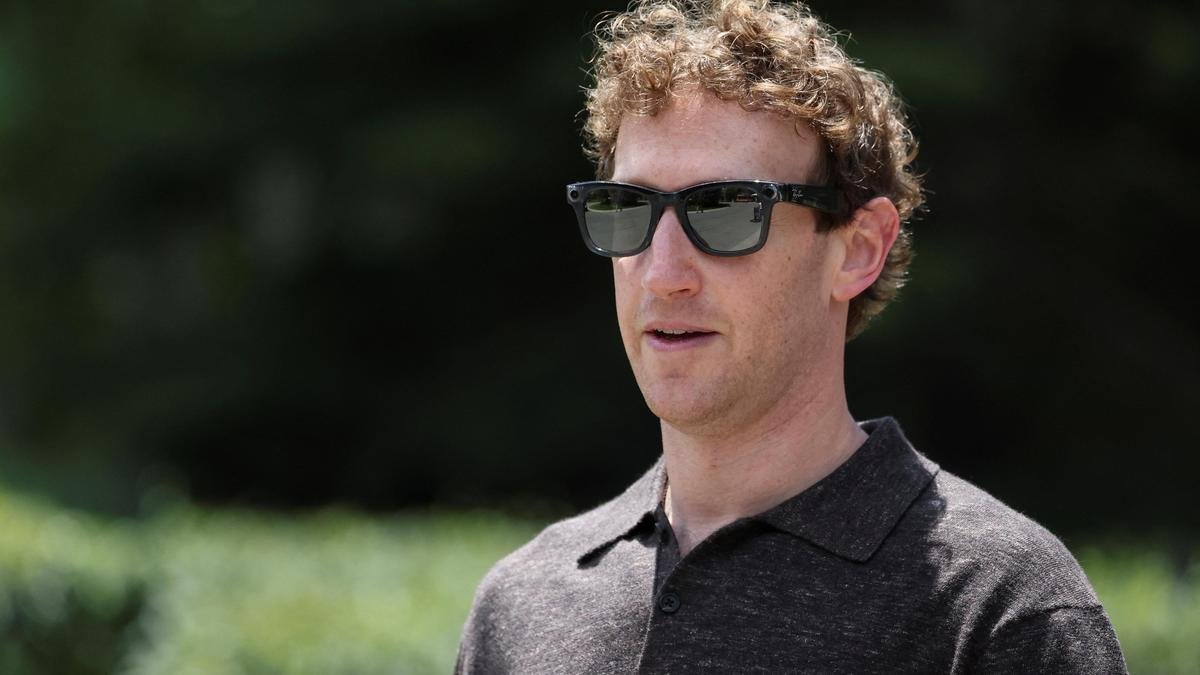
Meta chief executive officer Mark Zuckerberg conveyed his “apologies” for child sex abuse material (CSAM), “deepfake content and errors in operating the platform,” government sources said, after Joel Kaplan, the technology giant’s global head of public policy, met with officials from the Ministry of Electronics and Information Technology on Wednesday (August 5, 2026).
“Meta will be called again,” the sources said, indicating that further meetings are on the slate.
The delegation led by Mr.
Kaplan also met Information Technology Minister Ashwini Vaishnaw.
Parliamentary IT committee to Meta: Apologise for PM video removal or lose safe harbour Mr.
Kaplan had been summoned, among other things, to explain why Prime Minister Narendra Modi’s first video message to the youth posted on July 23 was temporarily removed from Facebook.
The company had attributed it to an error.
The government had insisted on full accounting of the error and a personal apology from Mr.
Zuckerberg.
The informal readout of the meeting did not include a specific reference to that post’s takedown.
“I apologised to the Minister on behalf of Meta for the error restricting PM Modi’s post,” Mr.
Kaplan said in a statement shared by a Meta spokesperson.
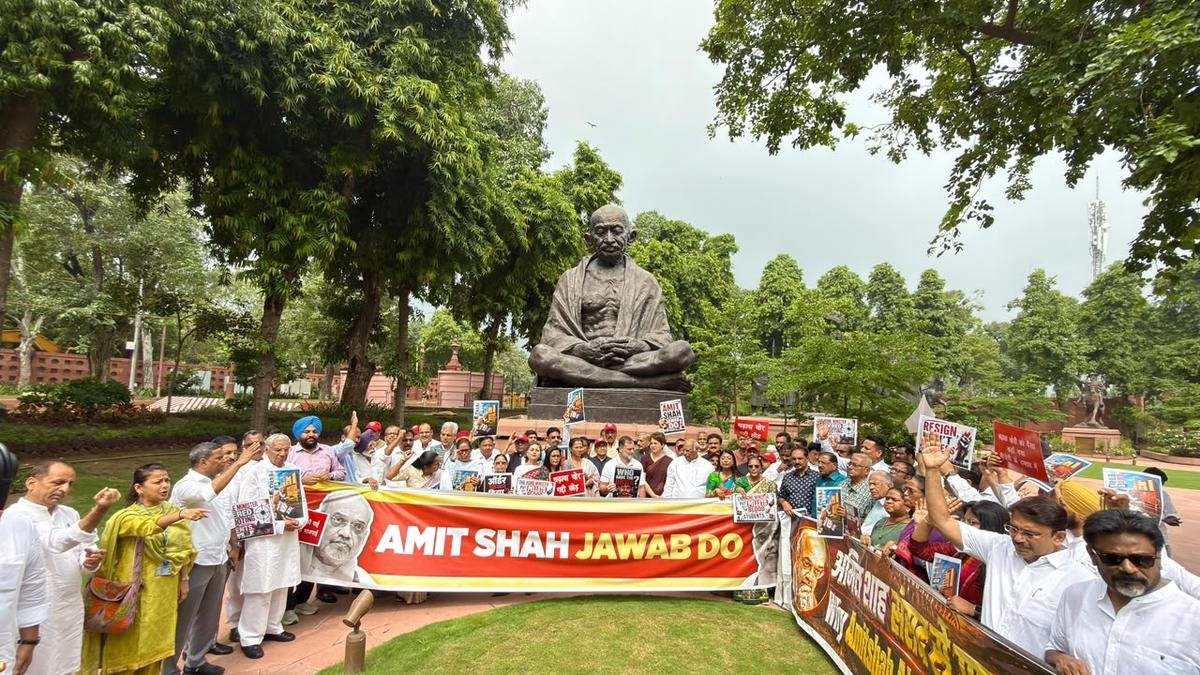
The meetings follow heightened concerns around Instagram’s role in amplifying the protests at Jantar Mantar last month, as well as the brief takedown of Mr.
Modi’s post on Facebook.
Government officials asserted that Meta was “not covered under the Intermediary definition” — a significant statement — since this would make the company liable in court for every single post by users.
The government also dressed down the company in a BBC report on advertisements appearing on Instagram promoting CSAM.
Bombay High Court orders removal of deepfake videos targeting Nitin Gadkari over ethanol policy The official sources added, “They select who receives the content.
Safe harbour under IT Act is not applicable.
They admitted that a lot of money was paid for boosting a certain type of content.
They apologised and regretted the mistake … Meta accepted the mistake that a lot of illegal content was promoted...
Paid promotion carried out for specific audience.” Standing committee Earlier in the day, according to a letter from the Lok Sabha Secretariat, the Parliamentary Standing Committee on Communications and Information Technology, headed by the Bharatiya Janata Party’s Nishikant Dubey, demanded that Google India’s safe harbour be lifted, thereby leaving the firm liable for individual users’ posts as a publisher.
The letter, seen by The Hindu, cited cybercrime complaints in Hyderabad where complainants lost over ₹48 lakh to cyberfrauds from apps downloaded from Google Play, where Google’s India country manager was named as a co-accused.
Government to raise CSAM lapses, wrongful account action issue with Meta; global team in India on Aug 5-6 This follows a similar demand for Meta, where the committee sought the withdrawal of Instagram’s safe harbour protection following the brief takedown of Mr.
Modi’s video.
The committee also cited the reporting on CSAM advertisements on Instagram.
The letter was addressed to IT Secretary S.
Krishnan and copied to Home Secretary Govind Mohan.
The IT Ministry and Meta did not have an immediate response to a query on the letter when contacted by The Hindu.
Google declined to comment.
“During the deliberations, the Committee demanded an apology from Mr.
Mark Zukerberg, Meta Chief on this issue,” the committee wrote in the letter.
“If he fails to tender an unqualified apology within 3 days of receipt of this letter, the protection/immunity given under Section 79(3) of IT Act may be withdrawn and action taken against him as a Publisher.” Section 79 of the IT Act, 2000 says that “an intermediary shall not be liable for any third party information, data, or communication link made available or hosted by” them, subject to certain conditions.
The IT Rules, 2021 are the main way those conditions have been expanded by the government, including requirements of taking down content upon notice by law enforcement agencies or designated government officers.
Several WhatsApp users say their accounts 'put under review' It is unclear if safe harbour can be revoked by the government.
“There is no express legal provision under the present legal framework through which the Government can directly remove or revoke the safe harbour protection provided to intermediaries under Section 79 of the IT Act,” Ravi Goyal, a partner at law firm Scriboard, told The Hindu.
“Moreover, the safe harbour protection provided under Section 79 is not a blanket or platform-wide immunity and instead applies in relation to specific content or instances.
Therefore, even if an intermediary is found not to be entitled to such protection in respect of a particular piece of content or instance, it could still continue to avail itself of the protection under Section 79 for its services, subject to compliance with law.
Thus, such actions are determined on a case-to-case basis by a court of law.” At a hearing where Meta, Google and X (formerly Twitter) representatives were speaking before the committee on Monday, MPs from the Opposition pushed back against the ruling party’s line of questioning, saying content moderation on social media platforms should not be subject to political influence.