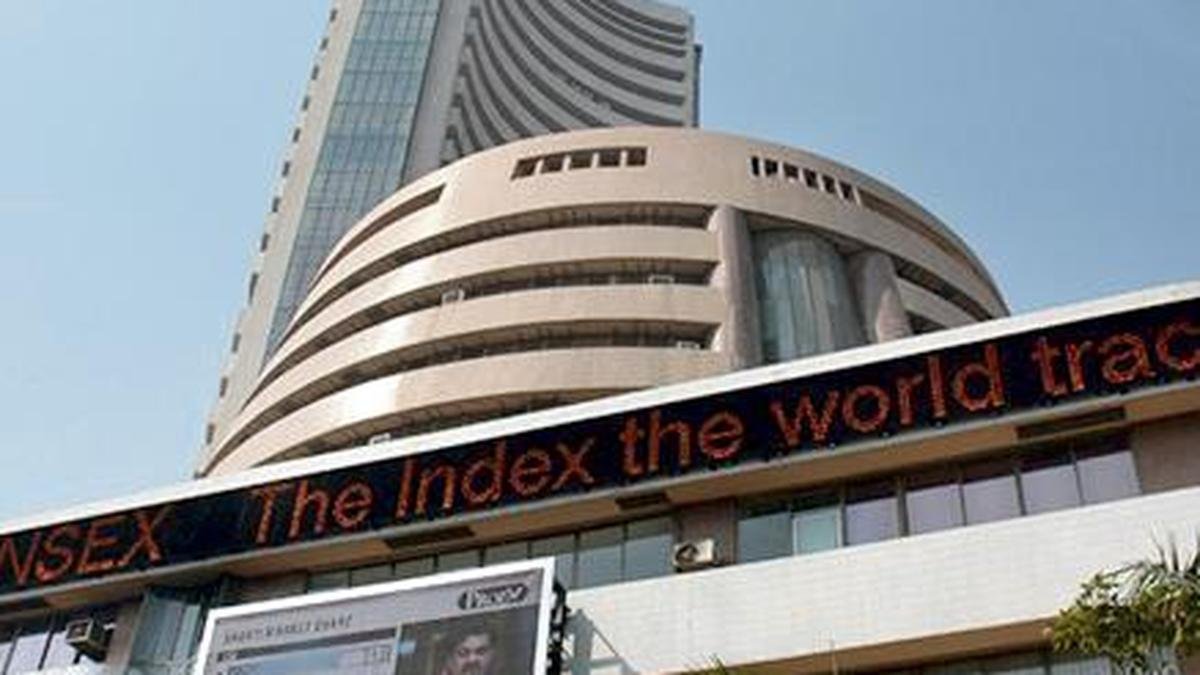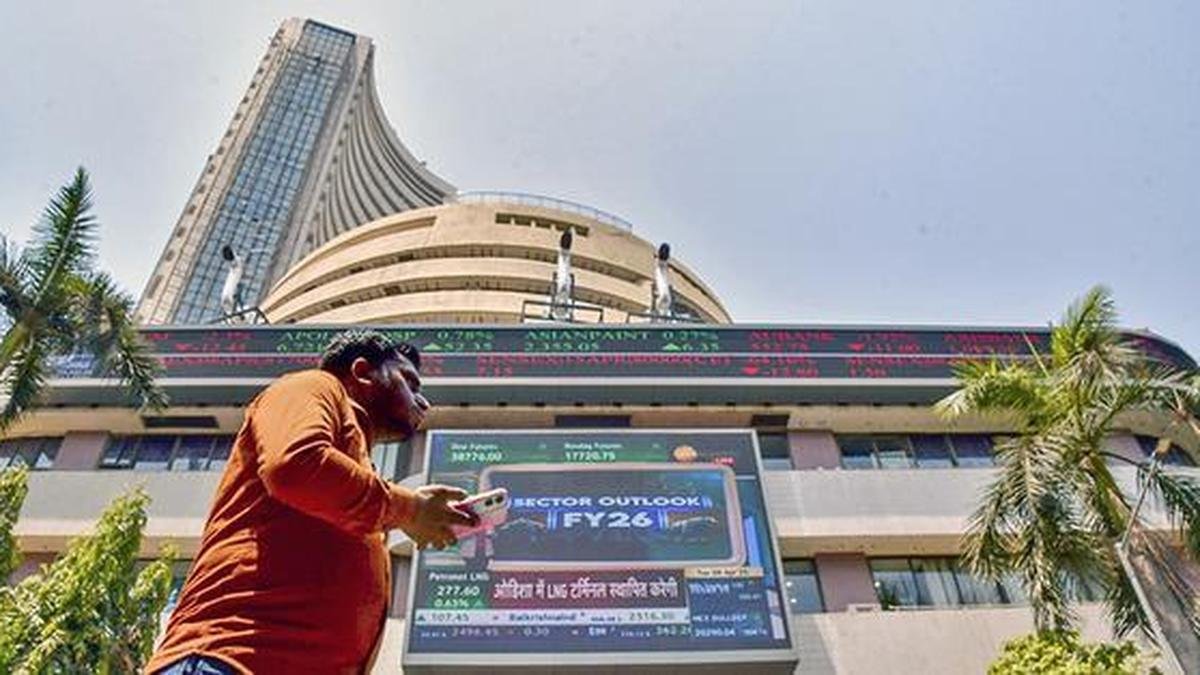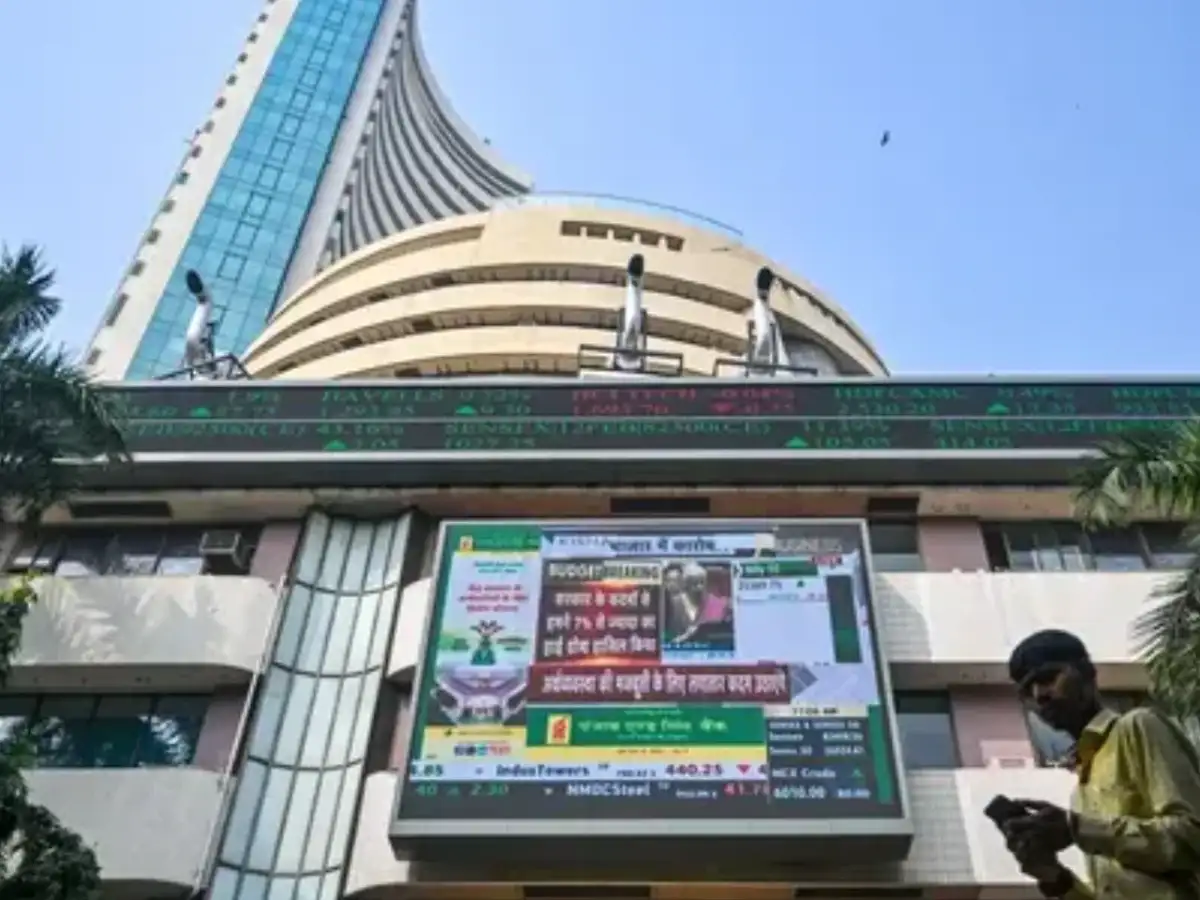
Indian equity benchmarks ended little changed on Tuesday, with a mild negative bias, as losses in banking, auto and pharma stocks weighed on the market. The Nifty slipped below the 24,100 level and closed at 24,055.8, down 24.6 points or 0.1%. The index stayed near the key 24,000 support zone through the session.
The BSE Sensex ended at 76,944.28, lower by 12.99 points or 0.02%, as gains in IT, FMCG and select heavyweights helped limit the fall.
Broader markets saw sharper selling. The Nifty Midcap 100 fell 1%, showing that pressure was deeper outside the largecap space. Sectorally, Nifty Bank declined 0.7% and Nifty Auto slipped 0.6%, while Nifty IT gained 0.9%, helping cushion the fall in the benchmarks.
Maruti, SBI, IndiGo, Bajaj Finserv, M&M, Axis Bank were top losers on the Sensex, falling up to 4%. Meanwhile, ITC shares rose almost 4%, followed by HCL Tech, Bharti Airtel, Reliance and Kotak Mahindra Bank.
Analysts say markets are increasingly balancing India’s strong growth momentum against mounting global uncertainties. Better-than-expected GDP growth underscores the resilience of domestic demand and the broader economy. However, escalating geopolitical tensions in the Middle East and a more hawkish Federal Reserve have renewed concerns about inflation and the prospect of elevated interest rates for an extended period.
"Persistent cost pressures may weigh on both corporate earnings and the pace of demand recovery. At the same time, higher US bond yields and renewed foreign capital outflows have kept investor sentiment cautious, with financial stocks facing the most pressure, while FMCG and IT sectors continue to attract defensive buying," said Vinod Nair, Head of Research at Geojit Investments
"In the near term, market trends are likely to be driven by developments in energy markets, global monetary policy expectations, and capital flows into emerging economies," Nair said.
Oil prices jumped 2% and world shares skidded Tuesday as recurring violence in the Iran war after more than a month with no significant fighting heightened uncertainty over the future of the conflict.
Brent crude gained 2% to $92.35 per barrel. It gained 2.7% on Monday after the US attacked rocket launchers on an Iranian island on Sunday, saying they were preparing to launch mines into the Strait of Hormuz. Iran responded by launching missiles at US sites in Jordan, all of which were intercepted.
Rising bond yields hit global markets
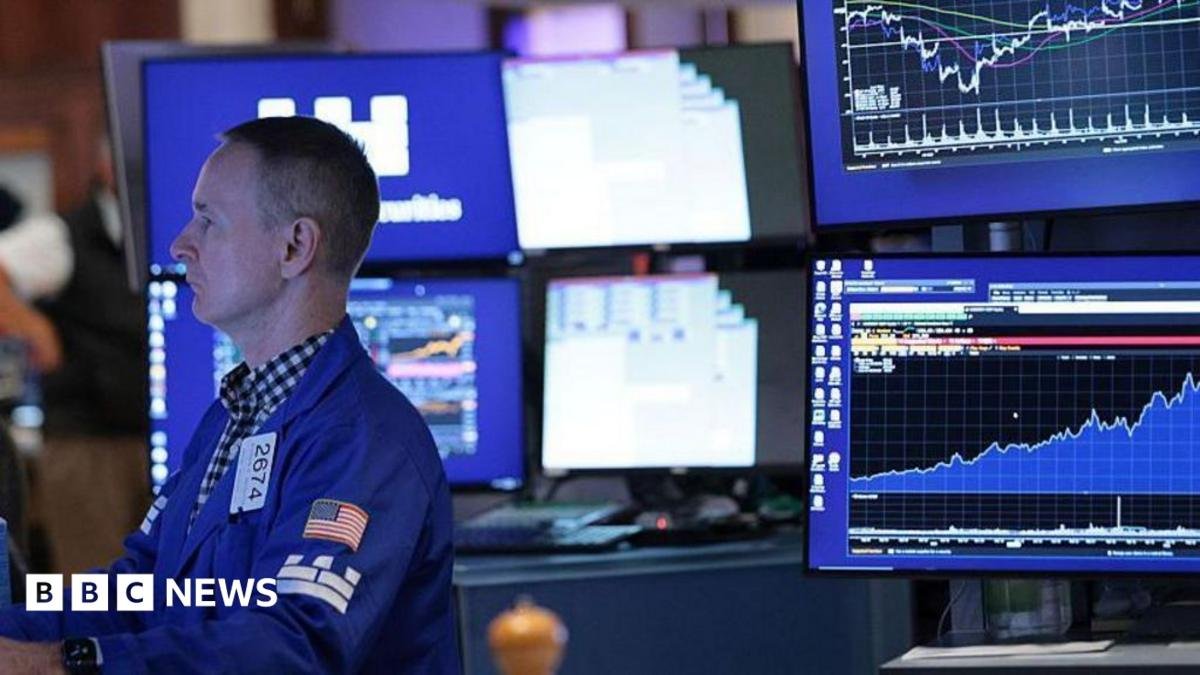
Global bond yields hit major new highs on Tuesday as renewed fighting in the Middle East lifted oil prices and traders braced for interest rate hikes, putting pressure on stock markets around the world.
Japan's 10-year benchmark yield hit 3% for the first time since 1996, pushing up government borrowing costs, as investors also fretted about ever higher public debt. Britain's 10-year yield hit its highest since 2008 above 5.24%, while the equivalent German yield rose to a 15-year high at 3.36%.
The 10-year US Treasury yield, a benchmark for prices across asset classes, rose to 4.79% — its highest since early 2025.
In Asia, Hong Kong's Hang Seng dropped 1%, with the weak tone set by the lacklustre debut of clothier Shein Global. European shares also dipped on Tuesday, pressured by a fresh rise in government bond yields as investors braced for higher interest rates.
The pan-European STOXX 600 slipped 0.2% to a more than one-week low by 8:15 GMT. Britain's FTSE 100 fell 0.5% as trading resumed after Monday's bank holiday while Germany's DAX slipped 0.5% and France's CAC 40 gained 0.2%.
The rupee surged to a two-month high against the US dollar on Tuesday, powered by aggressive central bank intervention and supported by flow-related dollar offers from foreign banks.
The rupee settled above 95 to the dollar mark for the first time in two months, defying a selloff in Asian currencies triggered by a global bond rout that deepened with Japan's benchmark bond yield hitting the key 3% barrier for the first time in 30 years.