NSW government imposes water restrictions after Menindee water volumes fall below 2021 levels
Sign up for climate and environment editor Adam Morton’s free Clear Air newsletter here
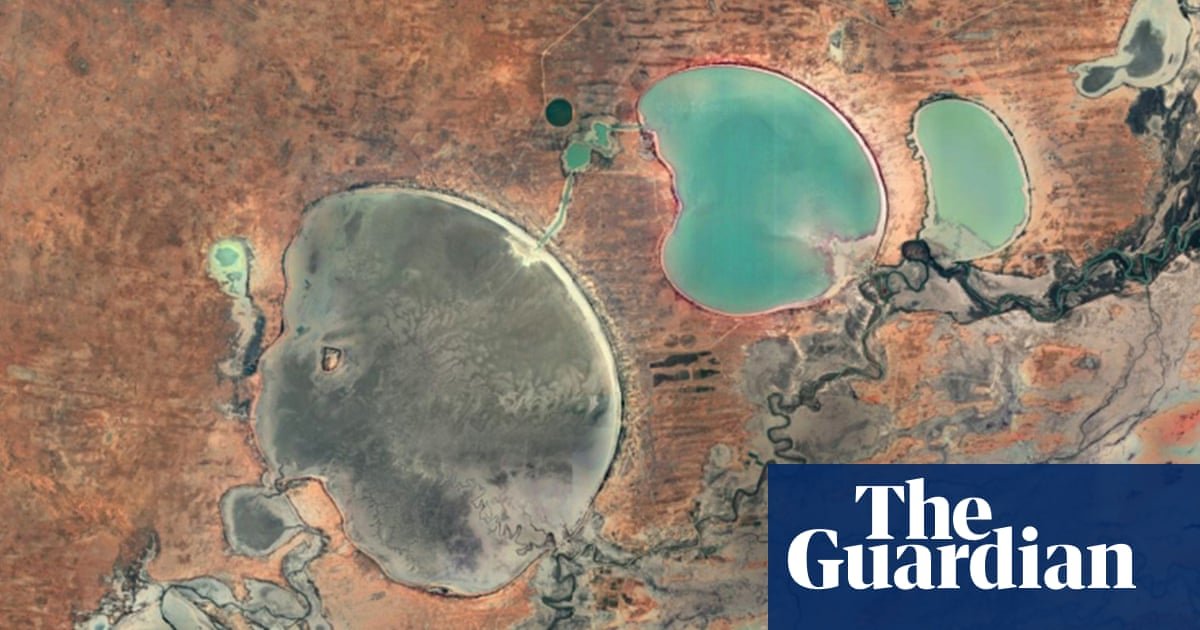
Water levels at Menindee Lakes in western New South Wales have fallen to their lowest point in five years, prompting the state government to impose upstream water use restrictions as experts warn of potential mass fish deaths over summer.
Combined volume at Menindee Lakes fell below 480 gigalitres earlier this month, the first time since 2021.
In the upper Menindee Lakes, water volumes have dropped below 250GL, a level that triggers temporary state water restrictions across parts of the northern Murray-Darling basin.
The restrictions limit access for some irrigators and are intended to preserve water for critical human needs and the environment.
It follows periods of low rainfall in the catchment throughout the past 12 months, with experts warning of a growing risk of summer fish kills unless flows down to Menindee Lakes via the Darling-Baaka River improve.
Menindee was the site of catastrophic fish kills in 2018, 2019 and 2023, which saw millions of dead fish wash up along stretches of the Darling-Baaka.
“Government officials are predicting with a level of certainty that unless there’s more water flowing into the Baaka-Darling River that there will be fish kills at Menindee this summer,” said Prof Jamie Pittock of the Australian National University and the Wentworth Group of Concerned Scientists.
“We need a major rainfall event to happen and for the state governments to prevent irrigators from pumping out the first flush of water.”
Sign up to get climate and environment editor Adam Morton’s Clear Air column as a free newsletter
Graeme McCrabb, who was one of the first Menindee residents to raise the alarm about the 2018-19 disasters, said the combined Menindee Lakes had reached “drought reserve volumes”.
He said this effectively meant conservation of water “at all costs”. McCrabb said he was hopeful that recent rainfall in Queensland may result in some replenishment of the Menindee system.
“There are some small inflows coming across the Queensland border now which probably give us some hope for the summer. But we would need more on top of that,” he said.
“If we don’t get inflows, the risk [of fish kills] would be very high in January or February.”
He said a milder summer would also lower the risk.
“I’m worried about fish kills to be honest,” McCrabb said.
“It’s a tough time or sad time when the water starts to get that real green algal look.”
Days after winning the 2023 state election, the NSW premier, Chris Minns, and senior state ministers visited Menindee and committed to an investigation of the mass fish kills.
An expert panel was established under the northern basin connectivity program, which recommended limiting upstream overextraction during dry periods to help maintain flows in tributaries into the Darling-Baaka River to Menindee Lakes. This was to try to reduce the risk of catastrophes such as fish kills and large-scale drying.
The panel delivered its final report two years ago but the state government is yet to implement it.
McCrabb said he was disappointed the government had not followed through on the recommendations of the connectivity panel.
“Since the fish kills, government agencies have made no policy changes to improve water quality outcomes,” he said.
Comment has been sought from the NSW water minister, Rose Jackson.