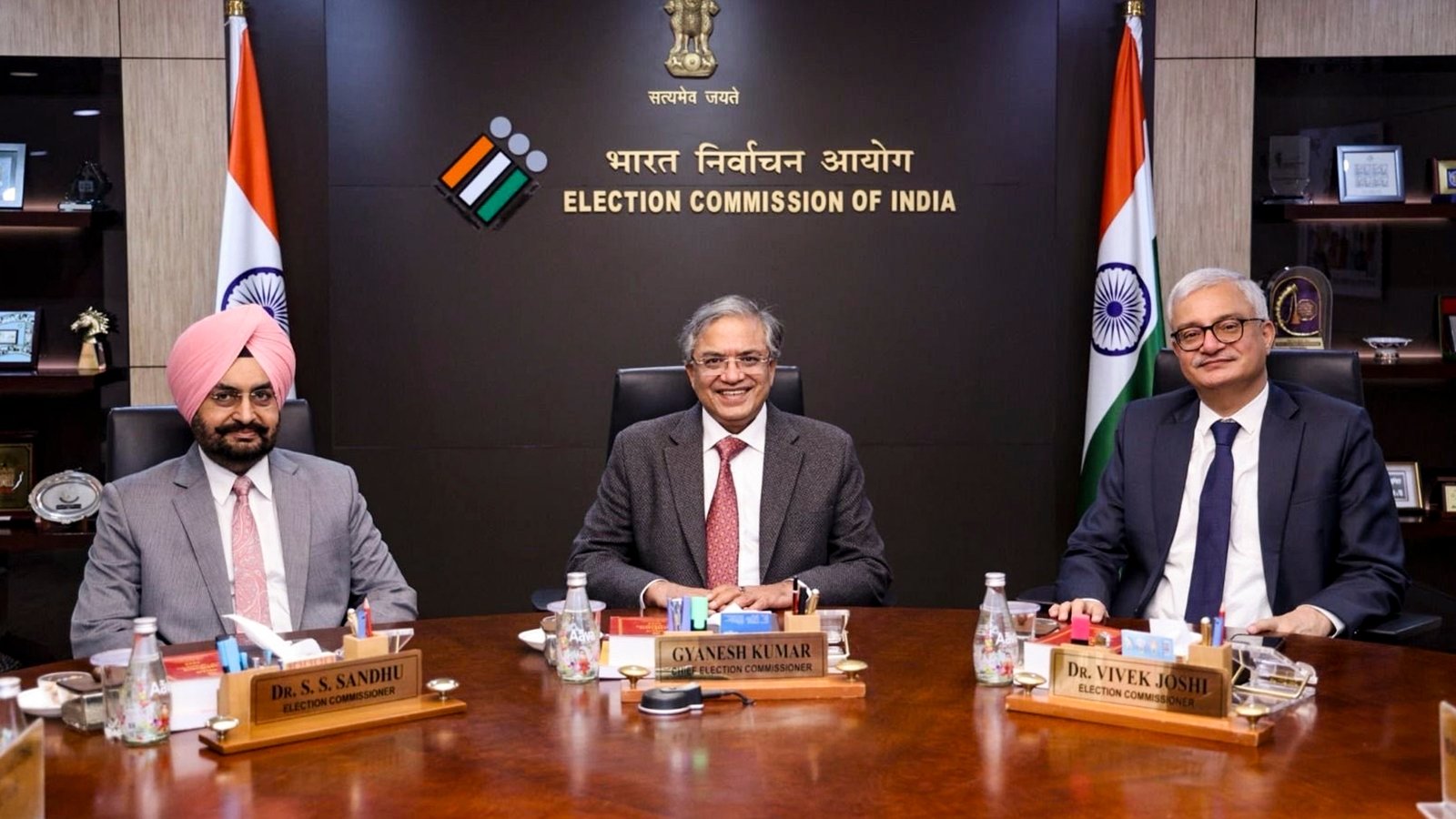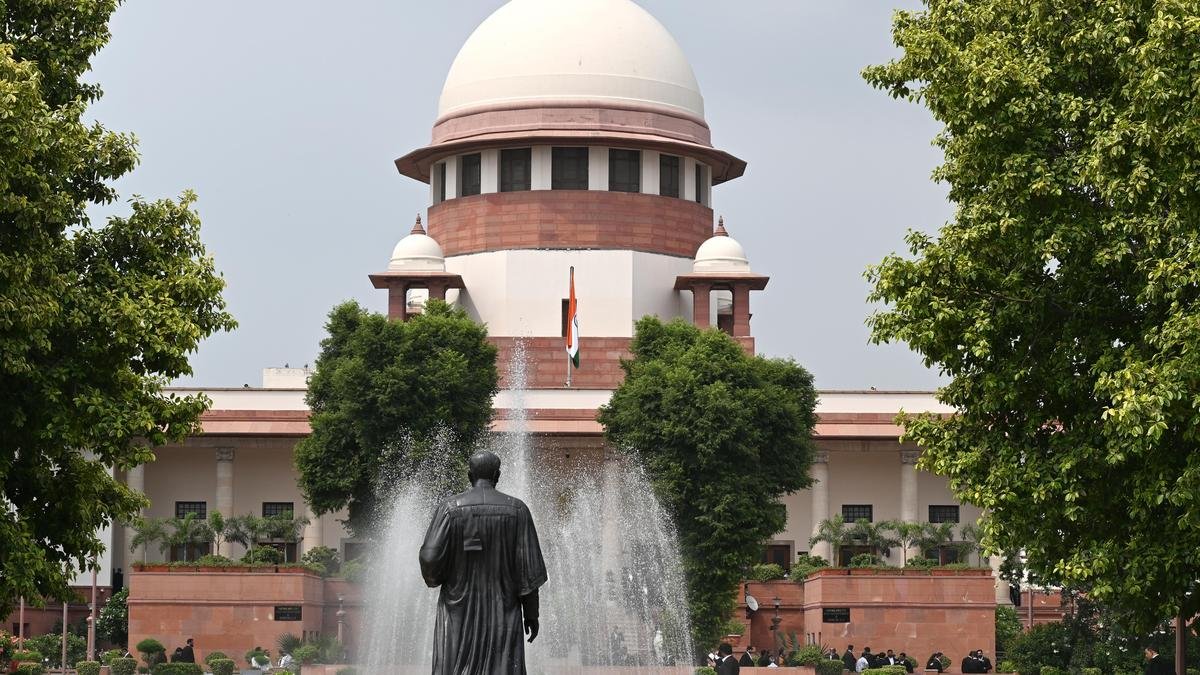
Supreme Court Justice Dipankar Datta on Wednesday (September 23, 2026) agreed that the replacement of the Chief Justice of India with a Union Cabinet Minister in the Prime Minister-led selection panel for Chief Election Commissioner (CEC) and Election Commissioners (ECs) prima facie amounts to an “effective veto” in favour of the Union government and fails the “perception test”, sending wrong signals to the public.
Justice Datta reminded that it is well-settled in law that independence in the appointment and functioning of the Election Commissioners was integral to free and fair elections and an essential part of the Basic Structure of the Constitution.
The judge’s observations came in a separate opinion following a split judgment over the question whether a challenge to provisions of the Chief Election Commissioner and other Election Commissioners (Appointment, Conditions of Service, and Term of Office) Act of 2023 ought to be referred to a Constitution Bench or not.
Justice Satish Chandra Sharma, the puisne judge on the Division Bench, held in favour of sending the case to a Constitution Bench, reasoning that several questions of substantial importance were at stake. The judge invoked Article 145(3) of the Constitution, which mandates a minimum Bench strength of five judges for cases involving substantial questions of constitutional interpretation.
Though the two judges had different opinions on the question of reference, they concurred to forward the case to the Chief Justice of India to ultimately constitute a Constitution Bench of appropriate strength to pronounce an authoritative ruling on the legality of the provisions.
The petitioners had contended that the 2023 Act “defeated” a Constitution Bench judgment in the Anoop Baranwal case, which had constituted a selection panel chaired by the Prime Minister and including the Leader of Opposition in the Lok Sabha and the Chief Justice of India. The 2023 Act, passed within months of the judgment, had replaced the Chief Justice with a Cabinet Minister nominated by the Prime Minister.
The petitioners, represented by senior advocates Gopal Sankaranarayanan, Shadan Farasat, advocates Prashant Bhushan, Kaleeswaram Raj and Neha Rathi, said the Act has statutorily bestowed the Executive “dominant control” and an “effective veto” over the appointment process of the CEC and the ECs.
Justice Datta said the petitioners’ apprehension “prima facie appears to have substance” and at least cannot be dismissed as “fallacious metaphors”. The inclusion of a Cabinet Minister did indeed not pass the perception test.
“The Minister cannot be expected to defy the Prime Minister,” Justice Datta observed in his opinion.
After all, Justice Datta said, the Prime Minister and his Cabinet Minister shared a “collective responsibility” under Article 75(3) of the Constitution, and worked together in the government. “Inclusion of a Minister fails to provide an independent countenance,” Justice Datta observed.
The judge said the Minister’s place in the selection panel would largely be “ornamental”.
Justice Datta, who held new rules omitting the Chief Justice “bad in law”, invoked a cricket analogy: “An umpire selected by a batting team, even if he gives the correct decision, will always be under a shadow of doubt, as he will be perceived to be loyal to the team.”
During the hearings, the apex court questioned the absence of even “one absolutely neutral person” on the Prime Minister’s committee and said it would send wrong signals to the public.
Solicitor General Tushar Mehta, appearing for the government, argued that the Prime Minister ought to be the last authority to distrust.
“If the Prime Minister’s decision is not to be trusted, why not have someone from outside or a former judge to select the Ministers also,” Mr. Mehta asked.
Mr. Mehta had quoted from a 2014 apex court judgment in the Manoj Narula case, saying the Prime Minister’s office held the highest constitutional trust and sanctity.
The law officer had asked if a constitutional court, while deciding the composition of a committee in a statute, could presume abuse of power, bad faith and mala fide intention on part of the constitutional functionaries.
Justice Datta had said the question was not about “lack of faith” in the Prime Minister, but about the principle of “justice not only being done, but shown to be done”.
The Anoop Baranwal judgment by a Constitution Bench in March 2023 had declared that the CEC should be a person of “fierce independence, neutrality and honesty”. It had called for an end to government monopoly and “exclusive control” over appointments to the highest poll body.
Prior to the judgment, the CEC and ECs were appointed by the President on the advice of the Prime Minister. The judgment had brought the appointment process on par with that of the CBI Director.