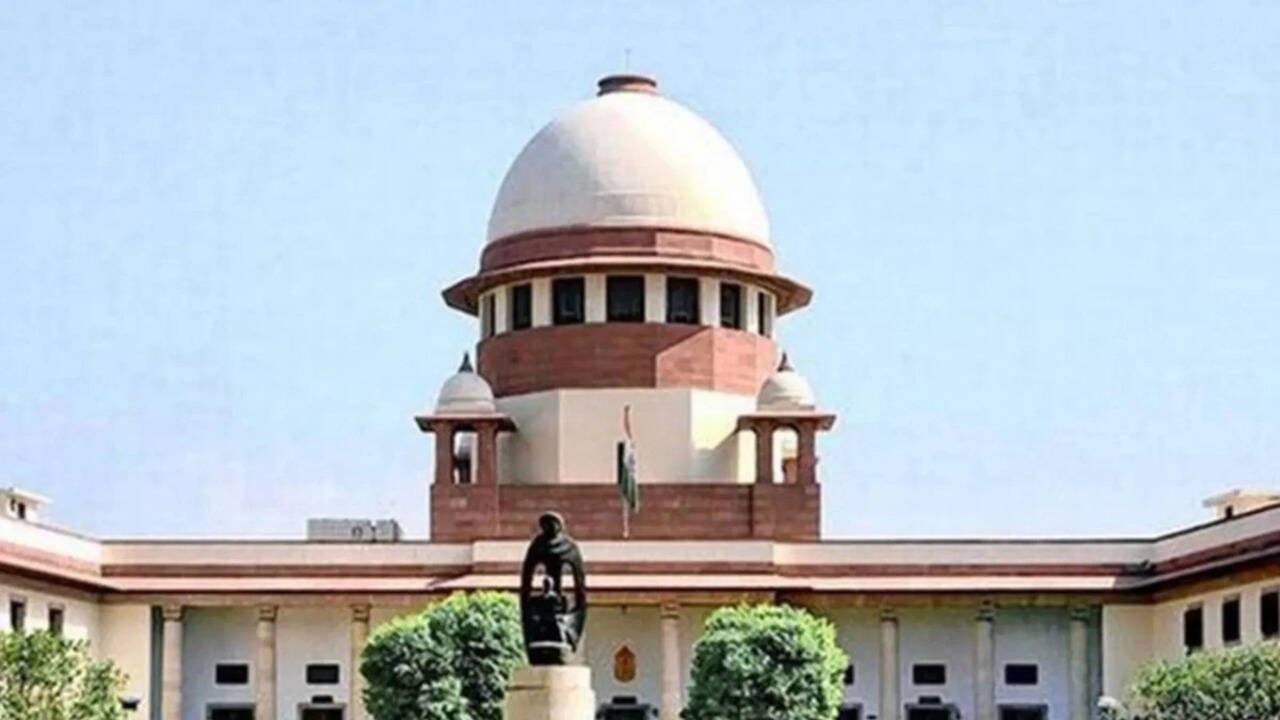
Supreme Court NEW DELHI: The Supreme Court on Tuesday held that a juvenile accused of murder can be tried as an adult if the crime qualifies as a "heinous offence" under the Juvenile Justice Act.The judgement, aimed at clarifying the legal framework for trying minors as adults, held that murder under Section 302 of the IPC must be classified as a "heinous offence" under the Juvenile Justice (Care and Protection of Children) Act, 2015."The offence punishable under Section 302 of the IPC, which prescribes punishment of 'death or imprisonment for life', carries life imprisonment as its minimum punishment.
It would therefore be categorized as a 'heinous offence'," the judgement authored by Justice Pardiwala stated.The juvenile's counsel had argued that since Section 302 of the IPC prescribes "death or imprisonment for life" but does not explicitly mention the word "minimum", murder should be categorised as a "serious offence" rather than a "heinous" one."Life imprisonment is, by necessary implication, the minimum punishment for murder since courts cannot impose a sentence below life imprisonment upon conviction under Section 302," the order held.The legal battle centred on a technicality in sentencing definitions.
Under the Juvenile Justice Act, "heinous offences" are those that carry a minimum imprisonment term of seven years or more.The Patna High Court had held that the appellant needed to be tried as an adult and directed the Juvenile Justice Board to transfer the case to a regular court.
The Juvenile Justice Board had initially decided that the child should be tried by the Board itself, but the appellate sessions court overturned the decision.
The high court later upheld the order allowing the juvenile to be tried as an adult, following which the accused approached the Supreme Court.(With PTI inputs)