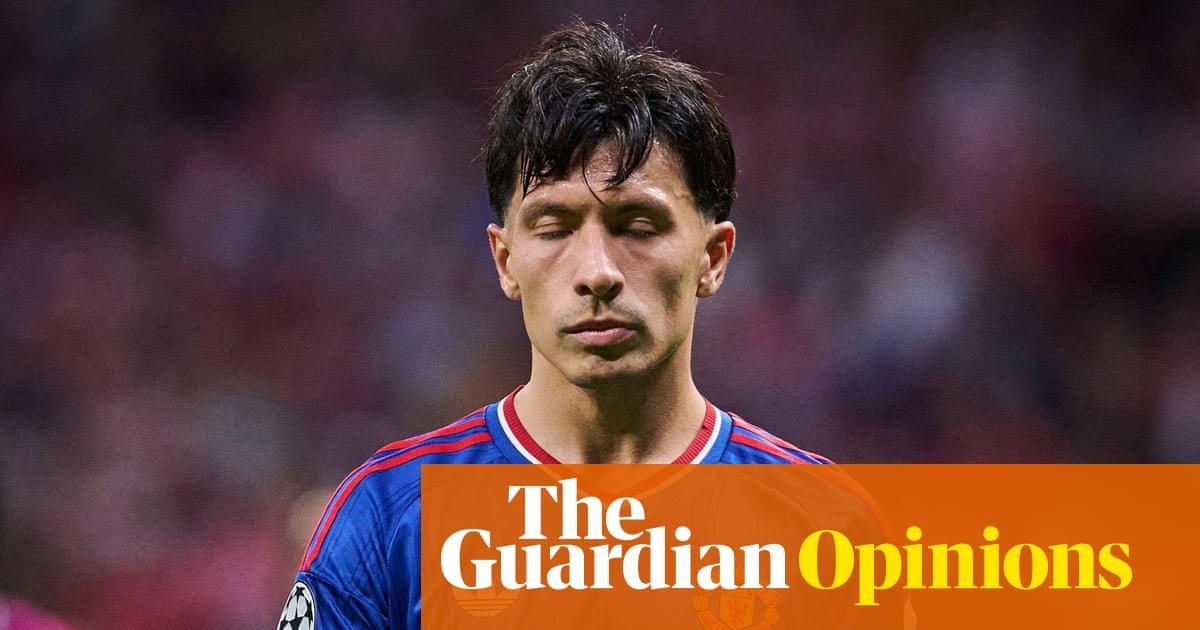
‘Miro’, now in charge at Nürnberg, knows the value of consistency and identity in an era of tinkering coaches who did not play professionally
You learn the most from the best. The Champions League winners are Paris Saint-Germain, and they could achieve a historic hat-trick this season. Since the tournament’s rebrand in 1992, they would be only the second club to accomplish this feat, after Real Madrid’s run from 2016 to 2018.
I see clear parallels between the two. For Madrid, nine players started in all three of their final victories. Similarly, PSG won their two finals with virtually identical lineups. The only change came during their title defence in Budapest, where Gianluigi Donnarumma no longer featured in goal, Luis Enrique having parted ways with the Italian European champion.
At its core, football has not changed. For two giants of the tournament’s predecessor, the European Cup – Ajax (1971 to 1973) and Bayern Munich (1974 to 1976) – seven players started all three finals. Had injuries not interfered, that number would have been higher. There is a similar pattern in Madrid’s five consecutive wins from 1956, with nine players appearing in at least three of those finals and three featuring in all five. Continuity plus selection: that is the eternal recipe for success.
Today’s elite managers have internalised this, as the numbers prove. We see remarkably similar patterns at PSG, Arsenal and Barcelona. In each case, a core of six to eight players establishes the team’s identity and anchors the XI in crucial matches. The next tier consists of the remaining three to five regular starters, who are pushed by four to six squad players. Thus, the backbone of a squad comprises about 16 players, with the rest providing depth.
Total playing time (roughly 5,000 minutes per season) is distributed as follows:
core players: about 70 to 85% each
remaining regular starters: 50 to 60% each
squad players: 40 to 45% each
fringe squad places: sharing the remaining maximum of 20%
Benchmarking also reveals there is no alternative to the standard operating system: ball-oriented defending. Managers also rigidly adhere to their formations, typically a 4-3-3 or 4-2-3-1. Substitutions are made like-for-like to preserve structural integrity.
Another encouraging trend is that all three clubs reserve a portion of their fringe squad places for at least three young talents, often products of their academies. To test their potential at the highest level, they are given consistent minutes. At Arsenal, 20-year-old Myles Lewis-Skelly seems to be establishing himself permanently.
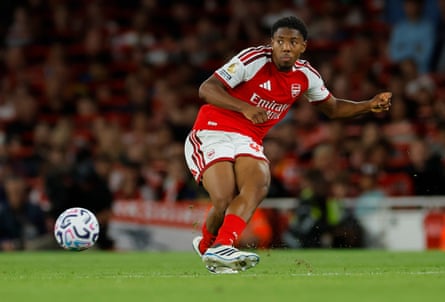
These principles are enforced over years and across all development levels by the current champions of France, England and Spain. This approach can also be observed at smaller clubs and, in a similar fashion, with national teams such as Morocco. It represents a universal blueprint for footballing success – one heavily influenced by the Spanish coaching philosophy, spearheaded by Pep Guardiola, Mikel Arteta and Luis Enrique.
The most significant deviations from this blueprint can be found in Germany. I see three pieces of evidence pointing to a unique German path. First, man-marking is experiencing a strange revival. Second, many Bundesliga clubs grant fewer opportunities to homegrown talent, despite paradoxically maintaining expensive academies. Third, a vast number of managers have no professional playing background.
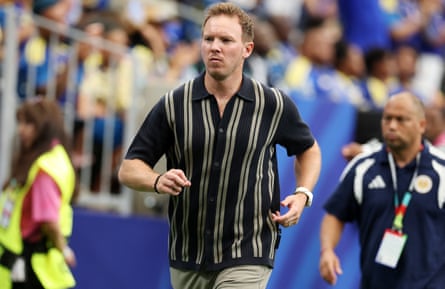
These coaches frequently alter systems and formations, before and during matches. At times, they deploy players out of position. The most prominent example was Julian Nagelsmann, who as national coach hindered his side’s development through constant, fundamental changes.
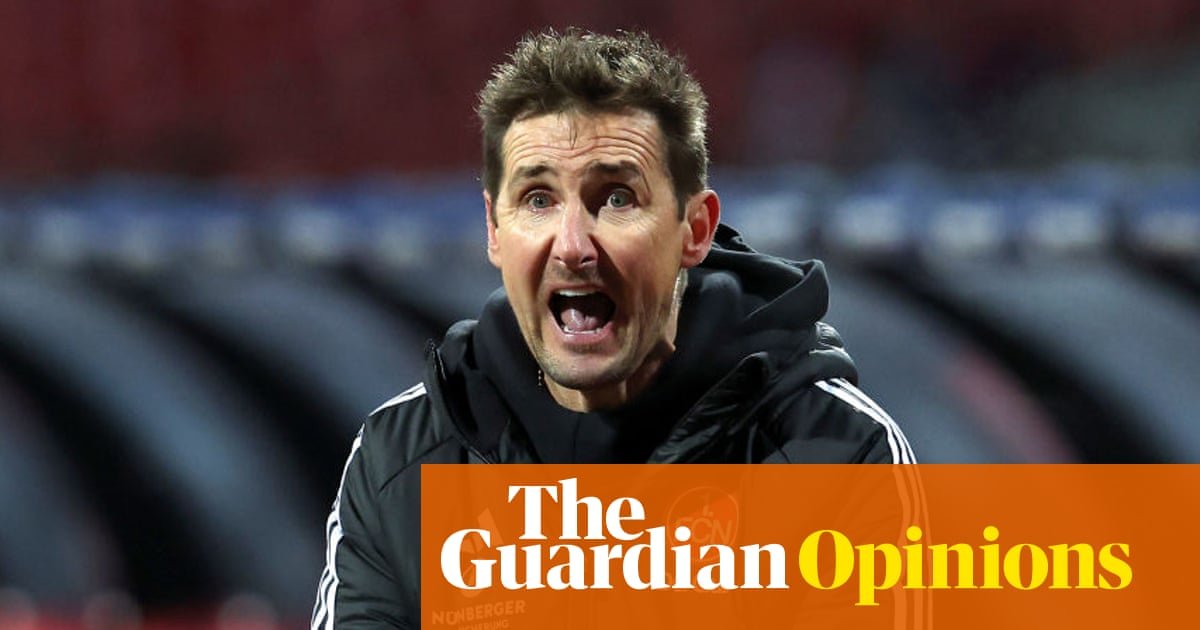
Yet there are exceptions. One is Miroslav Klose. We shared the pitch in more than 80 international matches. He was a magnificent teammate, a true team player who understood his precise value to the group. He is a World Cup winner and was the tournament’s record goalscorer from 2014 until last summer. Naturally, someone with that background possesses a deep understanding of hierarchy, discipline and the tactical awareness of what makes a collective function.
Miro, now in his third season at Nürnberg and sitting in a promotion spot in the 2. Bundesliga, carries the DNA of a great manager. I recognise the methods that lead to success in his work. What sets him apart from many others is that he does not overcomplicate things. He does not tinker with his core system or formation. He identifies who meets the club’s demands and who does not, rarely altering his starting XI.
Through these repetition effects, Miro has identified a core that provides stability. The winger Mohamed Zoma, who made his Italy debut last month, and the attacking midfielder Julian Justvan get about 90% of the playing time, while the central midfielder Finn Ole Becker secured about 80% before a recent injury. The defensive midfielder Adam Markhiev, a Finland international, is practically ever-present when fit. Miro had to rebuild his defence after summer transfers but seems to have quickly settled on his back four.
He also gives youth a chance, sticking by the academy graduates Tim Janisch and Eric Porstner even after mistakes. Since the turn of the year, the young striker Piet Scobel has featured every single week. Miro’s grasp of the club’s identity is also evident in his decision to appoint a local Franconian, the goalkeeper Jan Reichert, as the captain.
The manager’s position at Nürnberg is finally occupied in a way that allows something substantial to grow. Thanks to Miro, the club, stuck in the second tier since 2014 bar a single season, is again capitalising on the potential of their location. FCN have a grand history: only Bayern Munich have won more German league titles. The club legend Max Morlock scored Germany’s first goal in a World Cup final, in 1954.
The club also have immense potential. They benefit from a massive catchment area with virtually no local competition. The huge metropolitan region around Nuremberg, a city with 550,000 inhabitants, is economically robust, and the club boasts a 50,000-capacity stadium that is due for modernisation.
Above all, the club are deeply rooted in their community, supported by a vast and fiercely loyal fanbase. They remain a traditional, member-owned club. To the people here, “Der Club”, as they call it, truly means everything.
Philipp Lahm’s column was produced in partnership with Oliver Fritsch at the German online magazine Die Zeit.