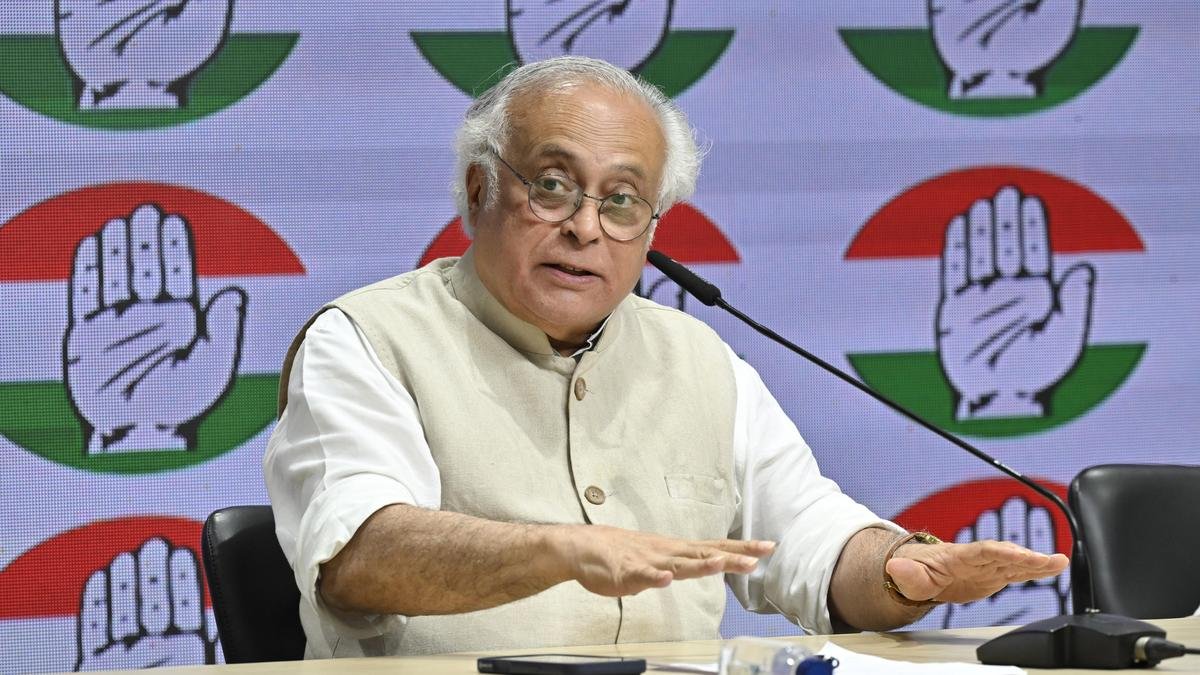
Congress leader Jairam Ramesh on Sunday (September 20, 2026) alleged that the National Green Tribunal (NGT) has been “emasculated” by the Narendra Modi government over the past decade and cited a study showing that it did not rule in favour of an environmental or public-interest party in a single appeal heard on merits in the first six months of this year.
The former Environment Minister said the NGT should now rediscover the letter and spirit of the NGT Act, 2010.
“A study published by the South Asian Reporter for Environment Laws (SAREL) on 19 September 2026 found that, during the first six months of 2026, the National Green Tribunal (NGT) did not rule in favour of an environmental or public-interest party in a single appeal heard on merits,” Mr. Ramesh said in a post on X.
He said that 119 appeals were filed before the NGT’s five benches between January and June 2026, and 52 were dismissed on procedural grounds. This, in itself, he said, is questionable.
“Of the 67 appeals heard on merits — 51 appeals were filed by industry, project proponents or property owners. They received favourable orders in 30 cases, or around 60% of these appeals. In contrast, environmental or public-interest parties filed 16 appeals seeking environmental justice. All 16 were dismissed, with none receiving a favourable ruling,” Mr. Ramesh said.
The contrast is particularly significant given that the NGT was established in June 2010 through an Act of Parliament to provide effective and expeditious environmental justice to the citizens of the country, the Congress general secretary said.
“Over the past decade it has been emasculated by the Modi government,” Mr. Ramesh said, adding that the tribunal must “recover and rediscover its courage”.
SAREL analysis
The analysis by SAREL examined the 119 appeals filed at the five benches of the NGT between January and June. While environmental or public-interest parties filed 16 of the 119 merit appeals, the project proponent, property owner, or industry side filed 51 such appeals.
More than 50 appeals were dismissed on technicalities or procedural issues and never reached a merits ruling.
“The public-interest side was not given a favourable judgment in all 16 of its matters, winning none. The industry side was dismissed in only about a third of its appeals and secured a favourable order in 59% (30 of the 51 merit appeals were won), with a further 6% preserved at status quo,” the analysis said.
It also highlighted that dismissal on technical grounds was a major filter, as 44% of all appeals were dismissed on limitation, jurisdiction, maintainability or withdrawal without any merits ruling.