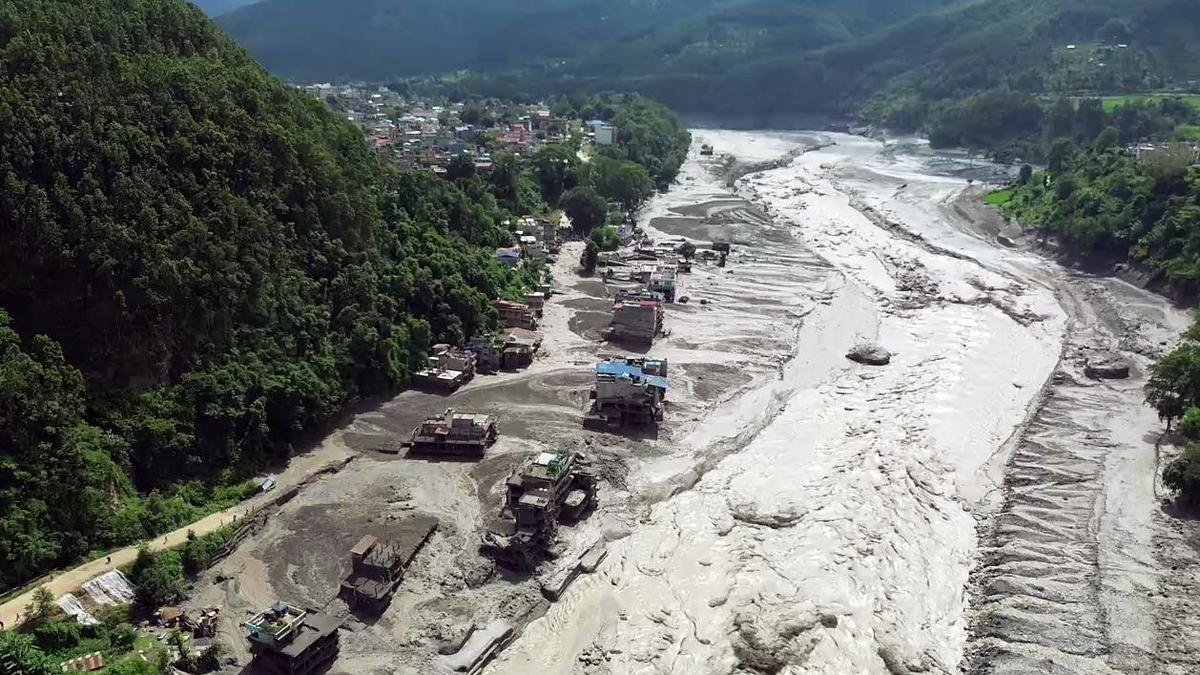
At least 157 people were confirmed dead and more than 400, including around 133 Indians, were missing or out of contact after a massive flash flood in Nepal’s Bhotekoshi River swept through villages in Rasuwa, a district bordering China’s Tibet region, on Wednesday morning, authorities said.
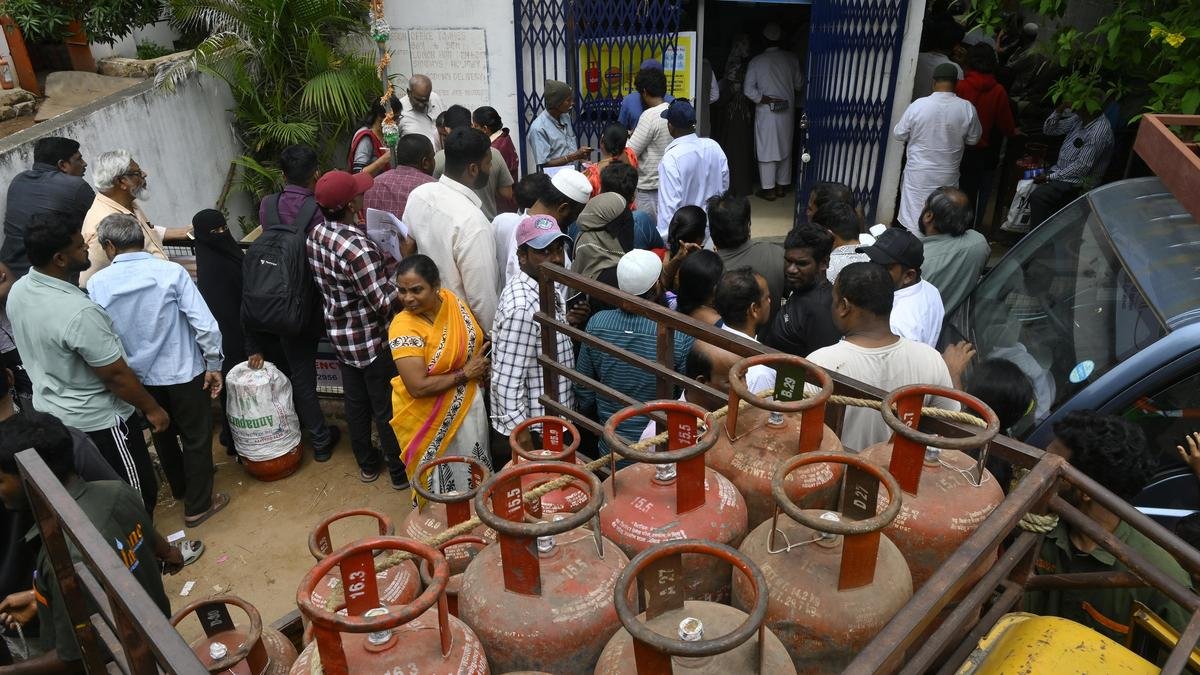
Nepal flash flood: At least 50 pilgrims from Tamil Nadu stranded as landslips disrupt route
In an update at 11:05 p.m. (Nepal time), the Nepal Police said 157 bodies had been recovered.
According to the Office of the Prime Minister and Council of Ministers, 391 foreign nationals and 93 Nepalis were out of contact.
“Several security personnel, government officials and employees of hydropower projects are also out of contact,” the PMO said. “The disaster has damaged 19 motorable bridges and 40 kilometres of road.”

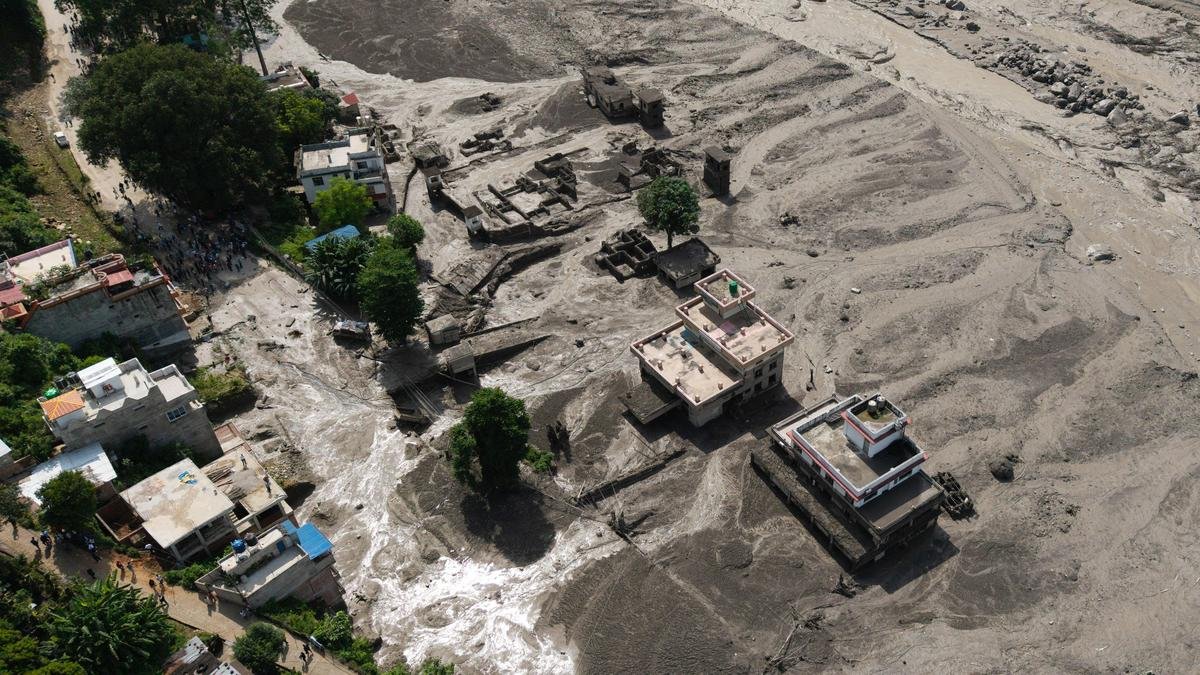
An aerial view of the houses partially submerged in mud-laden flash flood following an outburst in the Bhotekoshi River, in Rasuwa on August 26, 2026. (Videograb) | Photo
Prime Minister Balendra Shah said in a social media post he was left with a heavy heart after the fatal flash floods. “The entire nation has been left shocked and deeply saddened by the loss of life and damage to property,” he added, describing the disaster as “sudden” and “massive.” Stating that the government immediately mobilised all its resources for rescue operations, he vowed that rescue operations would continue through the night.
“Saving the lives of the injured, searching for those missing and protecting affected people is our first priority,” he said.
A Nepal Tourism Board update at 5 p.m. listed 403 people as missing, including 133 Indian nationals.
As authorities in Nepal stepped up rescue operations, officials and experts sought to establish what triggered the sudden flood.

In this screengrab from a video posted on August 26, 2026, Floodwater flows across a residential area, in Nepal.
Nepal’s National Disaster Risk Reduction and Management Authority, citing a preliminary analysis of Planet Labs satellite imagery, said in the evening that a rock-and-ice landslide along the Nepal-China border, about 20 km northeast of the Rasuwagadhi border crossing, caused a debris-laden flood in the Lhende River, a tributary of Bhotekoshi, that flowed through Timure and entered the Trishuli River.
Earlier, Foreign Minister Shishir Khanal told Parliament that preliminary information suggested an earthquake around 8.37 a.m. triggered an ice avalanche, which was followed by the flood around 8.40 a.m. “The information needed further verification,” he said.
Officials at the Flood Forecasting Division had separately said they received information that a landslide may have blocked a river in Tibet before water burst through. In an update at 1.35 p.m., the division said, citing information from the Chinese side, that the blocked river had yet to fully open.
The Bhotekoshi River, which originates in Tibet, flows into Nepal’s Trishuli River and eventually enters India as the Gandak River.

In this image received on August 26, 2026, Debris lies scattered after a sudden and massive flood surged through the Bhote Koshi River, killing four people, in Rasuwa, Nepal.
Later in the evening, Nepal’s National Disaster Risk Reduction and Management Authority, citing a preliminary analysis of Planet Labs satellite imagery, said a rock-and-ice landslide along the Nepal-China border, about 20 km northeast of the Rasuwagadhi border crossing, caused a debris-laden flood in the Lhende River that flowed through Timure and entered the Trishuli River.
Mr. Khanal told Parliament that the flood had caused extensive damage in Timure and Syafrubesi in Rasuwa, and in Betravati, Trishuli, Battar and Devighat in neighbouring Nuwakot. Roads, bridges, hydropower and communications infrastructure were among those damaged.
According to Nepali authorities, there had been no rain in the region before the flood hit, while rainfall was recorded on the Tibetan side. In July last year, flash floods in the same Bhotekoshi River, which also occurred without rain, killed nine people and washed away the Miteri Pul (Friendship Bridge) linking Nepal and China.
Officials said the death toll could rise and that it would take days to assess the full extent of the damage.
A Cabinet meeting on Wednesday afternoon directed authorities to urgently restore roads, electricity and telecommunications in the affected areas and to mobilise resources to rebuild damaged public infrastructure.
It also decided to declare the affected local governments in Rasuwa, Nuwakot, and Dhading as disaster-crisis areas for three months.
On Wednesday evening Prime Minister Narendra Modi spoke to Nepal Prime Minister Shah.
“Spoke to Prime Minister Balendra Shah and conveyed condolences on the loss of lives due to the floods in Nepal,” Modi wrote on X, formerly Twitter. “The people of India stand in solidarity with their sisters and brothers in Nepal at this difficult time.”
Meanwhile, India sent Humanitarian Assistance and Disaster Relief and medicines to Nepal.
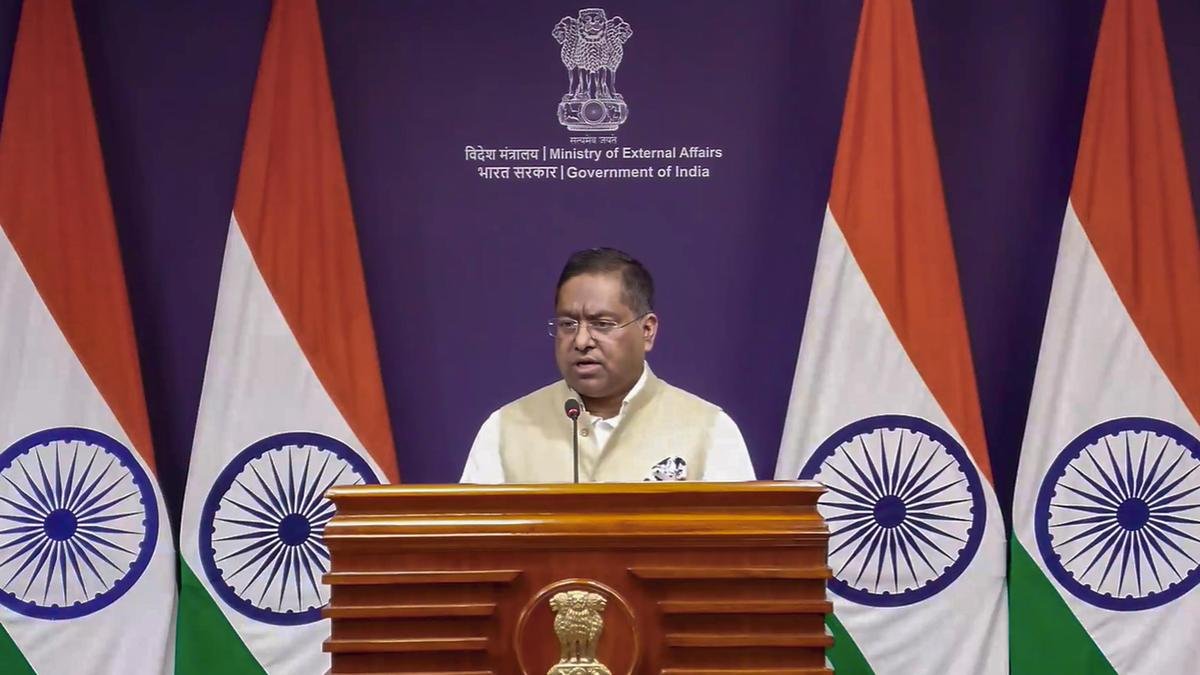
Minister of External Affairs S. Jaishankar said in a post on X: “Dispatched 10 tonnes of HADR assistance and essential medicines to support Nepal’s response to the devastating floods.”
“In face of this challenge, India stands with Nepal and its people.”
The recurrence of extreme floods has raised concerns among experts about disaster preparedness, infrastructure planning and risk mitigation.

A flooded road following a flash flood in Galchhi in the Dhading district, Nepal, on August 26, 2026. | Photo
“I think we should analyse today’s incident in a larger frame; it’s not a standalone event. The Melamchi, Roshi, and Seti floods, etc, show that these kinds of extreme events are occurring across the Himalayas and are becoming more frequent,” said Ramesh Bhushal, a journalist who has extensively covered climate change and its impact. “While such disasters may happen regardless of our understanding, the high casualties are the result of ignorance.”
A construction spree along rivers in Nepal’s northern regions, driven in part by the country’s push to expand hydropower as an economic booster, has remained a concern for environmentalists and climate experts.
Bhushal said casualties could have been reduced if authorities had planned infrastructure projects and settlements better.
“A lot of infrastructure — hydropower projects, roads, bridges and settlements — is being built along vulnerable Himalayan river corridors. But we haven’t integrated climate risks as far as I know,” said Bhushal. “Have we changed the design? Have we done better assessments? Have we done better modelling that could provide robust scientific information? Many of these questions have one answer: NO.”
While preliminary satellite analysis points to a rock-and-ice landslide as the immediate cause, experts say a thorough assessment is needed to establish the sequence of events and whether a glacial process also contributed to the flood.

This frame grab from a UGC footage courtesy of Nepal Police shows floodwaters crashing through the Bhote Koshi River after flash floods in Rasuwa district on August 26, 2026.
“Never seen or heard of the massive floods that hit Rasuwa today,” Madhukar Upadhya, a climate change expert and watershed management practitioner, said in reaction to Wednesday’s Bhotekoshi flood. “It’s beyond anything we have ever imagined.”
Upadhya said floods, both big and small, are natural, but climate change is making these risks increasingly damaging and more frequent.
“Today’s event signals what we should be prepared for. Our landscape is not suitable for large infrastructures that we see in the Alps,” he added. “As they say, cut your coat according to .... the same goes for infrastructure.”