Some users claim online marketplace’s automated systems stack odds against them when sales go wrong
After Catherine Warrilow sold a Zara necklace for £6 on Vinted, she packed it up and posted it off, just as she had done with many things before. Only this time the buyer claimed the parcel arrived empty.
Warrilow, 47, from Oxford, provided Vinted with photos and videos of the package, including date-stamped Ring doorbell footage of her leaving the house to post it. But she says the resale platform refunded the buyer and left her out of pocket.
“I challenged Vinted on what evidence they had and asked them to supply it, but they simply said ‘based on our evidence’ and ‘our evidence suggests’ and could not explain what that was,” she says. “The photos from the buyer showed that all of the parcel tape I’d used had been removed.”
Vinted has become a giant of the secondhand economy. In 2025, users traded €10.8bn (£9.1bn) worth of goods through the platform – a 47% increase on the previous year.
It generated €1.1bn in revenue and made a €62m profit. It now operates across 26 markets and has expanded beyond clothes into books, toys, sports goods and collectibles, as well as building its own shipping and payments businesses.
It is a success story, but some sellers feel that the odds are stacked against them.
Warrilow had used the app for five years, usually selling items her children had outgrown or things she had “fallen out of love with”. After having problems as a buyer, too, she had had enough.
In both cases, “small amounts” of money were lost, Warrilow says. “But the principle of the lack of support led me to start a survey.”
She did this on the website she set up called Sad Vinted Faces.
Within two days, hundreds of people had responded. Since then, she says, more than 6,400 cases have been collected.
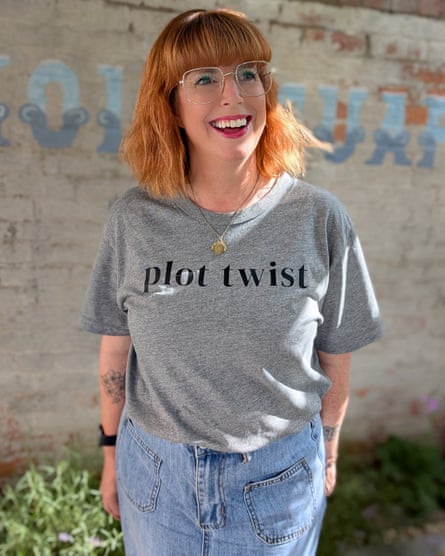
One of the users who claimed, via Warrilow’s website, that she had had a bad experience, was Maggie, who did not want to give her last name. She says she sold a pair of Birkenstock Boston clogs for £72. When the buyer disputed their authenticity, she provided photographs of the shoes, and a bank statement showing she had bought them from Office.
But Vinted decided the shoes were counterfeit, she says. The buyer was refunded and kept them, and Maggie permanently lost her account.
“What upset me the most was not just the financial loss, but the feeling that my evidence was never properly considered,” Maggie says. “I had no meaningful opportunity to explain my case, or have it reviewed by a real person.”
The consumer expert Martyn James says he has been “flooded” with messages from people who say they were accused of selling counterfeit goods and then had their Vinted accounts, and their money, frozen.
“This problem has been bubbling away for a while,” he says.
Part of the issue, he says, appears to be the use of automated systems in dealing with disputes.
“AI is all well and good as a first line of investigation,” he says. “It is fine to use it to speed things up. But a service cannot exist without the service part, and that has to involve a human being.”
He adds: “There seems to be no real sense of appeal. The company is acting as judge and jury, but there is money at play and it is not as straightforward as that.”
According to Vinted, all appeals are handled by human reviewers, including Warrilow’s cases.
Victoria Chamberlain-Ralphs has built a business selling clothes for clients who do not have time to do it themselves on Vinted. She says her problems started when she was made to convert her account to a “Pro” one, which took her offline for six weeks. “They said that our wardrobe was too big: we have 700 clients, which was, at that time, 18,000 items. They said that they had no capacity to get us back on.
“We were emailing constantly, and they said they ‘would get around to it’.” She adds: “I told them I have staff to pay. I have clients asking why their items are not online, and I have a building to pay for.”
In three years, Chamberlain-Ralphs says she has had her account shut down about 12 times. “I got banned last Thursday,” she says. “It was a permanent ban due to ‘fraudulent activity’.”
She says Vinted gave her no explanation. She had 42 outstanding orders, all of which were cancelled when her account was banned.
Five hours later, she says, it was reinstated. “They said it was ‘a false alarm’,” she says. “But that has cost me.”
She says her account was also banned in November 2025 after she was accused of selling a fake item of clothing. “I rang one of my clients and got a receipt from Amazon for the trousers I was selling, and proved it was not fake – but they did not remove the ban.”
According to Vinted, accounts will be suspended if Pro members repeatedly breach its “catalogue rules,” which prohibit counterfeit and dangerous items, or commercial activity that is not centred on secondhand goods.
James says cases such as these raise questions about what happens when a platform’s automated systems make allegations against users, and there is no obvious route for an independent review.
“Things may not be the fault of the individual, but Vinted is not responding,” he says.
Vinted says the company has “clear rules to protect the community and keep the marketplace safe”.
It says that “98% of transactions are completed smoothly, without needing help from our support teams”.
However, it adds, action is taken when rules are breached, to help “keep the marketplace safe for everyone”.
It says that users can appeal against decisions.