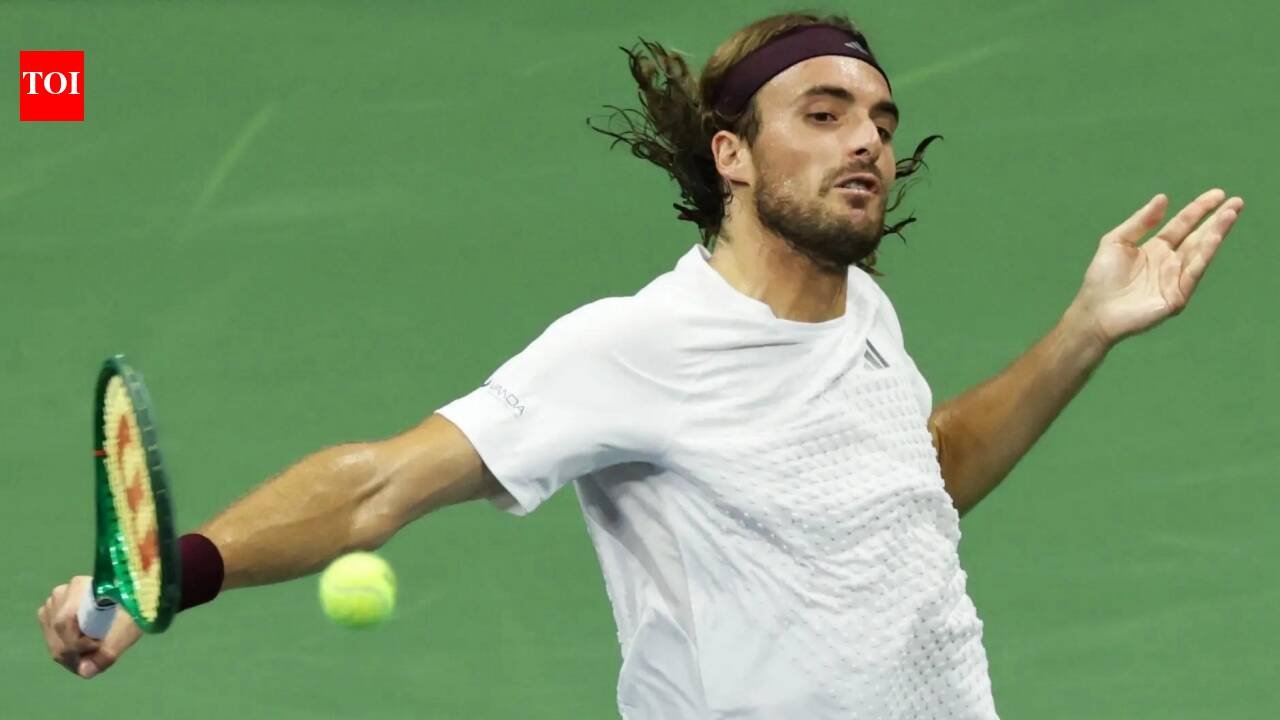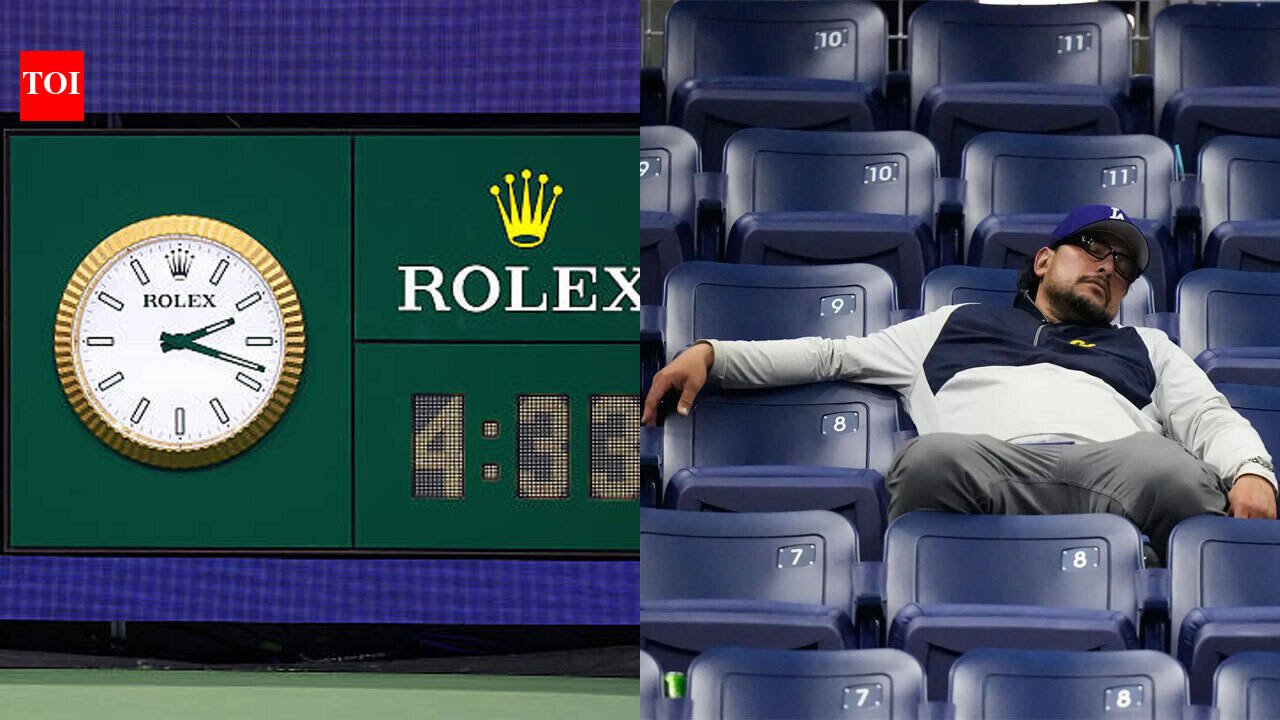
Matches increasingly spill into the early hours at US Open 2026. (Pic ) The US Open’s famous late-night energy is once again coming under scrutiny, but this time the concern is not about whether New York can keep the party going.
It is about whether the players can.As the first week of the Grand Slam winds down, a growing number of matches have stretched well past midnight, with three of the first six night sessions finishing after 2 am (local time) and two others extending beyond 1 am.
The unusually late endings have prompted four-time US Open singles champion Martina Navratilova, six-time Grand Slam winner Boris Becker and several players to question whether the scheduling has gone too far.Navratilova was among the most direct in her criticism, posting on X after the tournament recorded three post-2 am finishes in its opening six days."This is not sustainable…": Navratilova wrote while sharing statistics highlighting the late finishes.
Becker, the 1989 US Open champion, also weighed in after Navratilova's post, questioning why tennis players are being asked to compete at such hours."That’s simple to late to play tennis ?? anymore….tell me another sport like that ?!?," Becker posted.The issue has become particularly noticeable in a tournament where night tennis has long been part of its identity.
Arthur Ashe Stadium under the lights, packed stands and an electric New York crowd are among the defining images of the US Open.
But as matches increasingly spill into the early hours, players and former champions are beginning to question where the line should be drawn.
‘Everybody wants to go to sleep’ Alexander Zverev had little appetite for an extended discussion after his first-round match ended in the early hours.
With empty seats visible around the court, the German top seed took just two questions from reporters before making his feelings clear."I think everybody's tired," he said.
"Everybody wants to go to sleep."The problem became even more pronounced for Zverev as the tournament progressed.
His first two matches finished at 1:55 am and 2:15 am, respectively, making him the first top-seeded man to play back-to-back five-set matches to begin a major in the Open era, which dates back to 1968.His experience has underlined the physical cost of the scheduling, particularly when players have to recover from long matches and then prepare for the next round within a limited window.Alexander Zverev of Germany (AP Photo) Pegula questions whether it is ‘the right thing’ Third-ranked women's player Jessica Pegula acknowledged that tournament organisers have to balance several competing demands, including television schedules and match timings.
But she questioned whether those considerations should come at the expense of players having to compete deep into the night."I know they're dealing with a lot of different aspects as far as broadcast and TV and making sure certain matches get done and are starting at a certain time for those reasons," Pegula said."But you have to wonder if it's really the right thing for players to be finishing at 2 am, especially when it’s not — like, I'm not watching on TV.
I'm sleeping.
Some people stay, but there is a lot of people that need to go home."Her comments reflect a broader concern around the sustainability of the current schedule.
A late finish does not simply mean a player leaves the court later.
It can affect meals, recovery, sleep and preparation for the following day.Other Grand Slam tournaments have taken different approaches.
Wimbledon has instituted an 11 pm curfew, while the French Open schedules only one match during its night session.The US Open, meanwhile, has traditionally embraced the possibility of matches running deep into the night.
This year's schedule, however, has pushed that tradition to an extreme.Jessica Pegula of the United States (AP Photo) Venus Williams caught in historic late start The issue was apparent from the opening night itself.Novak Djokovic's first-round match lasted four hours and 36 minutes on August 30.
The length of that contest pushed Venus Williams and Sofia Kenin onto court at 12:13 am, the latest match start in US Open history.Much of the crowd stayed to watch what could have been the 46-year-old Williams' final Grand Slam singles match.
But the timing made the occasion more difficult for both players."It's not ideal," Williams said.
"I would have preferred something else, definitely.
It wasn't great for either of us, so I think we both tried our best.
I just don't know any other sport where you have to start that late.
I definitely think there's room for improvement there."The match eventually concluded at 2:01 am, adding another chapter to a tournament already seeing an unusual number of after-midnight finishes.Shelton experiences his first 2 am finish Ben Shelton also found himself dealing with the consequences of the scheduling when his second-round match against Denis Shapovalov, which began on Friday night, finished at 2:07 am Saturday.The delay was partly caused by the Williams sisters' doubles match, which lasted more than three hours."Not easy," Shelton said after defeating Shapovalov in 3 hours, 22 minutes.
"My first time experiencing playing this late."Shelton estimated that he would not get to sleep until around 5 am, highlighting how a match that ends after 2 am can effectively consume much of the following morning as well.Four of the 17 latest finishes in US Open history have now occurred this year.
The tournament record remains 2:50 am, set in 2022 when Carlos Alcaraz defeated Jannik Sinner in the quarterfinals on his way to his first US Open title.Aryna Sabalenka of Belarus (AP Photo) Sabalenka warns of disrupted schedules Top-ranked Aryna Sabalenka, who two years ago played what was then the fourth-latest women's match in tournament history, has also experienced the knock-on effects of finishing after midnight.She is not a fan of such late starts and the disruption they can cause to an athlete's routine."When you finish late, the next day shifts a lot," Sabalenka said.
"Like, you still need to get your hours of sleep, so you start later.
You just can really mess up your schedule."That is at the heart of the debate surrounding the US Open's night sessions.
The spectacle of late-night tennis can be a major attraction for fans, broadcasters and the tournament itself.
But for the athletes, a match finishing at 2 am can have consequences that extend well beyond the final point.Join conversation Share your thoughts in the comments Be respectful · TOI community guidelines With four of the latest 17 finishes in tournament history already coming this year, the question is no longer simply whether New York's tennis nights can continue deep into the morning.It is whether they should.For Navratilova, the answer appears increasingly clear: "This is not sustainable…".