US president demands compensation for damage incurred by US, complicating standoff with Tehran
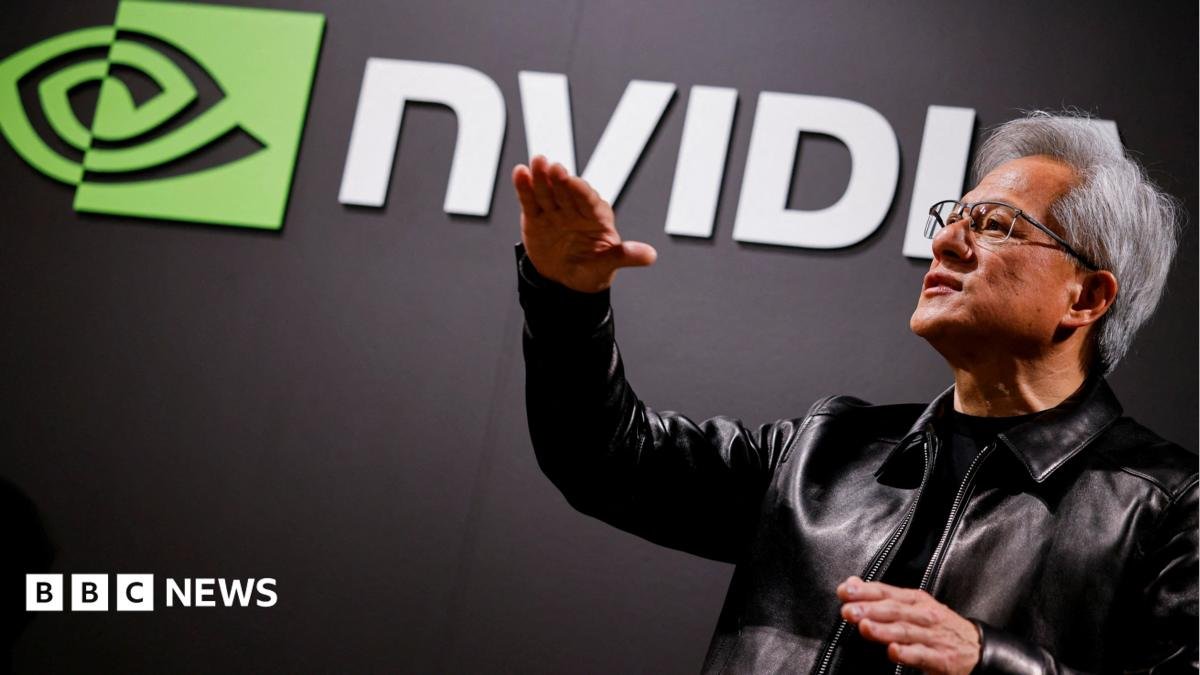
4m agoNvidia links with Wall Street firms for $500bn AI financing deal
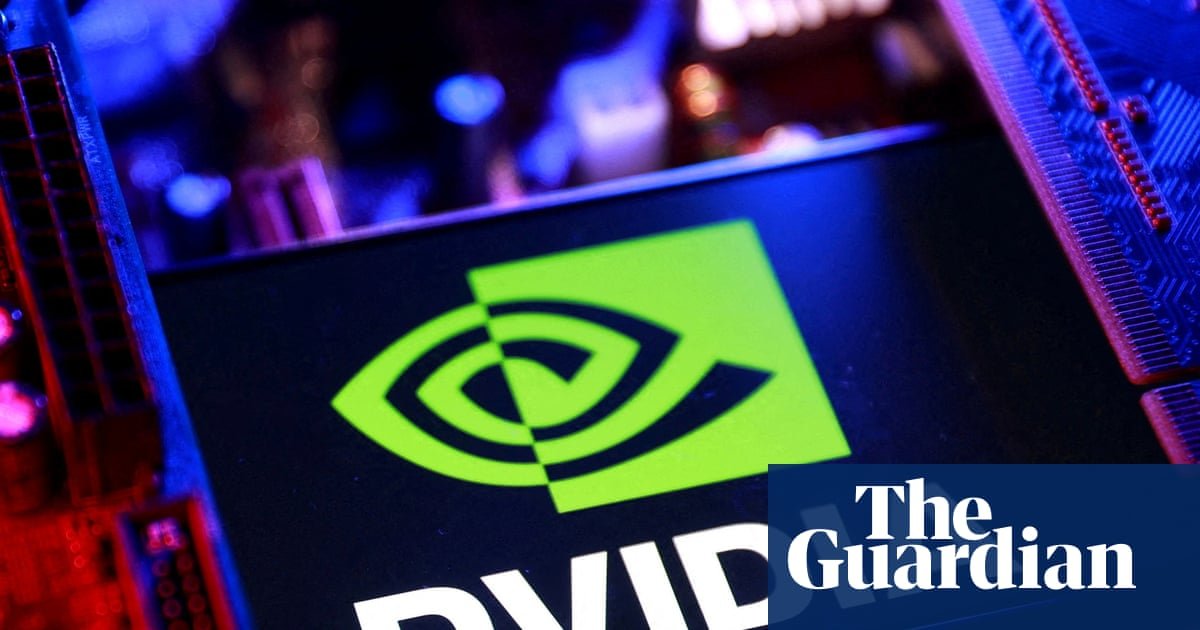
Nvidia has partnered with six major Wall Street financial institutions to raise more than $500bn (£370bn) capital for artificial intelligence infrastructure.
The Nvidia chief executive, Jensen Huang, said on X that the company has the option to backstop up to $125bn, or 25% of the potential deals.
The move highlights how surging demand for AI computing capacity is drawing institutional investors, as governments, companies and startups race to build out datacentres.
Big tech companies have signalled that spending on AI would not slow down, with combined outlays set to surpass $730bn this year. However, there has been concerns over the link between high valuations of tech companies and the need for vast investments to support their ambitions.
Nvidia signed memorandums of understanding with Apollo, BlackRock, Blackstone, Brookfield, Goldman Sachs and KKR for the financing platforms. The deal will create financing platforms, allowing third-party investors to treat AI “compute” as an asset class.
Nvidia, which is worth $5.3tn, counts Google, Amazon, Microsoft and Facebook owner Meta among its customers.
“These financing platforms will help customers access scarce compute at scale and build the AI factories that will power every industry and country in the age of AI,” Huang said.
“Compute has become a critical infrastructure asset,” Joe Bae and Scott Nuttall, the co-chief executives of KKR, said in a joint statement.
Jefferies analyst Mohit Kumar said:
We are back to the situation where there is no war ongoing, but the Strait of Hormuz remains closed. There is little official data to analyse the economic pressure on Iran. Estimates suggest that inflation is running north of 100%, with heavy pressure on essential commodities including food prices. The currency has depreciated by over 95%, though it is not a freely convertible currency and official data is not available. While the Iranian economy may be under severe pressure and the common person bearing the brunt of the current crisis, economic pressure would take months to make an impact. It is not a free democracy which implies that the economic pain of the general population may not translate into action at the government level. Trump also does not have the luxury of time. The longer the strait is closed, more inventories will be depleted and greater would be the impact on oil prices. As we have argued before Trump is sensitive to mid-term elections and keeping the Senate is important for him. Thus while the current statement can continue for a few days or weeks, we see some from of a fudge deal being agreed on. We are not looking for a lasting peaceful solution as we do not see an easy way out of the current crisis. But more like we pretend and look the other way and let some traffic flow through, while Iran retains some form of control over the strait.
We are back to the situation where there is no war ongoing, but the Strait of Hormuz remains closed.
There is little official data to analyse the economic pressure on Iran. Estimates suggest that inflation is running north of 100%, with heavy pressure on essential commodities including food prices. The currency has depreciated by over 95%, though it is not a freely convertible currency and official data is not available.
While the Iranian economy may be under severe pressure and the common person bearing the brunt of the current crisis, economic pressure would take months to make an impact. It is not a free democracy which implies that the economic pain of the general population may not translate into action at the government level.
Trump also does not have the luxury of time. The longer the strait is closed, more inventories will be depleted and greater would be the impact on oil prices. As we have argued before Trump is sensitive to mid-term elections and keeping the Senate is important for him.
Thus while the current statement can continue for a few days or weeks, we see some from of a fudge deal being agreed on. We are not looking for a lasting peaceful solution as we do not see an easy way out of the current crisis. But more like we pretend and look the other way and let some traffic flow through, while Iran retains some form of control over the strait.
Good morning, and welcome to our rolling coverage of business, the financial markets and the world economy.
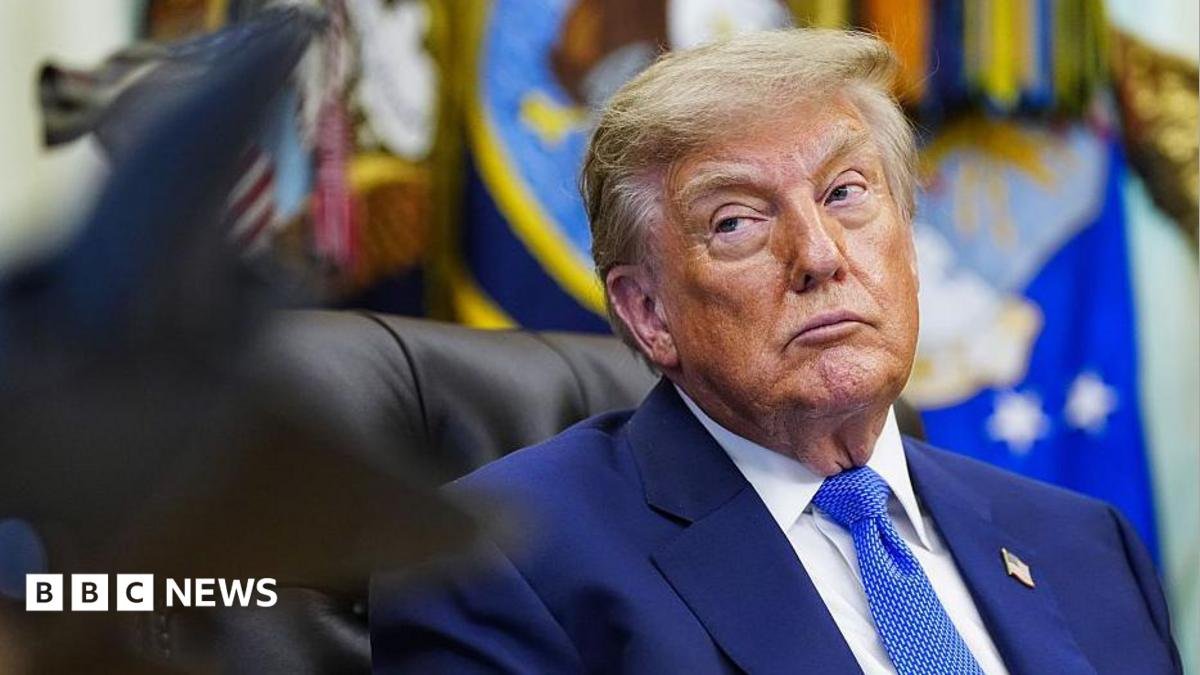
Oi prices have risen slightly this morning to the highest levels in more than a week, as hopes receded of a deal between the US and Iran to end the war and reopen the strait of Hormuz, after Donald Trump demanded compensation for damage incurred by the US.
Brent crude futures and US crude futures both rose about 5% on Monday after the US president’s responded to Iran’s demands for compensation and an end to sanctions and military threats, before it will restart talks with the US. Those conditions largely reflect the terms of the memorandum of understanding signed by both sides in June, which has since broken down.
Iran has been negotiating with Oman about how to reopen the strait of Hormuz, a key shipping passage, defining new shipping lanes, and got closer to a pact. The strait has effectively been closed for months, after the US and Israel started attacking Tehran on 28 February.
Trump said at the White House on Monday:
We’re going to ask for money for the damage they’ve done over a 50-year period. So if there’s damages to be paid, I think Iran should pay those damages.
He also said that he is happy to let economic pressure take its toll on Iran.
Brent crude is moving closer to $90 a barrel, rising 0.4% to $88.1 a barrel while US crude rose to $82.52 a barrel – the highest levels since 31 July for both global benchmarks.
Tony Sycamore, a market analyst at IG, told Reuters:
This is going to be almost a war of attrition now. You probably can see the [oil] market sitting around the $75 to $95 range while we wait to see who blinks first.
Gold has eased after hitting its highest level in more than two months.
Spot gold dipped 0.3% to $4,377 an ounce, after rising to $4,434.84, its highest level since 5 June earlier in the session. Investors are eagerly awaiting Wednesday’s US inflation data for clues on the US interest rate outlook, after week jobs data last week prompted traders to scale back bets that the Federal Reserve will raise rates next month.
We still retain the view that the Fed or the Bank of England will not hike rates, though the European Central Bank may be tempted to deliver another hike at the September meeting. Tomorrow’s inflation data would be key for setting the tome of markets for the coming weeks. Our view is that this month’s and next month’s inflation data would be benign and would offer some room for [Fed chair Kevin] Warsh not to hike rates.
The Reserve Bank of Australia, the country’s central bank, kept its cash rate unchanged at 4.35% for a second meeting. It said the economy was slowing as expected but warned it may raise rates again if necessary to keep inflation under control.
Asian shares are a mixed bag. Japan’s Nikkei rose more than 2% and South Korea’s Kospi gained nearly 1%, while Chinese stock markets fell. The CSI 30 dropped 0.6% and Hong Kong’s Hang Seng lost nearly 1%.
1.15pm BST: US ADP employment change for last week
3pm BST: US Existing home sales for July