Brent crude climbs above $91 a barrel
33m agoIntroduction: Oil prices rise as US-Iran ceasefire ends; UK wage growth slows amid cost of living squeeze

Professor Costas Milas from the Management School at the University of Liverpool said:
Bank of England policymakers will be “reassured” that private sector wage growth slowed down to 2.8%. This, however, might only prove short-lived. The problem is that public sector wage growth continues to outpace strongly wage developments in the private sector. Indeed, annual average regular earnings growth was 6.1 per cent for the public sector (ONS notes that public sector annual pay growth continues to be affected by variations in the timing of pay awards this year).
Bank of England policymakers will be “reassured” that private sector wage growth slowed down to 2.8%. This, however, might only prove short-lived.
The problem is that public sector wage growth continues to outpace strongly wage developments in the private sector. Indeed, annual average regular earnings growth was 6.1 per cent for the public sector (ONS notes that public sector annual pay growth continues to be affected by variations in the timing of pay awards this year).
James Smith, developed markets economist, UK at ING, said the cooling labour market means there is no need for the Bank of England to raise interest rates, unless there is a “severe and prolonged spike” in energy prices as a result of the Middle East war.
He has crunched today’s numbers.
If the UK economy really is picking up speed – as last week’s GDP data tentatively hints – then there’s little sign of it in the jobs market. Admittedly, just like the growth figures, it really depends on where you look. Government is still actively hiring, a trend we’ve seen throughout this year. Payroll growth is running at 1.1% on a three-month annualised basis, though we have our doubts over how long this can continue given the more austere plans for public spending coming down the track. In sharp contrast, consumer-facing industries (hospitality and retail) have been consistently shedding jobs, and if anything, the pace of decline is getting worse. That follows ongoing pressure since last year’s tax and minimum wage hikes. The remainder of the private sector is flatlining – and apart from last week’s more optimistic KPMG/REC hiring survey, most other surveys don’t point to any sign of an imminent upturn. That disconnect is clearly visible in wage growth. Pay is rising by 6.1% across government, compared to just 2.8% in the private sector. Admittedly, that latter figure is being slightly depressed by “compositional” effects, something the BoE is keen to point out. Still, the basic story here is that the jobs market is cool. We can see that in the vacancy numbers, which are still gradually falling and are well down on pre-Covid levels. We can see that in the unemployment rate, notwithstanding the latest reliability issues. And crucially for the Bank of England, there is little sign that wage growth is about to turn higher. Barring a severe and persistent spike in energy prices, we think the Bank will keep rates on hold until next spring, before cutting rates at least twice in 2027.
If the UK economy really is picking up speed – as last week’s GDP data tentatively hints – then there’s little sign of it in the jobs market.
Admittedly, just like the growth figures, it really depends on where you look. Government is still actively hiring, a trend we’ve seen throughout this year. Payroll growth is running at 1.1% on a three-month annualised basis, though we have our doubts over how long this can continue given the more austere plans for public spending coming down the track.
In sharp contrast, consumer-facing industries (hospitality and retail) have been consistently shedding jobs, and if anything, the pace of decline is getting worse. That follows ongoing pressure since last year’s tax and minimum wage hikes. The remainder of the private sector is flatlining – and apart from last week’s more optimistic KPMG/REC hiring survey, most other surveys don’t point to any sign of an imminent upturn.
That disconnect is clearly visible in wage growth. Pay is rising by 6.1% across government, compared to just 2.8% in the private sector. Admittedly, that latter figure is being slightly depressed by “compositional” effects, something the BoE is keen to point out.
Still, the basic story here is that the jobs market is cool. We can see that in the vacancy numbers, which are still gradually falling and are well down on pre-Covid levels. We can see that in the unemployment rate, notwithstanding the latest reliability issues. And crucially for the Bank of England, there is little sign that wage growth is about to turn higher.
Barring a severe and persistent spike in energy prices, we think the Bank will keep rates on hold until next spring, before cutting rates at least twice in 2027.
Here is our full story:
And here’s the union point of view. TUC general secretary Paul Nowak said:
Exploitative zero-hours contracts are endemic in this country, with more than 1.2 million people stuck not knowing how much they’re going to earn each week. That’s why the government must deliver on its promise of a right to guaranteed hours for everyone. Employers are addicted to this one-sided flexibility. But the vast majority of insecure workers have struggled to meet their basic living costs because they haven’t been offered enough hours – and one in three face a financial hit of at least £3000 a year from cancelled shifts and incurred costs. We need to get young people into work – but it isn’t good enough to push them from unemployment into rampant insecurity. No young person benefits from a race to the bottom – they deserve good, secure employment like anyone else. It’s time for the government to double down on its plans to make work pay, expand the youth jobs guarantee, and stamp out exploitative zero-hours contracts once and for all.
Exploitative zero-hours contracts are endemic in this country, with more than 1.2 million people stuck not knowing how much they’re going to earn each week. That’s why the government must deliver on its promise of a right to guaranteed hours for everyone.
Employers are addicted to this one-sided flexibility. But the vast majority of insecure workers have struggled to meet their basic living costs because they haven’t been offered enough hours – and one in three face a financial hit of at least £3000 a year from cancelled shifts and incurred costs.
We need to get young people into work – but it isn’t good enough to push them from unemployment into rampant insecurity. No young person benefits from a race to the bottom – they deserve good, secure employment like anyone else.
It’s time for the government to double down on its plans to make work pay, expand the youth jobs guarantee, and stamp out exploitative zero-hours contracts once and for all.
The data showed UK wage growth, excluding bonuses, in the private sector slowed to 2.8% – the weakest growth rate since October 2020.
Pay growth in the public sector accelerated to 6.1%, reflecting the payment of NHS staff pay rises earlier in 2026 compared to 2025, which distorts the figure.
Jake Finney, a senior economist at PwC UK, said:
On the face of it, the latest labour market report looks relatively benign. Unemployment, employment and inactivity remain broadly stable, while vacancies edged down but are essentially levelling off. The jobs market remains soft, but it isn’t collapsing.
Good morning, and welcome to our rolling coverage of the global economy, the financial markets, the eurozone and business.
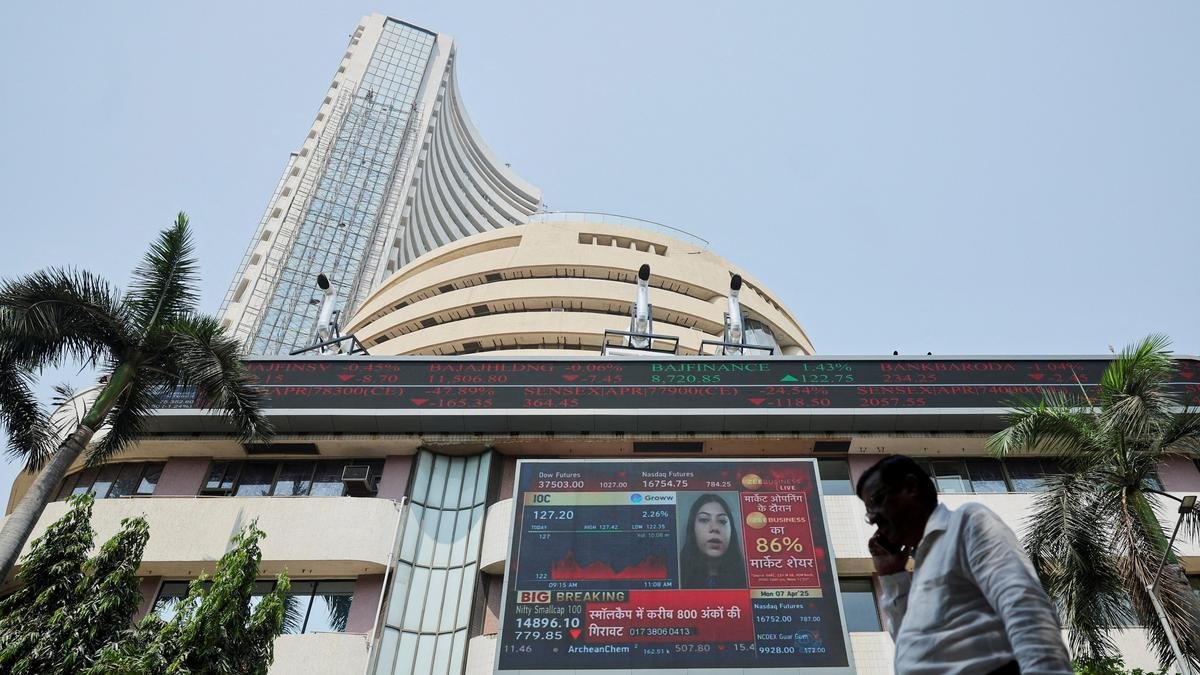
Oil prices have risen, trading above $90 a barrel, as hopes faded for a deal to end war in the Middle East, heightening fears about energy supplies.
Iran will shift to a “fully offensive“military stance as efforts have stalled towards a permanent end to the war, a senior Iranian official told Reuters on Monday, as Washington ruled out extending their temporary ceasefire pact.
Brent crude futures climbed 0.8%, to $91.60 a barrel, the highest since 30 July.
US West Texas Intermediate crude futures were up 75 cents at $85.25 a barrel, after hitting $85.37, the highest since 31 July.
Wage growth in the UK has slowed amid a cost of living squeeze, while the unemployment rate dipped slightly, official figures show.
Figures from the Office for National Statistics show average growth in total earnings, including bonuses, fell to 4.1% in the three months to June, down from 4.3% in the three months to May. City economists had forecast a bigger fall to 4%.
Excluding bonuses, regular pay growth ticked up to 3.5% from 3.4%, higher than the 3.4% expected by economists.
Liz McKeown, the ONS director of economic statistics, said the data showed “some softening” in the jobs market despite a broadly unchanged overall picture.
Regular wage growth has remained broadly stable in recent months. However, private sector pay growth has continued to ease, while public sector pay growth remains elevated due to the timing of the latest NHS pay awards.
The UK’s unemployment rate dipped to 4.9% in the three months to June from 5% in the previous three months. The number of job vacancies fell 7,000 to 712,000.
Felix Feather, economist at the fund manager Aberdeen, said:
Today’s labour market figures continue to point to a softening UK jobs market. Regular private-sector pay growth, which is closely watched by Bank of England officials, eased to 2.8% from 2.9% previously. Meanwhile, the more timely indication from PAYE payroll data showed employment fell again, this time by 13,000. Broadly, the labour market has been loosening for some time. Hiring activity has softened, vacancies have trended lower, and businesses continue to face a challenging demand environment. This underlines our expectation for the Bank of England to be on hold for the rest of the year. Still, we expect inflation will jump at tomorrow’s reading, due to the recent uplift in the energy bill price cap, challenging the impression of domestically generated disinflation reflected in the recent dataflow.
Today’s labour market figures continue to point to a softening UK jobs market.
Regular private-sector pay growth, which is closely watched by Bank of England officials, eased to 2.8% from 2.9% previously. Meanwhile, the more timely indication from PAYE payroll data showed employment fell again, this time by 13,000.
Broadly, the labour market has been loosening for some time. Hiring activity has softened, vacancies have trended lower, and businesses continue to face a challenging demand environment.
This underlines our expectation for the Bank of England to be on hold for the rest of the year. Still, we expect inflation will jump at tomorrow’s reading, due to the recent uplift in the energy bill price cap, challenging the impression of domestically generated disinflation reflected in the recent dataflow.
9.30am BST: UK Private rents and house prices for August
10am BST: Germany ZEW confidence for August
1.30pm BST: US Housing starts for July