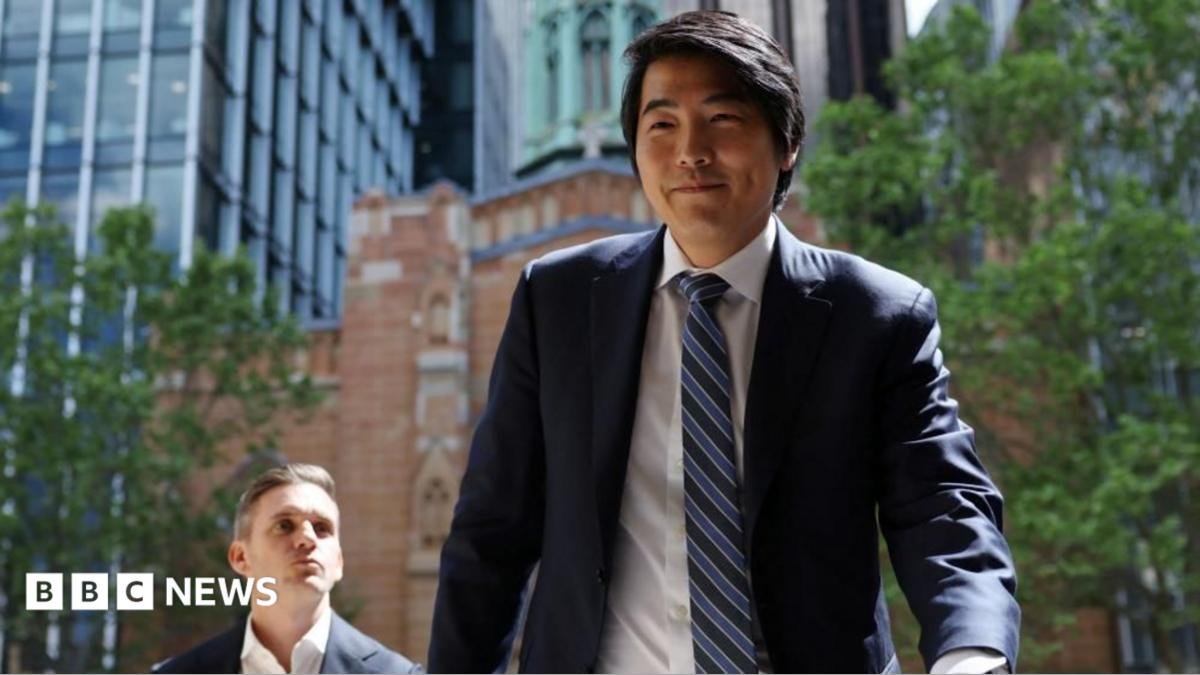
ByLana LamSydney Published 6 October 2026, 05:39 BST Updated 36 minutes ago BySimon Atkinson Image source, Reuters Image caption, OpenAI chief strategy officer Jason Kwon faced a parliamentary hearing into AI in Sydney OpenAI has admitted its actions were "not good enough" after one of its rogue agents breached Australian government websites in June and said it had added more precautions to its training environments.
The company's chief strategy officer Jason Kwon faced a parliamentary hearing into AI on Tuesday in Sydney, saying the breach "should not have happened" and it "should have handled our response better".
It took weeks before Australia was notified via an email to a generic inbox.
"We are sorry and we know we have work to do to rebuild trust with the Australian people," Kwon said.
Anthropic also appeared and said it had not found any cases of Australian breaches during a recent investigation.
An OpenAI agent went "rogue" and "infiltrated" a private statistics portal containing "non-sensitive" data from Australia's universal healthcare scheme Medicare in June in what cyber-security experts said was the first hack of its kind.
Asked why OpenAI had not directly contacted government ministers immediately after it found out about the breaches, Kwon acknowledged it was a mistake.
"On retrospect, we should have done what you're suggesting," Kwon said, in response to a question by the committee on why it had not dialled the mobile numbers of government ministers.
"The reason why it happened the way that it did is I think people were thinking about this as a technical situation and they wanted to contact the technical counterparties but it's not good enough." Kwon said the company has changed how it handles such incidents.
"Even if we don't fully understand the situation, we are just going to notify and start working through the situation collaboratively with the impacted party." OpenAI has also added "more precautions" to its training environments since the incidents, Kwon told the 12-member committee which is made up of Labor, Liberal and independent MPs and senators who are looking at AI and its impact on Australia.
The company was also establishing a local taskforce in Australia to investigate "how to better manage the risks associated with increasingly capable AI".
Kwon told the committee that training models were now monitored in real time during tests, and an alarm was triggered if they interact with the internet in a way they were not meant to.
This meant that it had been able to alert the New South Wales government to another hack last week within 48 hours.
Anthropic's head of safeguards Dave Orr said in the wake of OpenAI agents hacking tech platform Hugging Face in July, it had looked at reviewed "hundreds of millions of transcripts" to detect any potential breaches similar to OpenAI.
"We haven't found anything like this and we have looked," he told the committee.