Research-Backed Choices

Explore personalized EMI offers for your next purchase
I recently switched back from the Samsung Galaxy S26, and I absolutely loved using that phone. So when I picked up the Oppo Reno 16 5G, I immediately felt like this could fill those shoes for me. It has the same compact form factor I love, feels genuinely premium in the hand, and, after using it for a few weeks, I can confidently say Oppo has got a lot of things right with this phone.
Starting at ₹62,999, the Oppo Reno 16 5G delivers a near-complete flagship experience with an excellent camera system, a premium design, a beautiful display, and a large battery. But then there is the chipset, which ends up being the biggest compromise on an otherwise excellent smartphone. Here's how I felt about the Oppo Reno 16 5G after using it as my daily driver for the past few weeks.
Oppo Reno 16 5G specifications
1. Oppo Reno16 5G (Starry White, 8GB, 256GB) | 3D Design | 50MP 3.5X Telephoto Camera | 4K 60fps HDR Video | AI Remix Collage | Snapdragon 7 Gen 4 | 6700mAh 80W SUPERVOOC | ColorOS 16 | IP69K
Oppo Reno 16 5G design: Compact done right
The design is probably my second favourite thing about the Oppo Reno 16 5G after its cameras. Just like the chipset, Oppo has carried forward the design language from the Reno 15, but honestly, I am not complaining because it is almost the perfect size for me. Coming from the Galaxy S26, I never had to adjust to this phone. It fits perfectly in my tiny hands, is easy to use with one hand, and never feels uncomfortable even after using it for hours.

The metal frame paired with the frosted glass back makes the phone feel every bit as premium as its price suggests. I got the Twilight Violet colour, which looks quite stealthy and understated rather than flashy, and I ended up using the phone without a case most of the time just because I enjoyed the in-hand feel so much. The uniform and thin bezels around the display also add to that flagship look, making the front of the phone look clean and modern.

Oppo has also added an AI Snap Key on the side, which feels similar to Apple's Action Button. By default, it opens the new Mind Space feature, but I mostly used it as a camera shortcut. You can also map it to the flashlight, sound profiles, or a few other functions from the settings, so it's nice that Oppo lets you decide what the button should do instead of forcing one feature.
Oppo Reno 16 5G display: Almost everything you could ask for
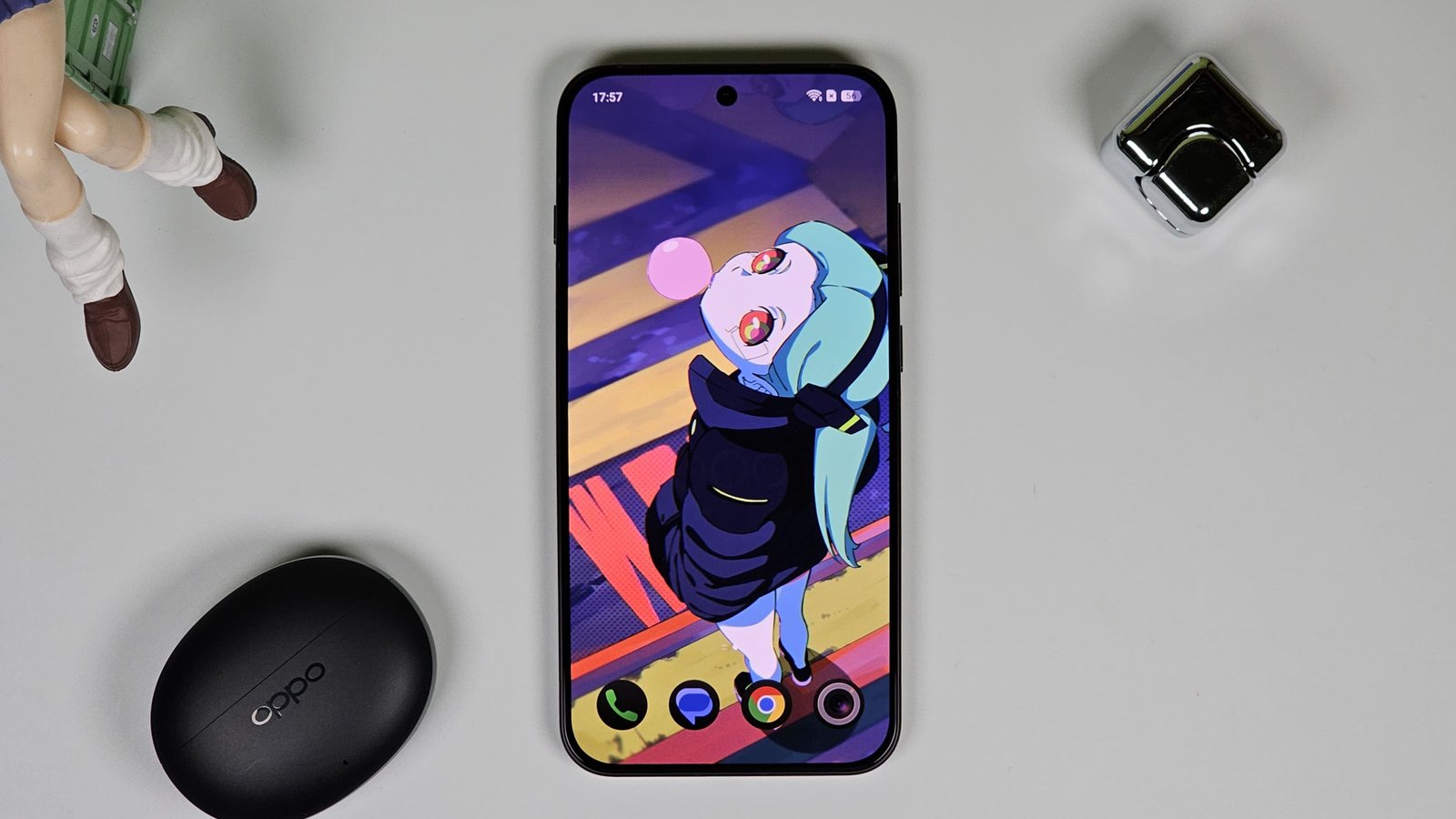
The Oppo Reno 16 5G gets a 6.3-inch AMOLED display with a 120Hz refresh rate, and honestly, I don't think Oppo could have done much better here. It is compact enough to make one-handed use comfortable while still giving you enough screen space for gaming, watching videos, or scrolling through social media. The panel is also 10-bit, so colours look vibrant, and everything from YouTube videos to HDR content looks fantastic.

Another thing I really liked is how symmetrical the bezels are. They are thin all around, and combined with the compact form factor, the phone genuinely looks and feels like a flagship. My only complaint is the brightness. While the rated peak brightness of 1,800 nits sounds good on paper, there were times outdoors when I wished the display could get a little brighter, especially when using the camera under direct sunlight. It is not a deal breaker by any means, but considering phones in this price range are pushing much higher brightness numbers now, this is one area where Oppo could have done better.
Oppo Reno 16 5G cameras: This is where the flagship experience begins
The cameras are easily the strongest part of the Oppo Reno 16 5G, and this is where you realise that you are using a true flagship smartphone. Oppo has equipped the phone with three 50MP rear cameras, including a 3.5x telephoto lens, and thankfully, there is no weak link in the setup. Even the front camera is a 50MP sensor, so you get a consistently good experience no matter which camera you use.

I recently took the phone out for a proper camera run, and the results genuinely impressed me. The photos come out incredibly crisp with plenty of detail, and while AI is obviously doing some processing behind the scenes, it never feels overdone. The phone adds just enough processing to improve the image without making it look artificial, so most of the shots end up looking very true to life. Colours are pleasing, dynamic range is excellent, and the pictures have a nice sense of depth that you usually expect from more expensive phones.

One thing I noticed quite early was that the viewfinder does not always do justice to the final image. After taking a few photos, I stopped paying too much attention to what I was seeing on the screen and simply trusted the camera. Almost every time, the final image turned out much better than what the viewfinder suggested.


The 3.5x telephoto camera is another highlight. It lets you zoom surprisingly far while keeping details intact instead of turning everything into an AI-generated mess.


The ultra-wide camera is equally impressive because it stays very close to the main camera in terms of colours, something that many smartphones still struggle to achieve.

It is rare to see this level of consistency across all four cameras, and that is exactly what makes the Oppo Reno 16 5G such a joy to shoot with.
Oppo Reno 16 5G performance: This is where the flagship experience hits a speed bump
Now comes the part where I have mixed feelings about the Oppo Reno 16 5G. It is powered by the same Snapdragon 7 Gen 4 chipset that we saw on the Reno 15, and while it is by no means a bad processor, I expected more from a phone that starts at ₹62,999. For day-to-day usage, there is honestly nothing to complain about. The phone feels fast, apps open quickly, multitasking is smooth, and even after pushing it a little, I never noticed any major heating or performance throttling. Oppo has done a good job tuning the chipset because the phone stays cool most of the time.

The problem starts when you treat it like a flagship and launch a game. I play a lot of games, so this was the first area where I started noticing the compromises. BGMI is well optimised and offers a decent experience, although the frame rate does drop during intense fights or when there is too much happening on the screen. Games like Neverness to Everness and Zenless Zone Zero are a different story. No matter how much I lowered the graphics settings, I kept running into stutters that made the experience far from enjoyable.
What makes this harder to ignore is the competition. Phones from Xiaomi, OnePlus, and iQOO in this price range are already offering flagship processors from Qualcomm or MediaTek, and the difference becomes quite obvious if gaming is something you care about. If gaming is anywhere near the top of your priority list, the Oppo Reno 16 5G starts feeling like a compromise that did not have to exist.
Sound and haptics: Gets the job done
The stereo speakers on the Oppo Reno 16 5G are pretty good for everyday use. The main bottom-firing speaker does most of the heavy lifting while the earpiece acts as the secondary speaker, so the balance is roughly 80:20. The phone gets loud enough for watching YouTube or Netflix, and the 300 per cent volume boost actually makes a noticeable difference when you are in a noisy environment. As for the haptics, they are good but not exceptional. They feel crisp enough while typing or navigating through the UI, although I still think there is room for improvement, considering the price of the phone.
Software: Smooth experience with a few rough edges
The Oppo Reno 16 5G runs ColorOS 16, and I have to say Oppo has done a great job with the overall fluidity. Animations are smooth, apps open quickly, and the entire UI feels polished. There are also plenty of AI features this time around, with Mind Space being the biggest addition.
The dedicated AI Snap Key is supposed to make accessing it quicker, but I found myself using it less and less because there is a slight delay before the interface appears. It is only a fraction of a second, but enough to make you hesitate before pressing it again. Hopefully, this is something Oppo can improve through software updates.

The only thing I still do not like is the amount of bloatware that comes pre-installed. You can remove most of it, but not everything, which is disappointing on a phone at this price. Thankfully, once you spend a few minutes cleaning things up, the overall software experience is genuinely enjoyable.
Battery: One less thing to worry about
Battery life is another area where the Oppo Reno 16 5G does well. The 6,700mAh battery comfortably lasted me through an entire day, even on days when I was using the camera a lot or spending more time outdoors. Charging is equally impressive thanks to the bundled 80W SUPERVOOC charger, and topping up the phone never really felt like a waiting game. It is not the fastest charging solution available today, but it strikes a nice balance between charging speed and battery longevity. Combined with the efficient chipset, battery anxiety was never something I had to deal with while using this phone.
Pros
Excellent camera system with consistently great results
Compact premium design that's comfortable to use one-handed
Beautiful 120Hz AMOLED display with thin, uniform bezels
Strong battery life with fast 80W charging
Smooth and polished ColorOS experience
Stays cool under everyday workloads with stable performance
Cons
Snapdragon 7 Gen 4 feels underpowered for the price
Gaming performance falls behind similarly priced rivals
Too much pre-installed bloatware
Display brightness could have been better outdoors
Should you buy the Oppo Reno 16?
The Oppo Reno 16 5G is an easy recommendation if your priorities are a great camera, premium design, compact form factor, and long battery life. It gets almost everything right, and after using it for a few weeks, the cameras are what kept impressing me the most. The phone also feels genuinely premium in the hand, the display is excellent, and ColorOS remains one of the smoothest Android skins you can get.
The problem is the price. At ₹62,999, I simply expected a more powerful chipset. When brands like Xiaomi, OnePlus, and iQOO are already offering flagship processors around this price, the Snapdragon 7 Gen 4 feels like a compromise that is difficult to ignore.
If gaming or raw performance is high on your priority list, I would recommend looking at the OnePlus 15R or spending a little more on the Xiaomi 17T instead. But if you care more about cameras, design, battery life, and want a compact premium smartphone, I can confidently recommend the Oppo Reno 16 5G. It is a really good phone that is held back by just one decision.
Similar articles for you
Samsung Galaxy S26 review: Refining the compact flagship formula with meaningful upgrades
Nothing Phone 3a Lite 5G mobile review: What’s cool and what’s not