Published on: Nov 9, 2026, 18:03:27 IST By Shishir Gupta Prefer HTon Google Share via Copy link The fighting may stop, but the strategic contest does not.
That is the central message of Hindustan Times Executive Editor Shishir Gupta’s assessment of the changing India-Pakistan equation: Operation Sindoor has not diminished the challenge from Islamabad, and India must prepare for an adversary investing in military capabilities while cultivating powerful international partners.
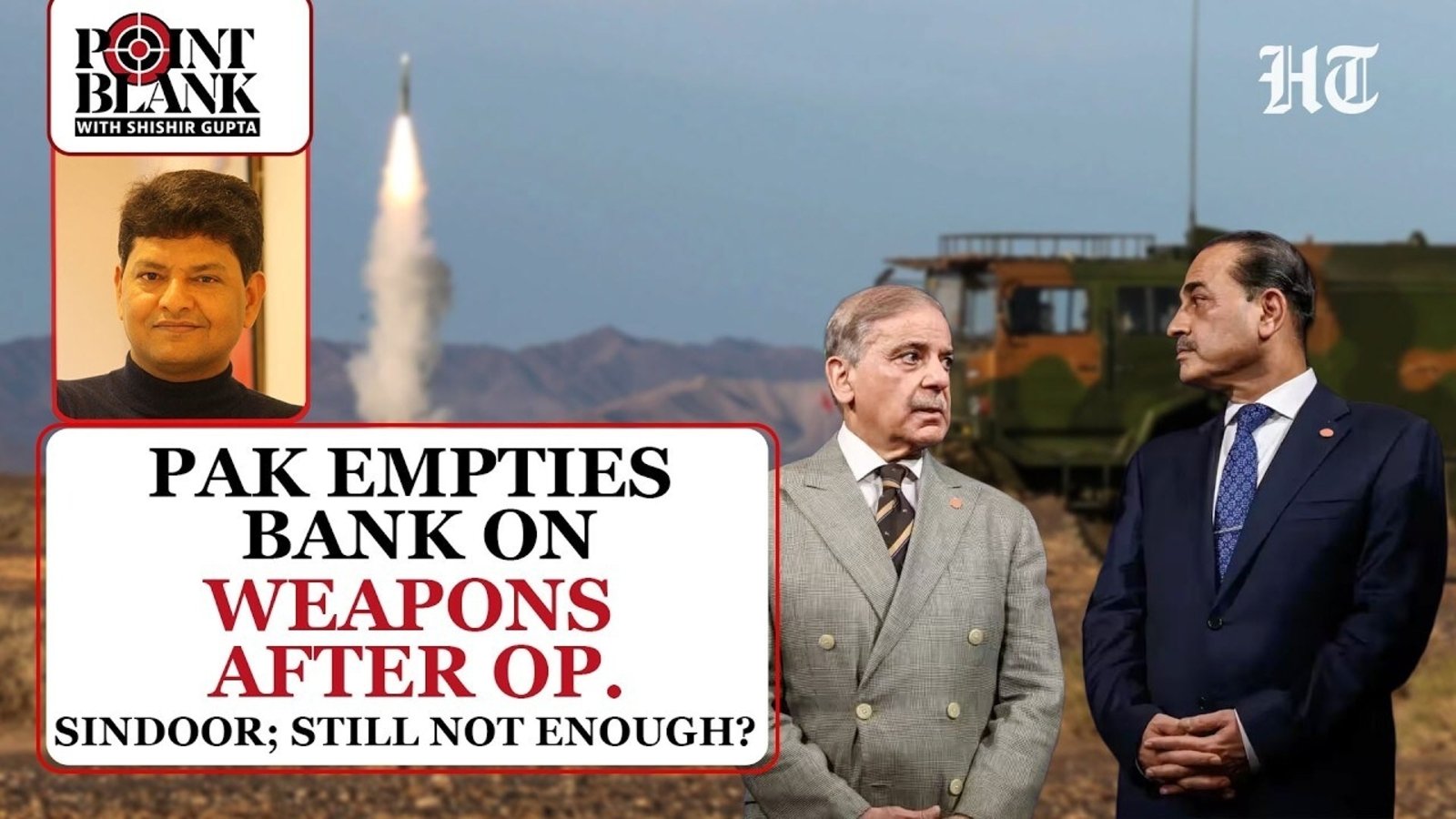
Speaking to HT Senior Anchor Aayesha Varma on Point Blank, Shishir Gupta described a competition extending beyond fighter aircraft, missiles and submarines.
Speaking to HT Senior Anchor Aayesha Varma on Point Blank, Gupta described a competition extending beyond fighter aircraft, missiles and submarines.
Its other dimensions include diplomatic bargaining, intelligence operations and information warfare.
India, he argued, retains the military advantage, but sustaining that edge will require self-reliance, sustained modernisation and greater attention to threats from within.
The fighter question: Why Delhi is watching closely At the centre of Gupta’s assessment was Pakistan’s potential acquisition of Chinese fifth-generation fighter aircraft.
Citing intelligence inputs, he said Pakistan could receive its first J-20 fighters as early as January or February 2027, although the timing could change.
He also said Pakistani pilots were already training in China.
These are claims made in the interview, rather than confirmed deliveries established by the transcript.
Nevertheless, Gupta’s concern was clear: a more capable aircraft, combined with longer-range air-to-air missiles, could substantially strengthen Pakistan’s aerial capabilities.
He pointed to Pakistan’s interest in missiles beyond the PL-15 used during Operation Sindoor, naming the PL-16 and PL-17.
In his assessment, improvements in both the launch platform and its weapons would deepen the challenge for Indian planners.
Gupta also acknowledged potential limitations, questioning the endurance of China’s WS-15 engine.
His broader argument, however, was that technical shortcomings should not obscure the significance of Pakistan potentially acquiring a fifth-generation fighter capability.
A build-up across air, land and sea The aircraft question forms part of a wider military expansion that Gupta attributed to Field Marshal Asim Munir.
He described Pakistan as a “quasi-military state” in which the military leadership can prioritise defence acquisitions despite financial constraints.
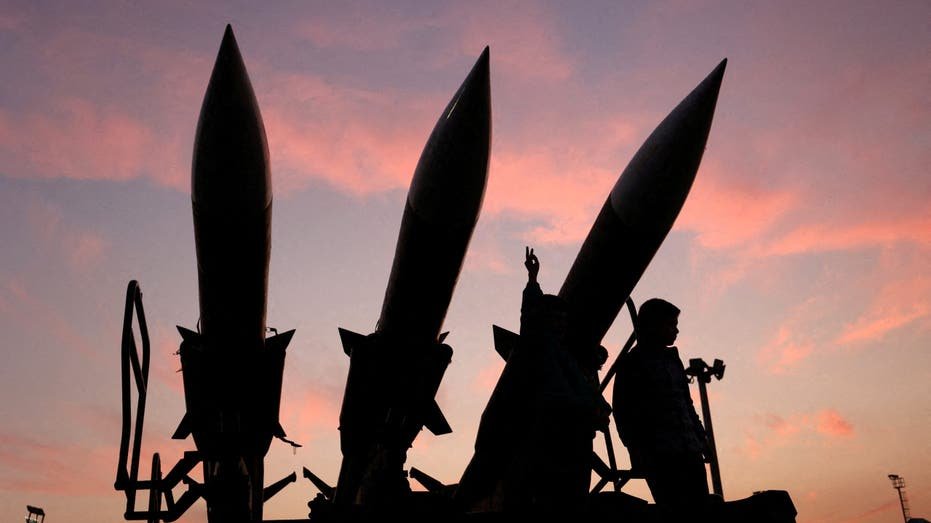
The equipment he highlighted included Chinese HQ-9B air-defence systems, eight Yuan-class or Hangor-class submarines, longer-range missiles, and armed drones and unmanned combat systems from China and Turkey.
Taken together, these acquisitions represent more than the purchase of individual weapons.
In Gupta’s account, they reflect an effort to improve Pakistan’s capabilities across multiple domains, complicating India’s operational planning.
He rejected the assumption that the damage India inflicted during Operation Sindoor had permanently reduced the Pakistani threat.
Although he credited India with damaging 11 Pakistani air bases and multiple air-defence installations, he argued that Islamabad’s subsequent modernisation made continued vigilance essential.
How Pakistan turns relationships into military leverage How does a financially constrained country sustain such ambitions?
Gupta’s answer centred on Pakistan’s ability to make itself useful to competing powers.
China remains its closest strategic partner.
Gupta described a relationship encompassing weapons, surveillance support and the China-Pakistan Economic Corridor.
In return, he argued, Islamabad accommodates Beijing’s interests and supports its political positions.
Yet Pakistan also maintains engagement with the United States.
Gupta placed this relationship within a long historical context, while describing Islamabad’s outreach to Washington, Saudi Arabia, Turkey and Iran as part of a wider effort to secure resources and influence.
His assessment was that Pakistan does not necessarily need its partners to share identical objectives.
It seeks overlapping opportunities: military equipment from one relationship, financial backing from another, and diplomatic relevance from a third.
But Gupta also identified a limitation.
Playing multiple sides can generate short-term advantages without producing lasting trust.
Pakistan’s usefulness, he suggested, should not be confused with unconditional support.
India’s response: Range, defence and readiness Gupta maintained that India was responding to Pakistan’s acquisitions rather than watching passively.
He highlighted efforts to integrate the Russian RVV-BD air-to-air missile, which he described as having a range of approximately 300 kilometres.
He also referred to the indigenous Astra programme, including an anticipated Astra 2 test and a projected range exceeding 200 kilometres.
The underlying objective, in his account, is to expand India’s ability to engage threats at longer distances and strengthen its stand-off capabilities.
Air defence is another priority.
Gupta referred to the expected arrival of India’s fifth S-400 system and the need to monitor Pakistan’s development of the Ababil missile, including its pursuit of multiple independently targetable re-entry vehicles.
These timelines and specifications were presented as Gupta’s assessments in the conversation.
His larger contention was that India must prepare simultaneously for Pakistan’s modernisation and the continuing challenge from China.
The contest beyond conventional weapons For Gupta, military preparedness is only one part of national security.
The other involves counterintelligence and the ability to recognise covert influence, institutional penetration and information operations.
He argued that India needs stronger safeguards across the armed forces, bureaucracy and other influential institutions.
He also identified information warfare - the use of information to weaken an adversary’s confidence and cohesion - as an area requiring greater attention.
His “high roller table” analogy captured the responsibility accompanying India’s growing international position: a country seeking a larger global role cannot assume that another power will protect its interests.
The challenge, therefore, is not simply to buy better weapons.
It is to connect military strength with intelligence capability, institutional resilience and independent strategic judgement - while recognising that an advantage over Pakistan does not make the competition any less demanding.
ABOUT THE AUTHOR Shishir Gupta Shishir Gupta is Executive Editor at Hindustan Times and one of India's top journalists covering national security, strategic affairs, foreign policy and geopolitics.
Over the past three decades, he has extensively reported on India's military, diplomatic and security landscape, covering every major conflict and national security challenge, from the 1999 Kargil War and the 2020 East Ladakh standoff to Operation Sindoor in 2025.
He has also covered major terror attacks, including the IC-814 hijacking, the 26/11 Mumbai attacks and the 2025 Pahalgam terror strike, along with numerous Pakistan-backed terrorist incidents in the Kashmir Valley and across India.
He has reported on national and state elections for more than three decades.
A recognised authority on strategic affairs, Gupta has covered India's nuclear programme since the Pokhran-II (Shakti series) tests in May 1998 and has written extensively on global nuclear issues, Indian diplomacy and the country's expanding global outreach.
He has also reported widely on international conflicts and terrorism, with a special focus on the Indian subcontinent.
Gupta has interviewed Prime Minister Narendra Modi more than four times, including Modi's first interview with the print media after becoming Prime Minister in May 2014.
His other interviews include three with the Dalai Lama, as well as conversations with Benjamin Netanyahu, Amit Shah, Yogi Adityanath, S.
Jaishankar, Nirmala Sitharaman and Piyush Goyal.
He is the author of Indian Mujahideen: The Enemy Within (Hachette, 2011) and Himalayan Face-off: Chinese Assertion and Indian Riposte (Hachette, 2014).
He was awarded the Chevening-Wolfson Joint Scholarship at Wolfson College, University of Cambridge, UK, in 1998 and participated in the International Visitor Leadership Program (IVLP) of the US State Department in 2006.
He received the Ben Gurion Prize from Israel in 2011 and the K.
Subrahmanyam Prize for Strategic Studies in 2015 from the Manohar Parrikar Institute for Defence Studies and Analyses (MP-IDSA).