The Parliamentary Standing Committee on Health and Family Welfare has recommended that every serum creatinine test (direct measurement of waste product in blood) in the country automatically include a glomerular filtration rate (eGFR) report (estimates normal kidney function), at no additional cost to the patient, to improve early detection of chronic kidney disease (CKD).
The Department-related Parliamentary Standing Committee on Health and Family Welfare headed by Prof.
Ram Gopal Yadav, MP, Rajya Sabha, in its 177th Report on “Prevalence of Chronic Kidney Disease in India-Prevention, Diagnosis, Treatment and Management” made a total of 66 recommendations.
The report was presented to the Rajya Sabha and tabled in the Lok Sabha on August 7.
D, annual screening of people at high risk, and a shift in policy from treating advanced kidney failure to preventing and slowing the progression of the disease.
Regional variation The committee cited a pooled CKD prevalence of about 13.24% in India, with considerable regional variation.
It noted that CKD often remains asymptomatic until substantial kidney function has been lost, resulting in delayed diagnosis, complications, and greater dependence on dialysis and transplantation.
Why are parliamentary standing committees necessary?
“Serum creatinine alone is inadequate for early detection, as levels can remain within the normal range despite significant loss of kidney function.
It has, therefore, recommended that public and private laboratories automatically calculate eGFR, preferably using the CKD-EPI equation, whenever serum creatinine is tested.
Urine albumin assessment should also form part of kidney function evaluation for high-risk individuals,’’ it said.
The panel also recommended annual CKD screening institutionalised under the National Programme for Prevention and Control of Non-Communicable Diseases for people with diabetes, hypertension, cardiovascular disease, obesity, a family history of kidney disease, and other recognised risk factors.
It has also sought a uniform national screening protocol across Ayushman Arogya Mandirs and other primary healthcare facilities.
Women and TB in India: a story of deprivation, discrimination and debt New concern The report also flagged the emerging burden of CKD of unknown etiology among agricultural workers and other outdoor labourers, and stated that heat stress, recurrent dehydration, pesticide exposure, and contaminated drinking water have been identified as areas requiring urgent investigation.
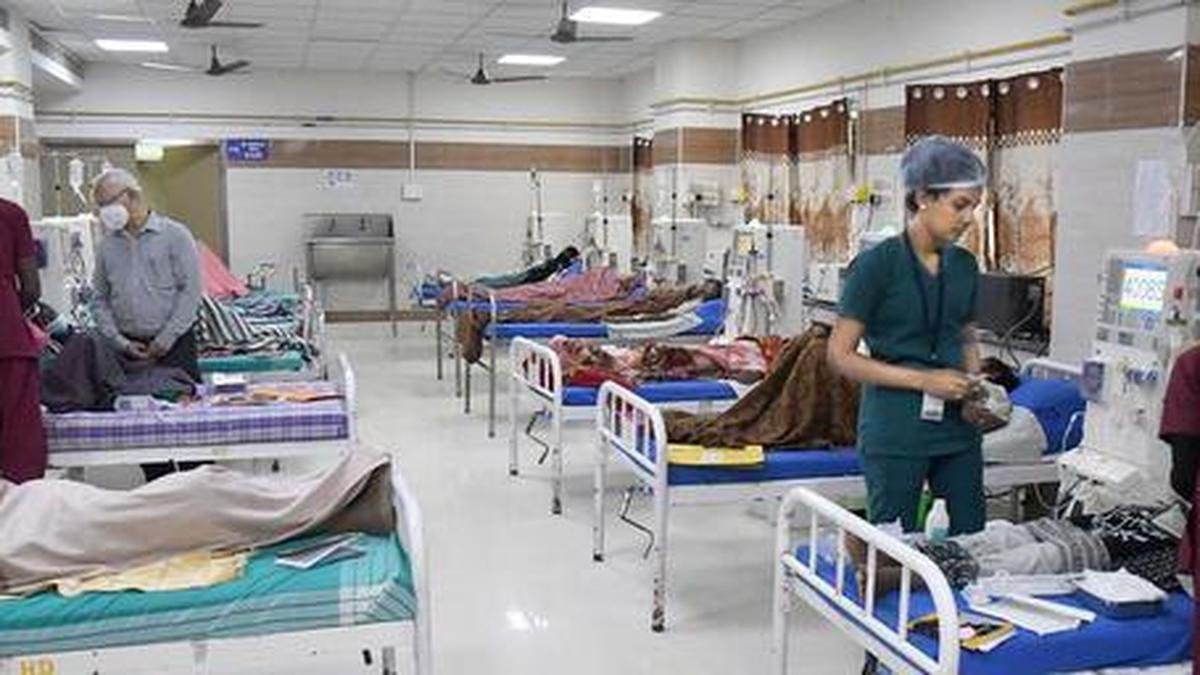
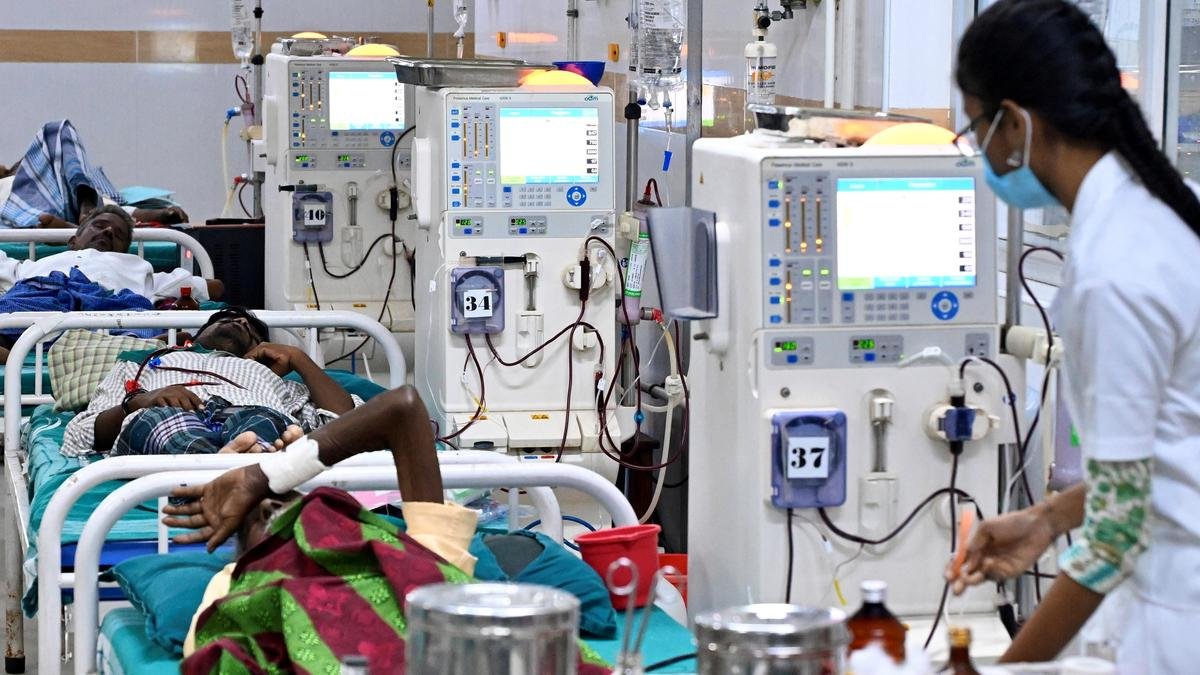
The report notes that while annual haemodialysis sessions under the Pradhan Mantri National Dialysis Programme have increased from about 25 lakh to 70 lakh over five years, there is a need for greater use of home-based peritoneal dialysis, particularly in rural and remote areas.
Only 1,637 beneficiaries across 12 States, or about 1.1% of active programme beneficiaries, were receiving continuous ambulatory peritoneal dialysis, it noted.
The committee has also recommended extending post-transplant coverage under the Ayushman Bharat PM-JAY from 15 days to one year, including follow-up consultations, investigations and immunosuppressive medicines.
Despite existing financial protection schemes, the report noted that out-of-pocket expenditure rose from 39.4% in 2021-22 to 43.4% in 2022-23.
The panel has sought a National Renal Registry linked to the Ayushman Bharat Digital Mission and the national dialysis portal, as well as stronger nephrology services at district hospitals and a separate national programme for paediatric kidney care.