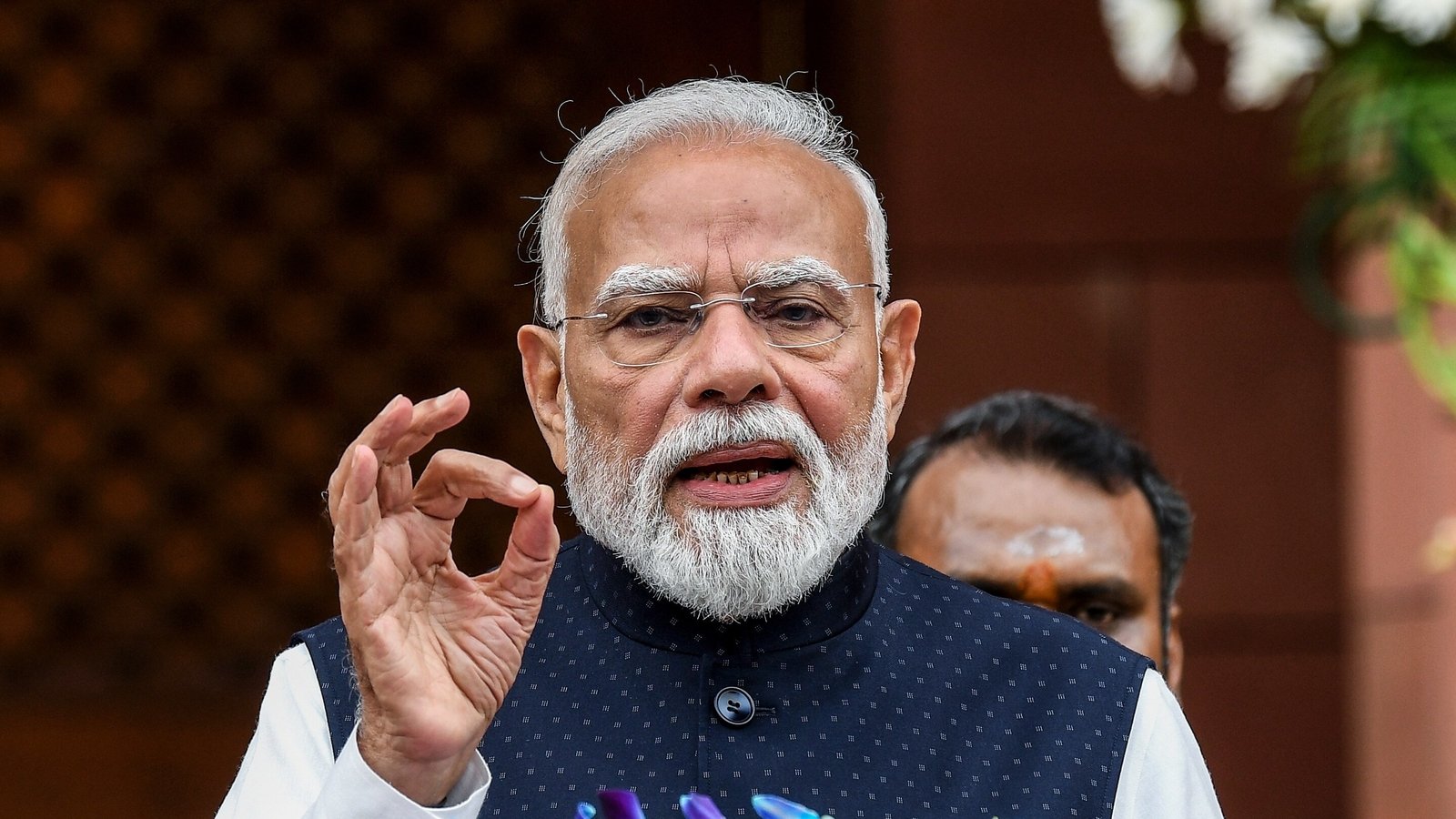
HomeNext PM Modi announces fast-track courts for paper leak cases: 'Those harming youth won't be spared' PM Modi said protecting the interests of students remained a priority for the government.
Updated on: Jul 23, 2026, 09:57:37 IST By Smriti Kak Ramachandran Prefer HTon Google Share via Copy link Prime Minister Narendra Modi on Thursday asserted that the welfare of the youth is paramount and the government has decided to set up fast track courts to punish those responsible for paper leaks.
PM Modi's 1st reaction on paper leak, protest: 'Those who try to harm future of youth...' (ANI) “Nothing is more important than the welfare and future of our youth!”, he posted on his official X account.
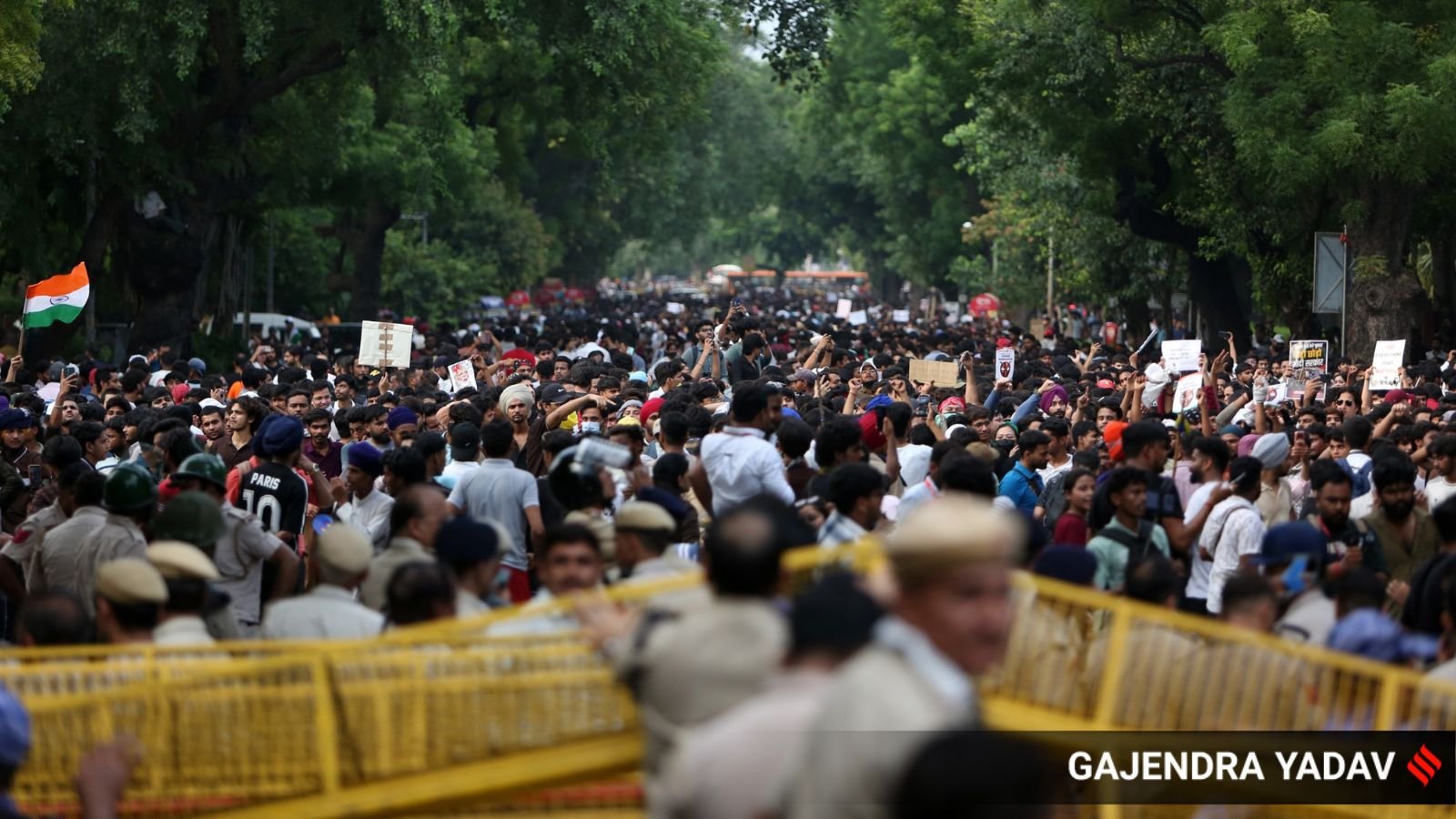
Track live updates on the CJP protest here The prime minister’s statement comes amid ongoing protests by students and activists over irregularities in the conduct of examinations, including National Eligibility cum Entrance Test NEET (UG) paper leaks.
“We have decided to set up fast-track courts to ensure swift and stringent punishment for those involved in paper leaks.
Have directed the concerned authorities and officials to take all necessary steps in this regard.
This continues our series of steps for safeguarding the interests of students,” he said “Those who try to harm the future of our youth will not be spared”, he said.
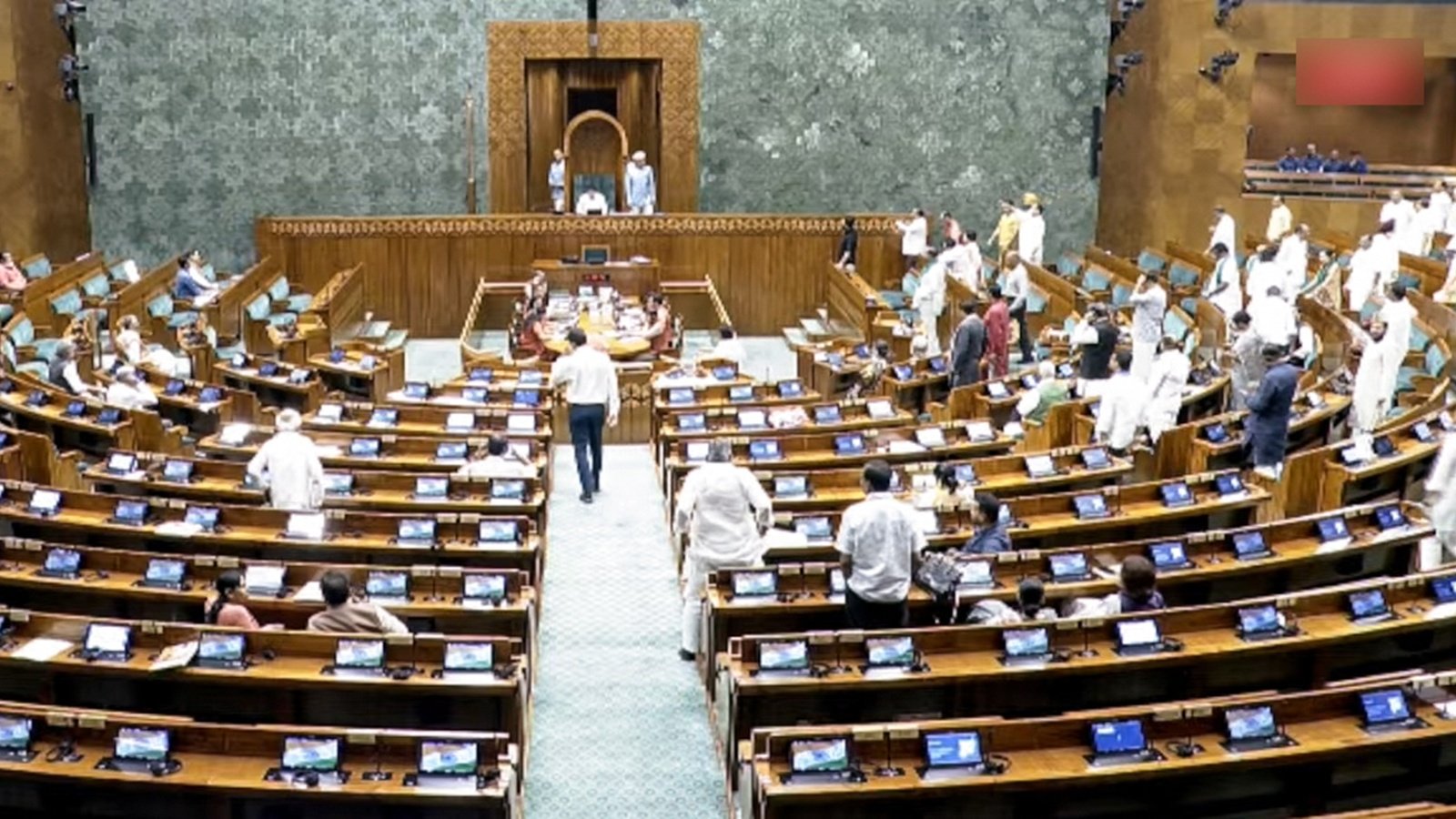
On Tuesday, while addressing the National Democratic Alliance (NDA) lawmakers at the parliamentary meeting he urged the MP’s to reach out to the youth and address their concerns seeking to underline that strictest punishment must be given to those involved in irregularities such as paper leaks.
This is PM Modi's first reaction to the ongoing protests demanding the resignation of Dharmendra Pradhan over paper leaks and student suicides.
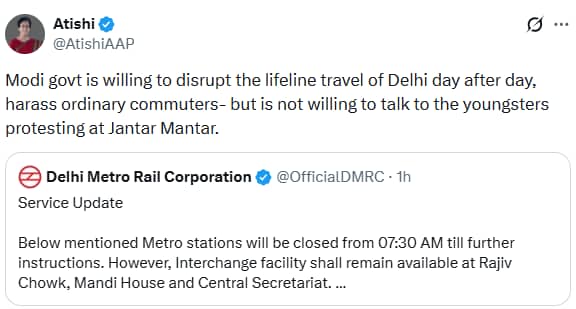
CJP reacts to PM Modi The Cockroach Janta Party (CJP), leading the protests at Jantar Mantar, reacted to the PM's post.
“Dharmendra Pradhan must resign,” the satirical front wrote on X.
Congress leader Rahul Gandhi joined the Opposition's protest on July 22 in support of the youth-led movement.
He demanded the PM apologise to the students who were “assaulted” by police.
The Opposition staged a sit-in by INDIA bloc MPs from Parliament to the PM's residence at Lok Kalyan Marg after which he was detained by the police.
Gandhi, at a press conference on Wednesday, said “We felt that if the students of India are on the streets, then the Opposition should also be on the streets”.
“This is a crime that has been done to the future of our country.
This is a crime that has been done to the people we love.” Rahul Gandhi's '152 paper leaks' claim He also alleged that 152 paper leaks had taken place since the BJP-led NDA came to power in 2014, affecting nearly 75 million students.
"What we do know is that 152 paper leaks have taken place over the last decade.
If you do the math.
So one a month approx," he said.
Responding, Union health minister JP Nadda said the matter was under investigation and assured that the government would present the facts once the probe was complete.
"This is a matter of investigation, and the government, being a responsible government, will undoubtedly investigate and present the truth to the public and the nation," he said.
K Annamalai questions BJP Former Tamil Nadu BJP chief K Annamalai on Wednesday questioned the Central government over the delay in engaging with students protesting against the alleged NEET paper leaks.
“Protest is a fundamental right in a Democracy.
The pertinent question, however, is this: why did the BJP-led Central Government take so long to initiate a dialogue with the protestors?” he wrote on X.
“Why was meaningful engagement delayed until the protest had escalated to a flashpoint?
Operating round the clock, the desk brings together experienced editors, reporters and correspondents to deliver fast, accurate and contextual reporting across subjects that influence public policy, governance, business, society and international affairs.
The HT News Desk covers politics, elections, government policies, the economy, business and markets, science and technology, the environment, law and order, infrastructure, education, climate issues and geopolitics, while closely tracking developments across states, institutions and global capitals.
The team also leads coverage of major breaking news events, policy announcements, court proceedings, natural disasters, public emergencies and significant international developments.
Reports published by the newsdesk are based on information gathered from reporters on the ground, official statements, government agencies, court records, regulatory filings, recognised institutions and other authoritative sources.
Stories undergo editorial scrutiny and verification processes to ensure accuracy, fairness and relevance, and are updated as events evolve and additional information becomes available.