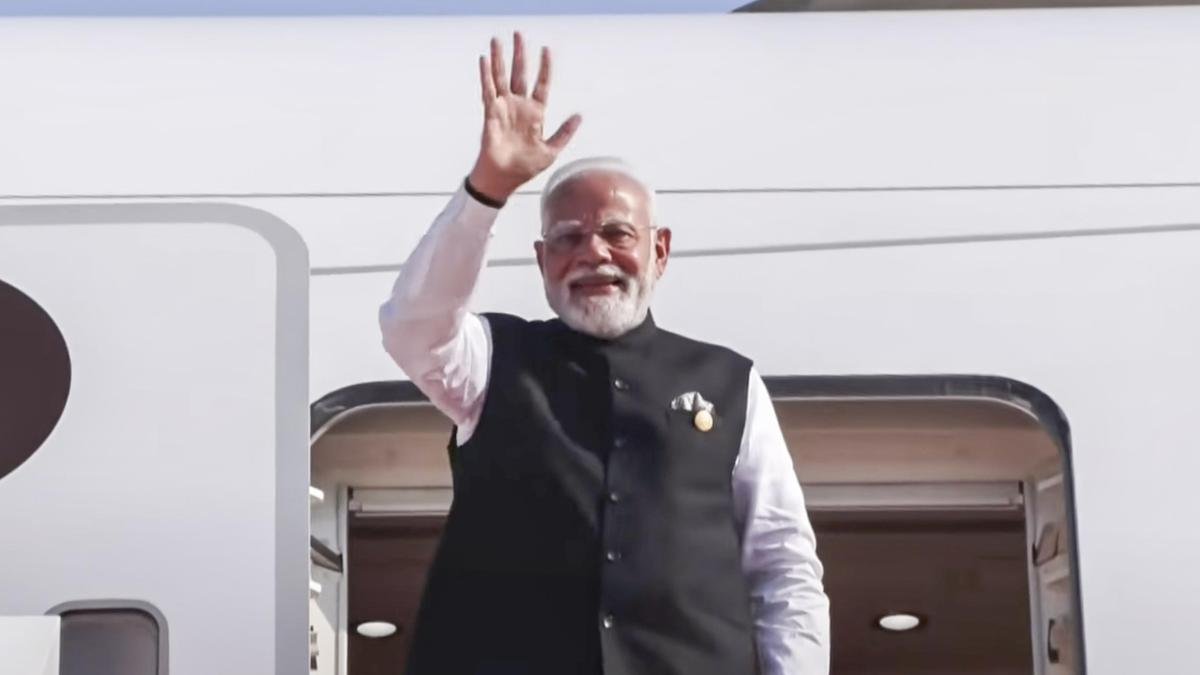
Prime Minister Narendra Modi’s four-day visit to Uzbekistan and the Kyrgyz Republic is more than just an outreach to two important states in Central Asia or the Shanghai Cooperation Organisation (SCO).
The agenda will include engagements aimed at three additional multilateral platforms — the upcoming BRICS Summit in September, the two-year UN Security Council term of 2028-2029, and planning for the long-pending India-Central Asia Summit, which has not met since 2022.
Experts say the delay has led to speculation in the region that New Delhi has lost interest in the engagement, particularly compared with Mr.
Modi’s first foray in 2015, when he visited all five Central Asian states.
His biggest challenge during this visit will be to reverse that perception.
India’s return to its Central Asian neighbourhood In a speech given at Kazakhstan’s Nazarbayev University in Nur Sultan, addressed to the “people of Central Asia”, Mr.
Modi had then promised that India would rebuild connectivity to the region.
“In an age of globalisation, Asia cannot remain fragmented.
And Central Asia cannot remain distant and disconnected from India,” he said.
Since 2012, when the previous Manmohan Singh government had launched the ‘Connect Central Asia’ policy, there had been considerable hope that more trade, travel, and pipelines would follow.
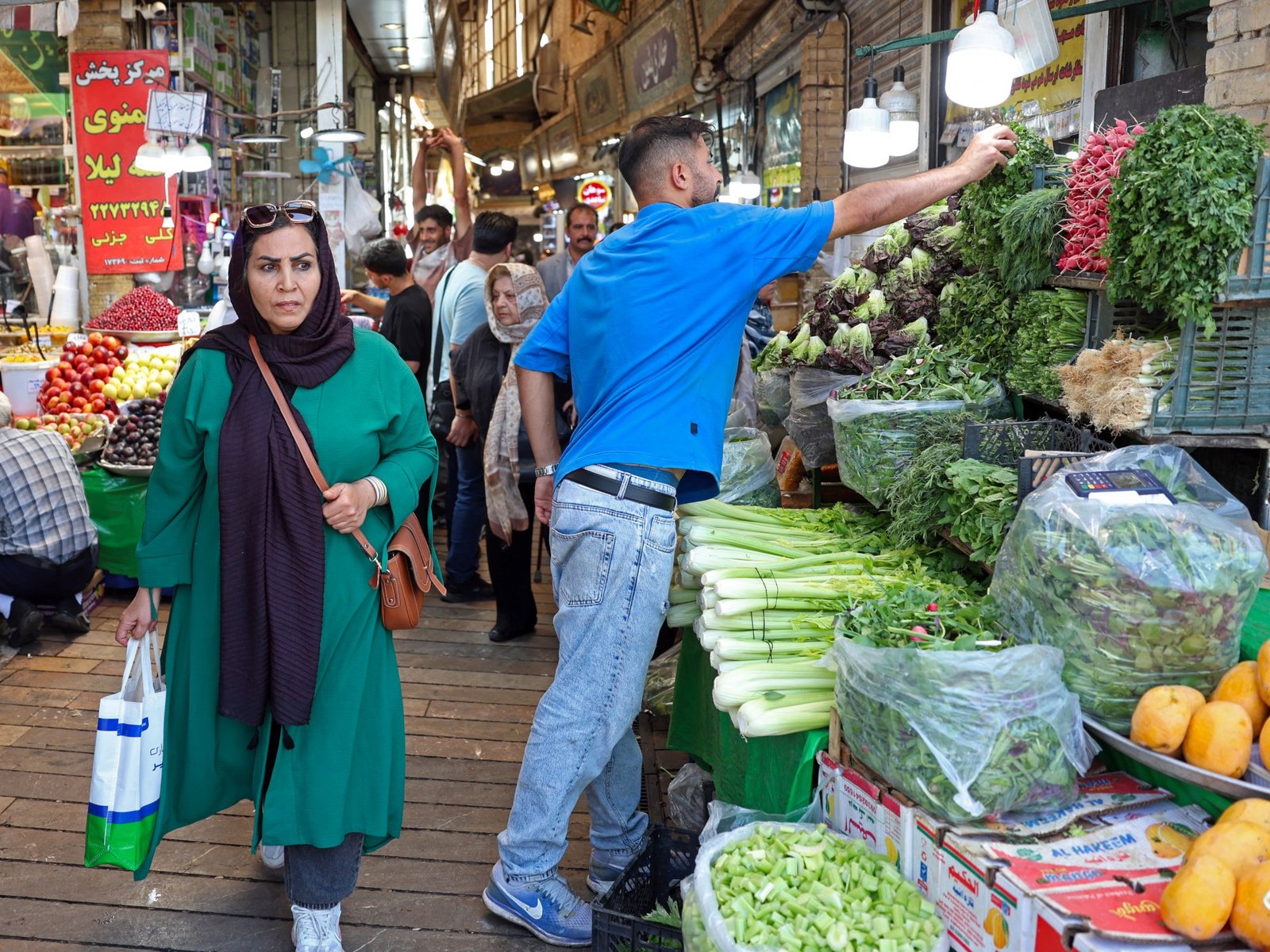
However, while trade in goods has risen from $500 million in 2010 to more than $2 billion in 2025, connectivity prospects have been considerably cut due to geopolitical shifts.
The rupture in ties with Pakistan since 2016 has ended India’s road connectivity to Afghanistan and Central Asia, as well as the Turkmenistan-Afghanistan-Pakistan-India pipeline.
More recently, the virtual closure of the Chabahar port projects due to U.S. sanctions has ended that route, while the U.S.-Iran war has imperilled the International North South Transport Corridor project.
In addition, China’s Belt and Road Initiative has made deep inroads in the region, growing to $106 billion in China-Central Asia trade in 2025.
India discusses agricultural collaboration with Taliban government of Afghanistan “The broader message is that we have to stay engaged with the entire region, but also bilaterally with each Central Asian state,” Nandan Unnikrishnan, a distinguished fellow at the Observer Research Foundation and a leading expert on Central Asia and Russia, said, adding, “We may not be able to match China and Russia in terms of investment and influence, but we have many economic interests.
In addition, India’s soft power is in trade, education, and IT, where Indians have been slow to utilise such obvious advantages.” In Bishkek, Chinese President Xi Jinping and Russian President Vladimir Putin will attend the summit amongst other leaders of the SCO members.
Kyrgyz President Sadyr Japarov will hand over the presidency of the SCO to Pakistan Prime Minister Shehbaz Sharif for 2027, and all eyes will be on whether Mr.
Modi gives any indication that he would attend the summit in Islamabad.
When asked by The Hindu, Secretary, Ministry of External Affairs Sibi George said at a briefing last week that the decision on India’s participation would be taken by the “appropriate authority at the appropriate time”.
The SCO summit will also be Mr.
Modi’s first opportunity to meet with Iran President Masoud Pezeshkian since the U.S.-Iran war began, and discuss India’s concerns over the Hormuz Strait blockade.
In addition, New Delhi wants Iran to take a more flexible position at the BRICS summit on September 12, where tensions between Iran and the UAE have held up consensus over a joint statement.
The next big hurdle Mr.
Modi must cross is with Tajikistan, given that India and Tajikistan are both contenders for the Asian bloc’s vote for the non-permanent seat in the UN Security Council election in June 2027.
Despite India’s considerably larger diplomatic footprint, recent votes in the UN General Assembly have delivered upsets — in June, Germany lost out to Portugal and Austria, and the Philippines lost to the Kyrgyz Republic in this year’s UNSC votes.
In addition, Bangladesh’s Khalilur Rahman defeated his rival from Cyprus for President of the General Assembly in a tight race, even though the U.S., European countries, and India are understood to have supported Cyprus.
In the absence of a “clean slate” for next year’s election, India’s best bet would be to convince Tajikistan to put off its candidature to another year, and for Mr.
Modi to discuss this with both Tajik President Emomali Rahmon and his Central Asian counterparts during the upcoming summit.
In 2009, India had convinced Kazakhstan to withdraw from elections for the 2011-2012 term, and later supported Kazakhstan to win the 2017-2018 term.
Finally, officials hope that a date for the India-Central Asia Summit, which has been put off several times, will be set during the PM’s visit.
In January 2022, the leaders of all five core states — Kazakhstan, Kyrgyzstan, Tajikistan, Turkmenistan, and Uzbekistan — were expected in Delhi as guests for Republic Day, when the visit was cancelled due to a new wave of COVID-19 cases, and Mr.
Modi addressed the first India-Central Asia Summit virtually.
In June 2023, another opportunity for Central Asian leaders to visit Delhi was lost when the Modi government decided, citing scheduling difficulties, to cancel the in-person SCO Summit and hold that via videoconference as well.
In June 2025, India revived its interest when External Affairs Minister S.
Jaishankar held the India-Central Asia Dialogue of Foreign Ministers.
The PM met the Ministers and conveyed his invitation to their leaders, but the India-Central Asia summit is yet to be scheduled.