Get our daily political email, free app or daily news podcast
11m agoChalmers says economy facing ‘serious moment’
20m agoChalmers: ‘no amount of savings will make inflation go away’
1h ago‘Unwelcome but unsurprising’: Chalmers responds to inflation data
1h agoNational apology to LBGTQ+ veterans a ‘milestone’
2h agoInflation jumps to 4.9%
3h agoLabor agrees to Greens demand to carve out pensioners from private health insurance bill
3h agoZali Steggall and Allegra Spender update party name after acronym concerns
4h agoCoalition ‘instinct’ is to repeal digital duty of care bill, Hastie says
5h agoEarly election not on the cards, says Wells
5h agoUS ambassador criticises Labor’s digital duty of care bill
6h agoChalmers notes ‘serious moment for our economy’ but downplays recession fears
6h agoSolomon Islands to end China security pact, sign new Australia treaty
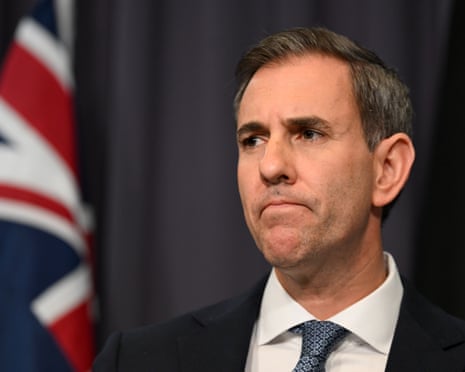
The treasurer has said Australia’s economy is facing an “especially difficult” period while pointing to government forecasts that things will get better in 2027.
Jim Chalmers was asked if the country faced an “economic emergency” when speaking to reporters in Canberra just now. He said:
This is a very serious moment for our economy, and we will respond in substantial ways.
Chalmers said the combination of economic issues Australia was facing had motivated his statement on Monday, which he described as “probably the most substantial preview, that I’ve seen in this building, of a mid year update”.
But he noted that Australia’s jobs market had enjoyed a “better experience” than other countries and pointed to Reserve Bank predictions that wages would grow faster than prices next year.
2026 has been an especially difficult year for people. We expect this inflation, for a range of reasons, to hang around for a bit longer than anyone would like. But we also expect inflation to come down in the target band in 2027. We expect real wages growth, in the Treasury and RBA forecast, to return in 2027. We expect our economy to continue to grow.
2026 has been an especially difficult year for people. We expect this inflation, for a range of reasons, to hang around for a bit longer than anyone would like.
But we also expect inflation to come down in the target band in 2027. We expect real wages growth, in the Treasury and RBA forecast, to return in 2027. We expect our economy to continue to grow.
Jim Chalmers has said no amount of budget cuts would fix Australia’s inflation as he promises rising prices will be the main priority of next month’s budget update.
The treasurer has told reporters he stands by promises to find significant savings, as foreshadowed in a grim parliamentary statement earlier this week.
I said on Monday, and I say again today, there’s no amount of responsible cost of living relief or budget savings, which will make this inflation challenge go away overnight, and that’s because it has a number of drivers, primarily, in this case, automotive fuel. And so we will do what we responsibly can, to hand down a budget update next month, which has substantial savings.
I said on Monday, and I say again today, there’s no amount of responsible cost of living relief or budget savings, which will make this inflation challenge go away overnight, and that’s because it has a number of drivers, primarily, in this case, automotive fuel.
And so we will do what we responsibly can, to hand down a budget update next month, which has substantial savings.
He pushed back at commentary that government spending has caused resurgent inflation, defending past cost-of-living policies such as electricity rebates and fuel excise cuts.
I would encourage people not to make the mistake of concluding that budgets are the primary driver of prices in our economy … If you look at the last four years, public final demand growth halved while private final demand growth tripled. And that tells us there are other factors at play here. People shouldn’t pretend, unfortunately, as I have seen in recent weeks and months, that there are no global factors at play here. Of course there are. Budgets are not the primary determiner of prices in our economy.
I would encourage people not to make the mistake of concluding that budgets are the primary driver of prices in our economy …
If you look at the last four years, public final demand growth halved while private final demand growth tripled. And that tells us there are other factors at play here.
People shouldn’t pretend, unfortunately, as I have seen in recent weeks and months, that there are no global factors at play here. Of course there are. Budgets are not the primary determiner of prices in our economy.
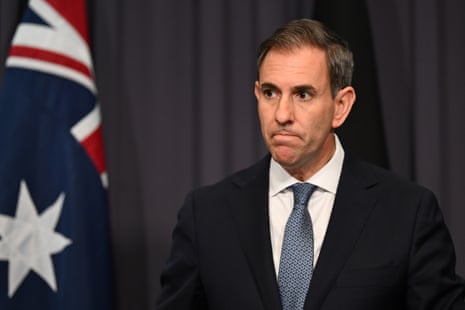
Chalmers says inflation jump is an unsurprising ‘global phenomena’
The treasurer, Jim Chalmers, has said new data showing surging prices was a “unwelcome but unsurprising reminder” of pressure on Australians.
Chalmers said the leap in inflation to 4.9% in October was due to oil and fuel prices, which he said had been widely predicted.
He told reporters in Canberra:
If you look around the world, October saw inflation go up in most major advanced economies, and interest rates are going up around the world as a result. We did have an inflation challenge in Australia before the war in the Middle East, but the war is making it much worse, and a lot of this inflation is a global phenomena, as a consequence. Inflation is still much lower than its peak in 2022, but it is still too high.
If you look around the world, October saw inflation go up in most major advanced economies, and interest rates are going up around the world as a result.
We did have an inflation challenge in Australia before the war in the Middle East, but the war is making it much worse, and a lot of this inflation is a global phenomena, as a consequence.
Inflation is still much lower than its peak in 2022, but it is still too high.
The Reserve Bank’s preferred trimmed mean measure of inflation – which takes out the most volatile prices, including fuel – lifted to 3.8%.