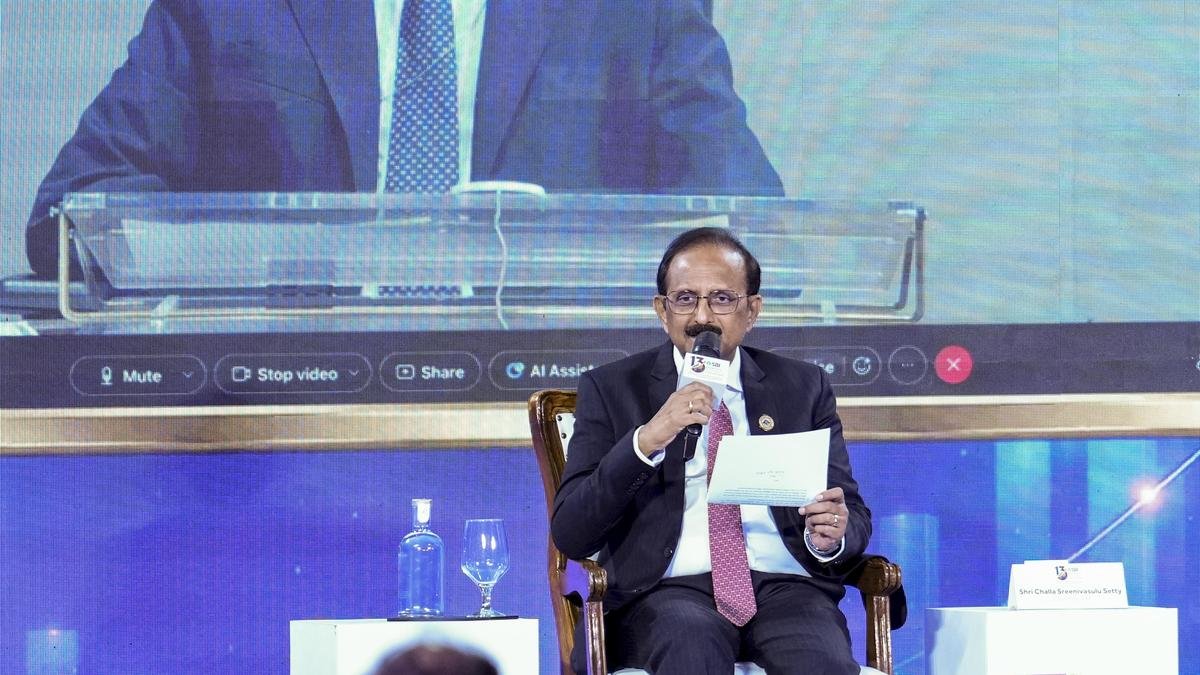
Principal Secretary to the Prime Minister P.K.
Mishra on Wednesday cautioned banks against reviving aggressive lending practices driven by short-term optimism, warning that poor credit assessment in the past had forced the banking system to divert significant resources towards cleaning up stressed assets.
“The cleanup of the banking system required considerable resources and time.
Those resources could otherwise have supported productive investment.
We should therefore preserve the institutional memory of that episode,” Mr.
Mishra said while addressing the SBI Banking and Economics Conclave in Mumbai.
“Credit must be appraised against the economics of the project rather than the enthusiasm of the moment.
That is the surest protection against a repetition of the cycle of excessive lending, stressed assets and subsequent cleanup,” he added.
The remarks come at a time when India’s banking sector has emerged from one of its worst asset quality crises, with gross non-performing assets (GNPA) at a multi-decadal low.
The GNPA ratio of the banking system fell below 1% in the first quarter of fiscal 2027, compared with nearly double-digit levels about a decade ago during the peak of the bad loan crisis.
Gross NPAs of SCBs hit a historic low of 2.15% as of Sept.
2025: FinMin The earlier deterioration in asset quality had contributed to the “twin balance sheet problem”, where stressed corporate borrowers and weakened bank balance sheets constrained fresh investment.
The government responded through bank recapitalisation, consolidation of weaker lenders and regulatory measures aimed at strengthening risk management practices.
Mr.
Mishra’s comments assume significance as banks are currently witnessing strong liquidity conditions and improved balance sheets, raising concerns that renewed credit growth could lead to excessive risk-taking if lending decisions are influenced by market optimism rather than fundamentals.
Manufacturing, FDI to strengthen resilience Highlighting the need to improve India’s macroeconomic resilience, Mr.
Mishra stressed the importance of reducing dependence on imports and strengthening domestic manufacturing capabilities.
“We have a significant merchandise trade deficit.
We must make things at home and competitively,” he said, adding that improving manufacturing performance and skilling the workforce would remain critical to sustaining economic growth.
He also underlined the importance of attracting foreign direct investment (FDI), describing it as a source of long-term capital at a time when global capital flows have become increasingly volatile.
Gross FDI hit 15-year high of $30.7 billion in April-June 2026 “Capital is fickle-minded,” Mr.
Mishra said, emphasising the need to create conditions that encourage stable and long-term investments.