Reserve Bank of Australia increases official cash rate to 4.85%, bringing it to highest level since 2008
RBA interest rates live updates: Reserve Bank cash rate decision
Get our daily political email, free app or daily news podcast
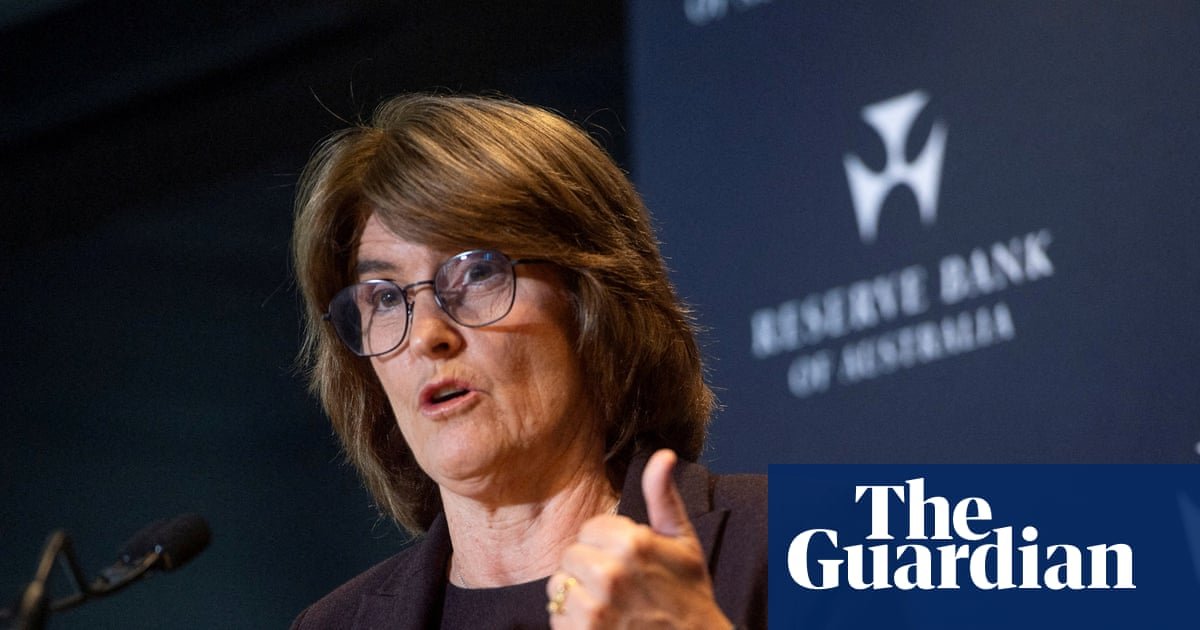
The Reserve Bank governor Michele Bullock has said that “some pain now will prevent even worse pain down the track,” after lifting official interest rates to an 18-year high of 4.85% in a bid to combat persistent inflation.
The RBA’s decision to hit mortgage holders for a fifth time in 2026 will intensify pressure on indebted households, but signals from the central bank suggest policymakers may now wait to gauge the full economic fallout before pulling the trigger again.
The decision split the monetary policy board, with six members voting for a hike, while three were in favour of holding the cash rate steady.
Sign up for Guardian Australia’s Politics, really newsletter here
Bullock told journalists shortly after the rate decision that inflation needed to come down “and we will do what is necessary to achieve that”.
In its post meeting statement, the RBA did not include an explicit reference to the potential need for further hikes, signalling the RBA is now prepared to wait and see the effects of this year’s multiple rate rises.
Economists from major investment houses, including UBS, understood the change in language from past statements to be “clearly dovish”, signalling the likelihood that rates would remain were they are at least in the short term.
The cash rate is now at its highest level since 2008.
The back-to-back hikes will heap more pain on over 3.3m households with home loans and turn the screws on a federal government under pressure for its economic management.
The latest rate rise will lift the monthly interest payment on a $700,000 home loan by $107, according to Canstar, bringing the total rise in repayments over this year’s five hikes to $532.
Bullock said on Tuesday that while the rate rise, which informs mortgages, is not the news that many Australians want to hear, “it is what’s needed to get inflation down”.
“Some pain now will prevent even worse pain down the track,” Bullock said.
Household costs
As the central bank struggles to explain to Australians how interest rate hikes will help tame inflation made worse by events overseas, the RBA’s latest set of forecasts in its Statement on Monetary Policy (SOMP) showed a difficult period ahead for the economy.
The forecasts showed the country’s cost of living crisis would extend for another year, even as Australia struggles with below trend economic growth and climbing unemployment.
The 4.3% inflation rate in the year to September was substantially stronger than the RBA had anticipated as a worsening Middle East conflict squashed hopes of a quick resolution to the global oil shock.
Inflation will push higher through the final months of 2026 and only return below 3% – within the bank’s 2 to 3% target range – by the end of next year, or about nine months later than hoped, the latest forecasts showed.
Amid a heated political stoush over whether the federal government’s spending is to blame for high and rising inflation, the RBA noted in its SOMP that public demand was weaker than expected through the first six months of 2026.
That was the result of cost of living measures rolling off and “moderating” spending in areas such as defence and disability and aged care services, the SOMP said.
Global oil prices would ease over the coming 18 months, but still remain relatively elevated, according to the forecasts, suggesting limited relief from high fuel costs for motorists and ongoing high costs for businesses.
“We view the risks to the inflation outlook as still skewed to the upside,” the report said.
Alongside persistent cost of living pressures, the RBA also predicted weak economic growth through to the end of 2028.
The economy would grow by 1.6% this year and by 1.3% in 2027.
That would be well below an estimated potential growth rate of about 2%, but better than recent forecasts by bank analysts.
And despite the risks associated with a housing downturn that “is one of the steepest over the past 50 years”, the central banks’ economists saw no evidence that the country was headed towards recession over the coming two years.
Unemployment, now at 4.7%, would end next year at about 4.9%, before creeping over 5% in 2028. Importantly, employment would remain positive.
Meanwhile, there was no end in sight for the global artificial intelligence boom, which would continue to add to capacity issues in Australia.
The RBA nearly tripled its forecast for business investment growth in 2026 to 12%.