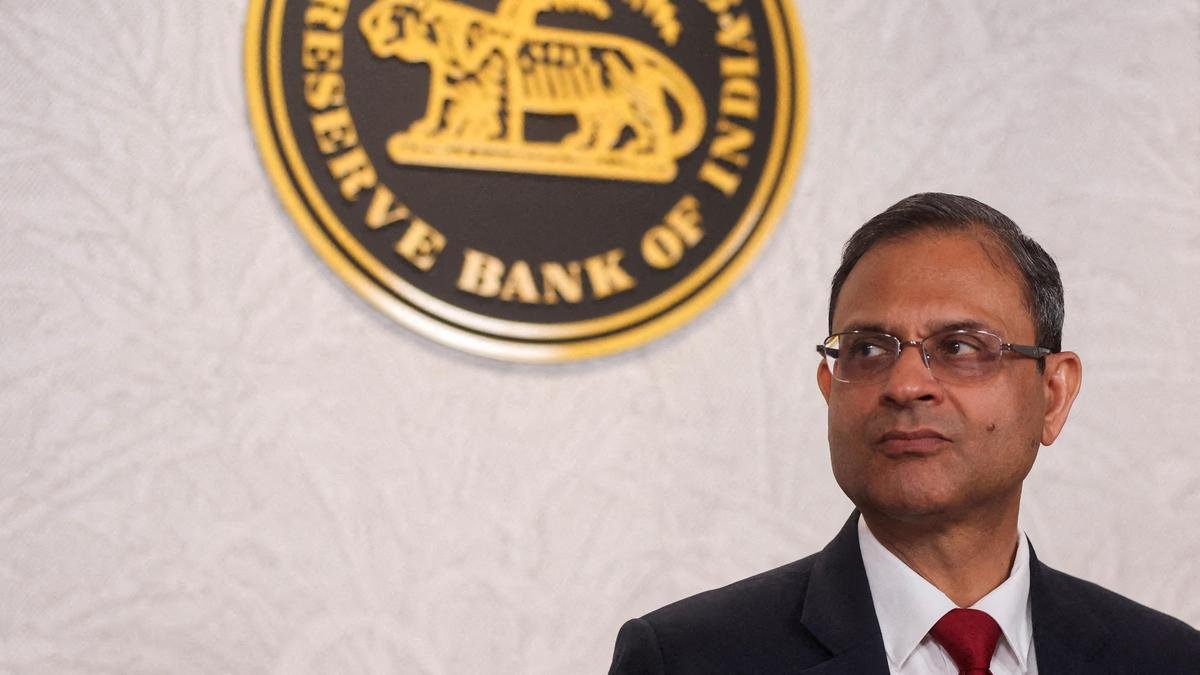
As multiple shocks threaten financial stability Reserve Bank of India (RBI) Governor Sanjay Malhotra on Saturday emphasised the importance of maintaining it at all costs.
Financial instability anywhere can become a threat to financial stability everywhere, he pointed out.
The challenge before financial sector regulators is to build a financial system that can withstand the shocks they anticipate and those, they cannot yet foresee, said Sanjay Malhotra, Governor, Reserve Bank of India (RBI) while laying down five key priorities that policymakers must factor in when safeguarding financial stability.
“This requires resilient institutions, better data, deeper markets, credible safety nets, effective resolution mechanisms and regulation and supervision that are proactive and forward-looking, while being proportionate,” he said in his special address at the Fifth Kautilya Economic Conclave, on the topic “Preserving Financial Stability in an Evolving World”.
Firstly, stating that some shocks will be inevitable, he said financial stability was not about preventing them, it’s about strengthening systemic resilience to face those shocks and contain their amplification.
“Shocks may be endogenous or exogenous. Our aim must be to foster a financial system that can provide financial services in all states of the world, even under severe shocks,” he said.
Secondly, as a new generation of systemic risks were taking shape, he said assessing them and their complex interactions was vital.
“Risks are increasingly exogenous, cross-border and interconnected. The next financial crisis may not originate in a bank, or even in finance. It may begin with a geopolitical event, a cyberattack, or a technological failure and affect the financial system through multiple channels,” he cautioned.
To strengthen systemic resilience, those responsible must aim to better understand the network of dependencies and contagion channels and make scenario analysis a cornerstone of risk management.
Thirdly, monitoring and assessment frameworks must improve. “For that, we need better and more granular data. The financial system is becoming increasingly complex, but data on NBFIs, interconnected exposures, technology dependencies and cross-border positions remain fragmented,” the Governor said.
In an increasingly interconnected financial system, the quality of our data would increasingly determine the quality of our risk assessment, he stated.
Fourthly he said, resilience must be system-wide. “A strong banking system is necessary, but not sufficient. We need resilience across sectors and institutions: NBFIs, financial markets, payment systems, technology infrastructure, critical third parties and cross-border financial networks,” he emphasised.
“Financial instability anywhere can become a threat to financial stability everywhere,” he pointed out. Fifth, he said, innovation must strengthen, not fragment, the foundations of trust.
“Artificial intelligence, tokenisation, and new forms of financial intermediation can dramatically improve efficiency. But innovation will be sustainable only if the financial system preserves the fundamental properties on which trust rests: sound institutions, settlement finality, singleness of money, and financial integrity,” Mr Malhotra stated.
“If we succeed, financial stability will remain largely invisible. And, in central banking, invisibility is perhaps the most meaningful measure of success,” he highlighted.