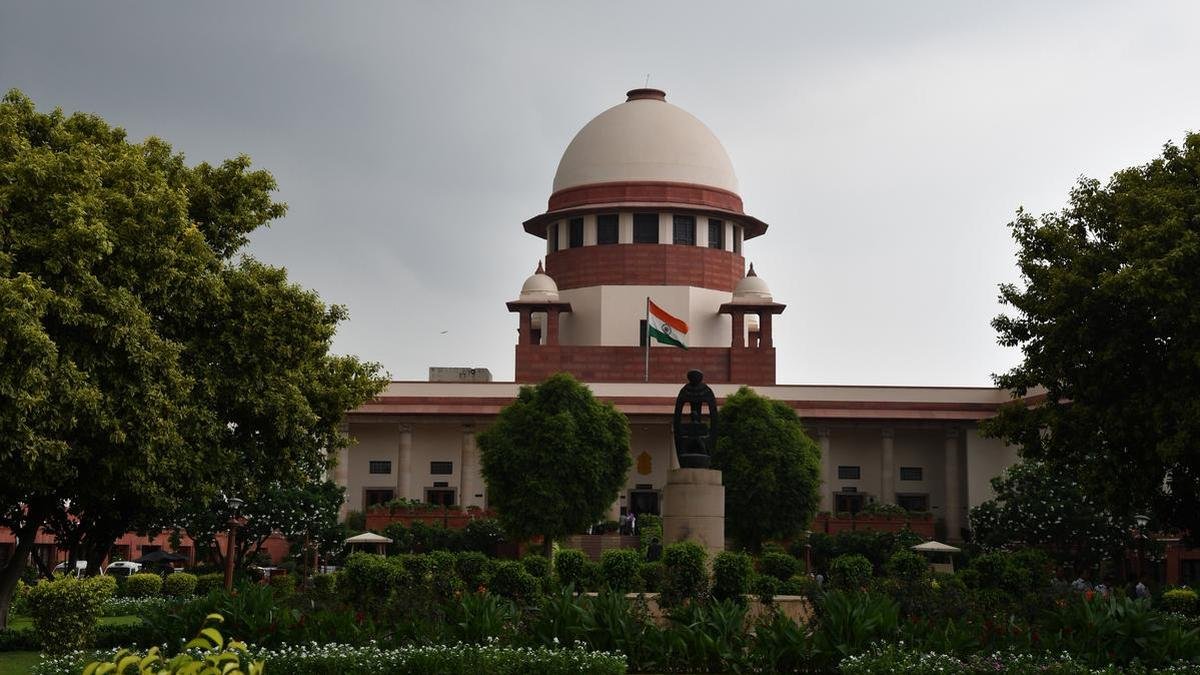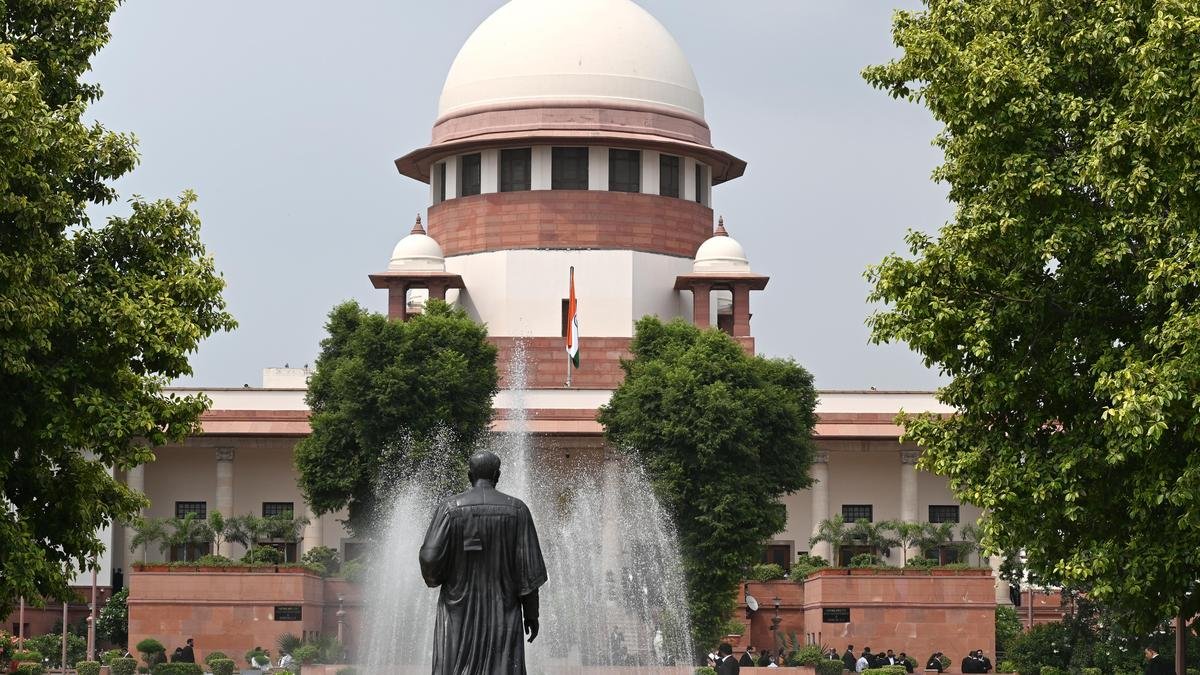
The Supreme Court on Tuesday (August 18, 2026) agreed to use an exceptional power under Article 142 of the Constitution to quash First Information Reports (FIRs) registered against students who joined nationwide protests over the NEET-UG exam paper leaks that led to the resignation of Dharmendra Pradhan as Education Minister and compelled the government to introspect.
“We will quash these FIRs by invoking Article 142.
FIRs involving elements with serious criminal antecedents would be decided subject to discussion in court,” Chief Justice Surya Kant, heading a three-judge Bench, said.
The Bench said it would constitute a high-powered committee to examine all the issues concerning the NEET-UG protests, and invited suggestions from the advocates appearing in the case.
Advocate Vrinda Grover, representing students’ right to protest, pointed out that the Delhi Police have not disclosed details regarding any FIRs.
She said the national capital’s police have not shared even the FIR numbers despite promising to take no action against students and youngsters who protested peacefully.
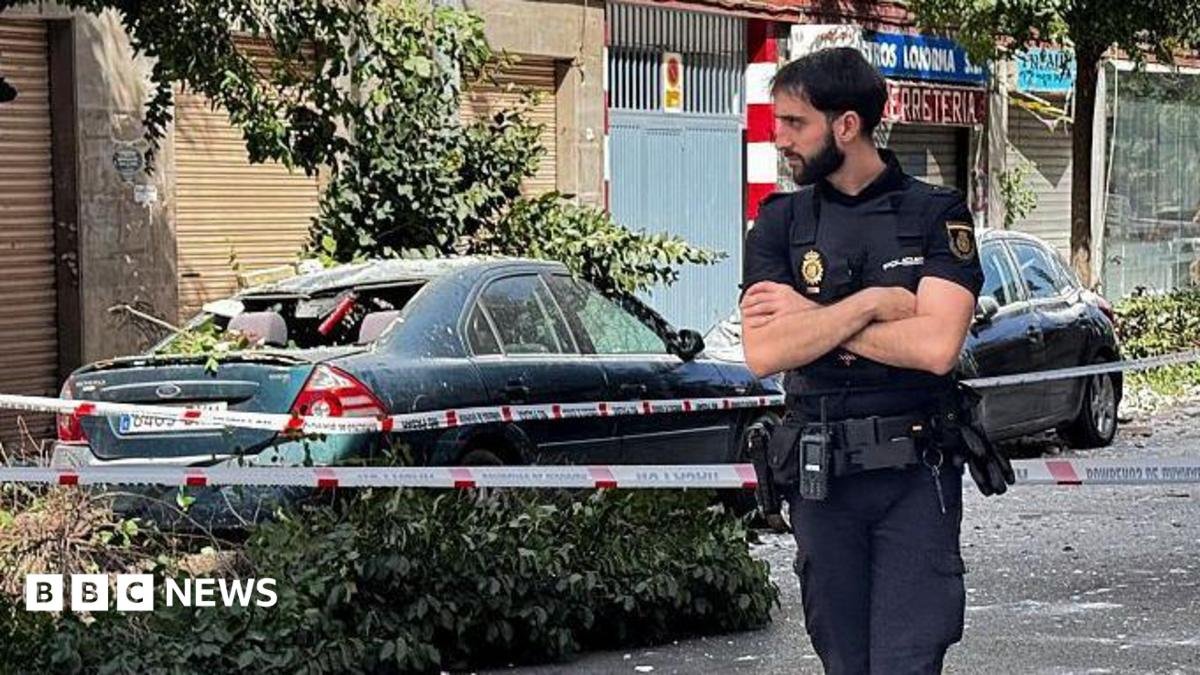
Protests in Delhi, which triggered agitations across the country, led to a police crackdown on July 20 in which pellet guns and tear gas were allegedly used.
SC to examine ‘proportionality’ of the use of facial recognition at NEET protests “But unless we have a list of these FIRs, how will we quash them,” Chief Justice Kant asked.
Solicitor General Tushar Mehta, the government’s top law officer and Delhi Police counsel, said the police would confine their investigation to 2,873 persons with “serious criminal background” who were identified at the protest site.
He said these persons included history-sheeters facing serious charges, including murder, rape, child sexual abuse, etc.
Justice Joymalya Bagchi said the state cannot refer to “undesirable elements” in “generic” terms.
“You have to at least identify them,” Justice Bagchi said.
‘Trapped’ constable fired AK-47 during NEET protest: Bihar Police to Supreme Court “We have identified 2,873.
The rest are students,” Mr.
Mehta responded.
Advocate Rizwan Ahmed, appearing for retired Air Force officer Manish Kumar Solanki, who has squarely blamed the organisers of the NEET-UG protests, including the Cockroach Janta Party (CJP), for the July 20 violence, objected to the court’s proposed move to quash the FIRs against students.
He asked if this would be a “one-off” or was the court setting a precedent.
He said the students had not expressed a “shred of remorse or regret”.
“The moot question here is whether the Parliament march was lawful or unlawful?
The answer is, it is unlawful,” Mr.
Ahmed submitted.
Senior advocate N.
Hariharan, on the petitioners’ side, said Mr.
Ahmed seemed to ask the question and answer it as well.
“The criminality of the protest has to be seen from the purpose for which the students were gathered there.
Let us not forget their right under Article 19 [right to speech and dissent],” Chief Justice Kant addressed Mr.
Ahmed.
The CJI said the court would protect the students “so long as they did not intend to violate the law, so long as they wanted to hold a protest in a peaceful and lawful manner and raise their voice with respect to certain demands which they expected the authorities to hear”.
The court said there was a clear distinction between cases involving peacefully agitating students and those against hardened criminals who infiltrated the protest to spread violence.
“This is a question of the life and future of thousands of innocent students.
Their parents spend hard-earned money for their education.
They have a future.
They have legitimate expectations from the system… We have to build up their confidence in the system.
That is the real foundation,” Chief Justice Kant observed.
The Bench sought suggestions from petitioners for framing issues to be examined by the committee while noting that allegations of police officers sexually molesting women protesters would be looked into urgently by the panel for further legal action.
Senior advocate Gopal Sankaranarayanan, for the petitioners, said the Delhi Police affidavit did not spare a single mention about any internal or administrative action taken against police personnel allegedly captured on social media molesting women protesters.
“The affidavit has an admission of plainclothes policemen present, without name tags.
Once you start indulging in these kinds of disgusting activities, some responsibility should be put on individuals who are at the head of such chain of actions,” Mr.
Sankaranarayanan submitted.
Senior advocate Shadan Farasat asked why the state had not taken legal action against these police personnel.
“We will frame issues which the high-powered committee proposed would go into.
This would include issues the committee should go into urgently.
The order would be out tomorrow,” the Chief Justice assured.
Ms.
Grover, backed by Mr.
Hariharan, said there ought to be a woman in the committee as the issues also concerned them.