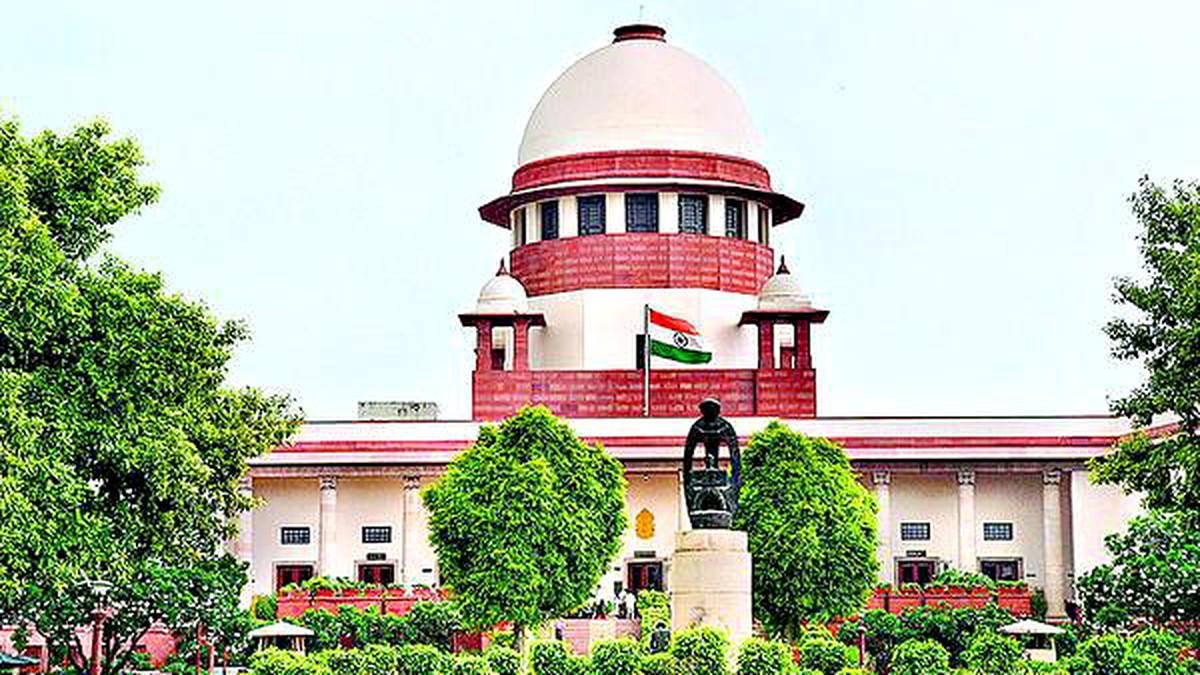
The Supreme Court observed in a judgment on Monday (August 17, 2026) that ridding the electoral process from the influence of black money is a responsibility of the Election Commission of India (ECI).
“Black money in the electoral process is one such aspect that compromises democracy, rule of law and the electoral process itself,” a judgment authored by Justice Sanjay Karol noted.
Bane of tainted money The court said the bane of tainted money circulating and influencing voters’ choices was an age-old problem.
It has been recognised time and again, but not yet resolved.
Elections stolen, alleges Rahul Gandhi; Election Commission of India demands proof ‘under oath’ “The choice exercised by the people once influenced by external factors is no longer a choice of their own.
It is somebody else’s choice being thrust upon them.
These external factors can take many shapes and forms...
Ill-gotten, undeclared money is one of the primary forms used.
It is this which is called ‘black money’,” Justice Karol observed.
The top court urged for timely investigations and conclusion of criminal cases relating to recovery of ill-gotten money during the elections.
SC refuses to interfere with ECI's decision to keep 2002 as base year for SIR in Sikkim The court cautioned that “any external factors that may influence this exercise of choice have the ability to compromise the very essence of democracy”.
It said the choice made by the individual is not free if ill-gotten money is involved and rather it is clouded by gratification, monetary or otherwise, or by promises sometimes genuine, other times misleading.
Compromises electoral process “Black money in the electoral process i.e. the issue with which we are herein concerned, is one such aspect that compromises democracy, rule of law and the electoral process itself,” the Bench said.
Referring to seizure of cash and assets during the election process, the Bench further said: “The authority affecting the seizure must, within 24 hours, report the same to the District Magistrate/Additional District Magistrate/Court having competent jurisdiction along with written reasons disclosing the prima facie nexus between the cash or other asset seized and the suspected electoral offence.” Justice Karol directed that when FIRs are registered, the investigation officer (IO) entrusted with the probe has to make every possible endeavour to complete it within a year.
“If this timeline is exceeded, reasons therefore shall be recorded and communicated to the Election Commission of India,” the Bench pointed out.
The order was passed by the Bench on a plea filed by the Karnataka government related to the 2014 Lok Sabha polls, where large-scale black money was seized during elections in Bellary district.
File affidavit by Nov.
18 Asking the Election Commission and State governments to file a compliance affidavit by November 18, the Bench directed the IO to submit a quarterly status report regarding the investigation to the electoral body.
When Static Surveillance Teams find money in excess of ₹10 lakh during checks, information should be forwarded to the Income Tax authorities, the top court said.
The Bench directed High Courts to ensure speedy trial of election-related black money cases.