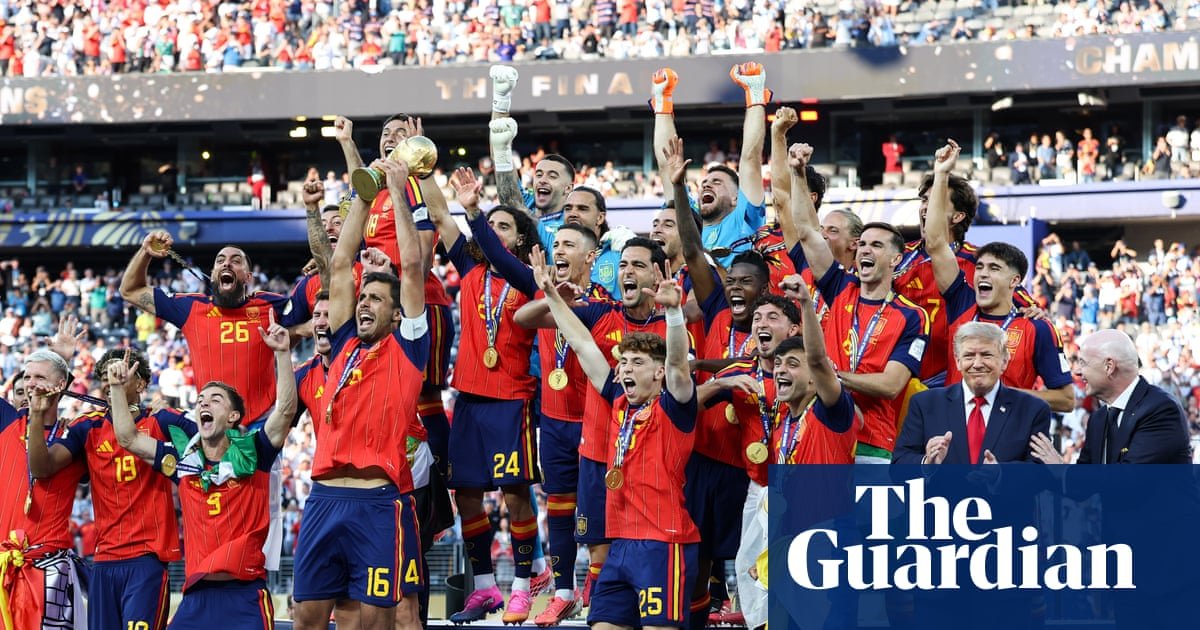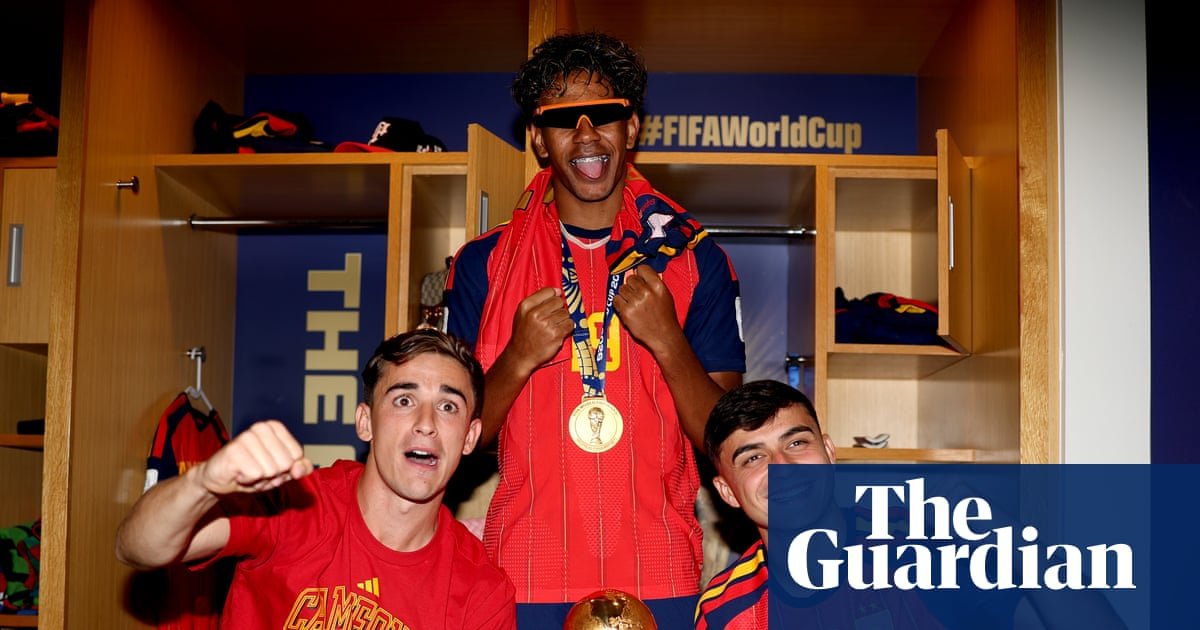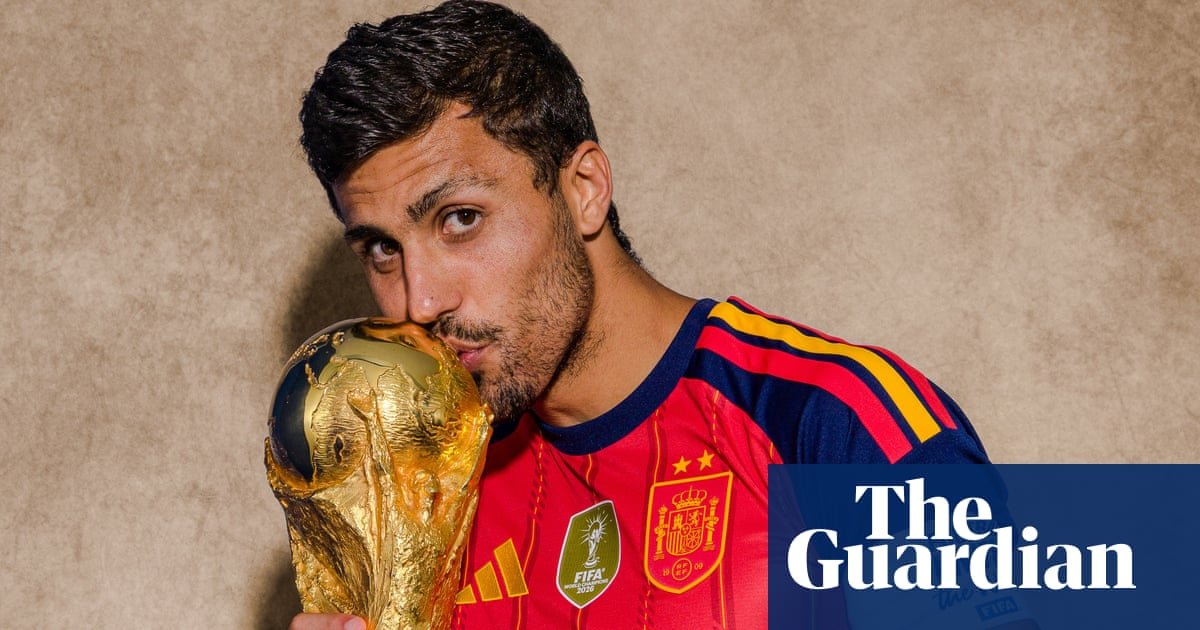
Much of what Rodri does is indefinable – his great skill is simply being, existing in the right spaces
You don’t need to be long in the US before somebody, finding you’re here to cover “the Fifa” as so many Americans so demoralisingly call it, will tell you that the USA would obviously win it all the time if only their best athletes weren’t distracted by more local pursuits: American football, basketball, eating enormous sandwiches and the like. If you’re really lucky they’ll start shouting names at you with a detailed rundown of height, weight, sprint speed, what they can bench and other fascinating statistics.
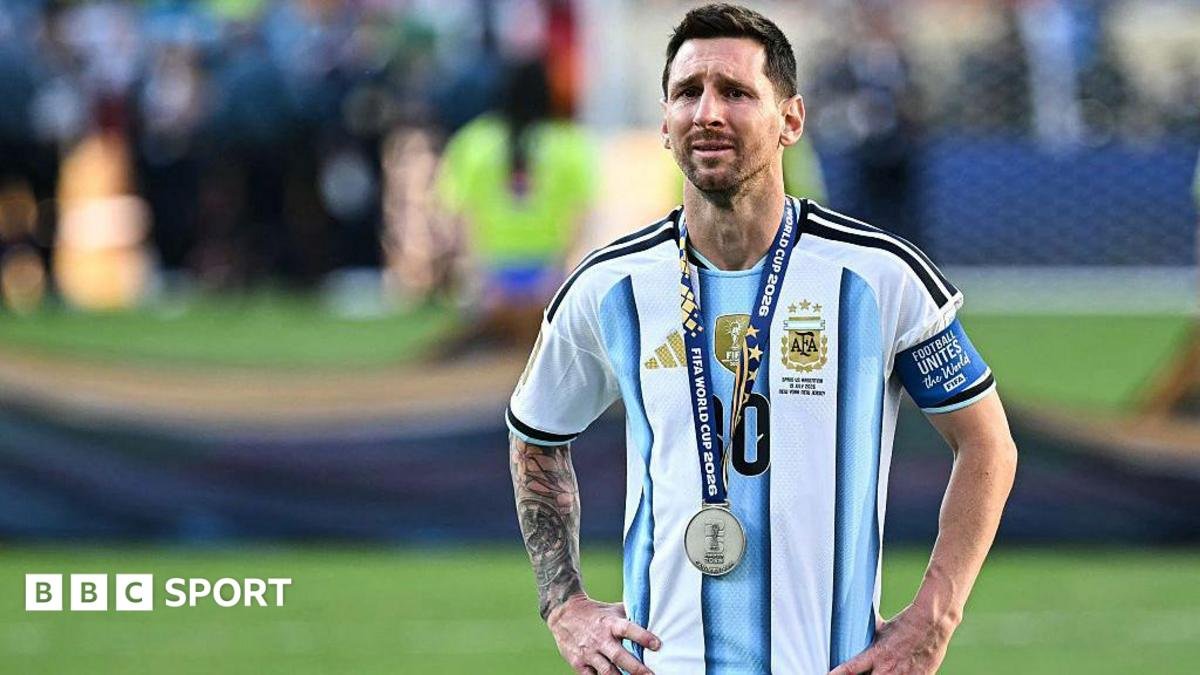
At which you wonder whether the 5ft 7in Lionel Messi has ever done a bench press. Rodri probably has, but he’s still nobody’s idea of a great athlete. He’s tall without being physically imposing. He’s not quick. He ambles about games being in the right place. Occasionally he leans into people or passes the ball 10 yards. It would be difficult to put together a highlights reel of his performance in the World Cup final that would convince a neophyte that he was the defining player – but he was, and was rightly named player of the tournament as well.
This has been a World Cup in which individual stars shone. Kylian Mbappé topped the goalscoring charts, followed by Messi, Jude Bellingham, Erling Haaland, Harry Kane and Ousmane Dembélé. In the most heavily marketed World Cup ever, there were plenty of faces to market: “Look at this celebrity, scoring a goal!” But in the end the parade of goalscorers ended up marching in the shadow of the great controller.
Mauricio Pochettino made the point last year that there were two problems with a US system that in effect forces a parent who wants their child to play soccer to pay thousands of dollars a year to belong to a club. The first is that it means huge swathes of the population are excluded for basic financial reasons. The second is less obvious but perhaps almost as insidious: parents at the end of the year will demand to see progress, to know what they’ve got for their money.
The two most important attributes for an elite footballer – technical ability and tactical awareness – are extremely difficult to measure. And so coaches tend to tell parent that their charge has knocked a fraction off their sprint time, or is lifting 20 pounds more. That’s measurable; it satisfies the need to see a return on investment. The result is a focus on physicality rather than the nebulous but vital skills that define the best players, something reflected in how the US play. Carli Lloyd made a similar point, and a series of youth coaches I’ve spoken to over the past month have agreed.
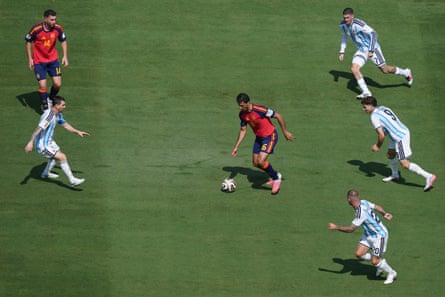
There is no American Rodri, and perhaps in the present system there cannot be one. But then there is no English Rodri, or French Rodri, or Argentinian Rodri, or German Rodri. Rodri is a very Spanish type. He comes from the line of Sergio Busquets, and the closest player to him in the modern game is Martín Zubimendi. In an environment in which football is becoming increasing physical, they have found a role for the cerebral.
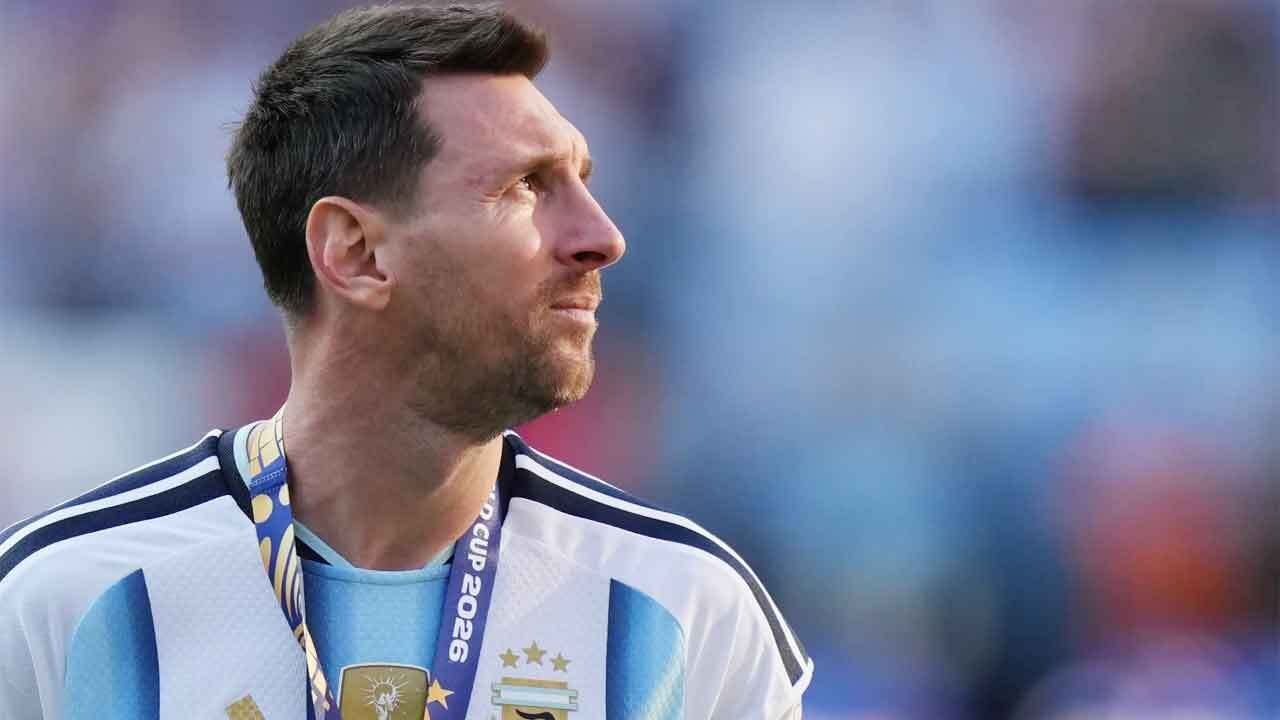
Much of what Rodri does is indefinable. He didn’t score a goal or register an assist at this World Cup. A pass completion rate of 93.2% is obviously very good, but it was only the 44th best in the tournament. Even if you filter out centre-backs, who play a lot of short simple, unpressured passes, Rodri is 18th. He ranked 22nd for tackles per game and 450th for interceptions. Even at fouling, at which, following in the proud Manchester City lineage of Fernandinho, Rodri is a master, has was only 97th. Although he completed a record 756 passes at this tournament, his great skill is simply being. By existing in the right spaces, Rodri lubricates and distributes and, by somehow combining that with a capacity to draw matter towards him, he discourages opponents from passing in his zone. He, as much as anyone, was the reason Lionel Messi was so little involved in the final.
Yet as recently as the end of the domestic season – which admittedly doesn’t feel that recent after 104 World Cup games, but was only two months ago – there were doubts about whether Rodri would ever be quite the same again. It was only 10 weeks after being named player of the tournament at Euro 2024 that Rodri sustained the anterior crucial ligament injury that kept him out for the 2024-25 season. City’s decline in his absence told its own story.
His return was not straightforward. He struggled during the Club World Cup, forced off during the defeat by Al-Hilal. He started only 17 league games last season. Pep Guardiola suggested that the best of Rodri wouldn’t be seen until the World Cup. That’s been a recurring theme; most of the best players at this tournament were those who had not slogged through 50+ high-intensity games last season.
In that sense, Rodri’s is a great redemption story, a player returning after two very difficult seasons to add World Cup honours to his European award. But there’s also an undeniable irony that in a country that celebrates the individual like no other, in a World Cup that has relentlessly promoted celebrities, the defining player ends up being the most unflashy team-oriented candidate imaginable, the first non-creator to win the Golden Ball in 24 years.