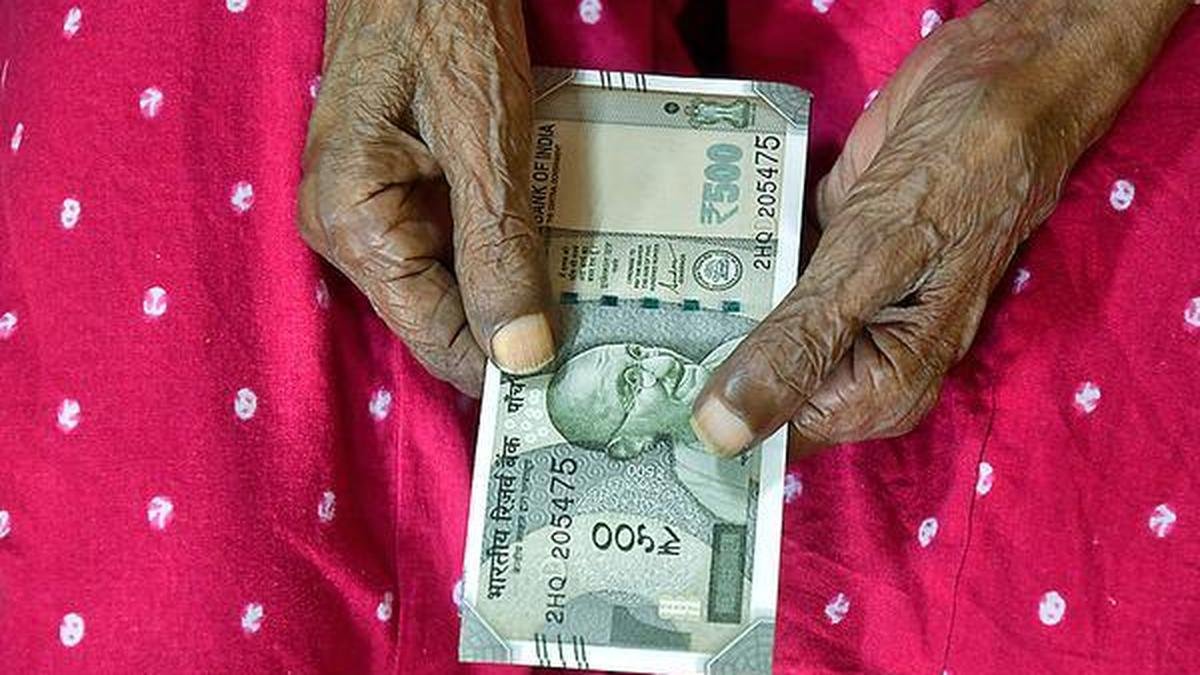
An in-principle decision taken by the Congress-led United Democratic Front (UDF) government in Kerala to end doorstep delivery of welfare pensions and fully shift to the Direct Benefit Transfer (DBT) mode has drawn sharp reactions from the Opposition alliance, the Left Democratic Front (LDF).
At present, the social security pensions for the elderly and distressed sections are paid either into their bank accounts via DBT or delivered to them under a Direct-To-Home (DTH) method through primary agricultural credit societies. A little over 23 lakh social security pensioners receive their monthly payment of ₹2,000 through the DTH method. In Kerala, the monthly welfare pensions paid out to roughly 60 lakh people — social security and welfare fund board pensions combined — enjoy considerable space in the political discourse, given the beneficiary size and the fiscal commitment. The prestige this welfare measure commands was evident during the 2026 Assembly elections. A promise that the pensions would be hiked to ₹3,000 had ranked high on the manifestos of all three fronts.
At the centre of the current political controversy is a July 27 State Finance Department order stating the government’s intention to fully replace doorstep delivery of social security pensions with Aadhaar-linked bank transfers. While the abruptness of the decision had come as a surprise, it was apparently based on a recommendation by the Kerala Social Security Pension Ltd (KSSPL) which advocated for DBT as the preferred mode. The reasons given included the delays in returning unpaid pension money, payments made to ineligible individuals, and in some cases, multiple payments made to the same individual. Other reasons included the financial burden caused by the ‘incentive’ paid to people making the delivery and a possible loss of central financial assistance for non-compliance with DBT requirements.
Strong backlash
The reaction of the Communist Party of India (Marxist)-led LDF to the order was swift. The Leader of the Opposition, Pinarayi Vijayan, demanded an urgent roll-back of the decision on the grounds that it would bring needless hardship to senior citizens, particularly people with limited access to banks. K.N. Balagopal, who was Finance Minister in the 2021-2026 LDF government, accused the Congress-led government of harbouring an ulterior motive to weaken and phase out the pensions.
The doorstep delivery mechanism was introduced by the LDF when it came to power in 2016. Prior to that, pensions were paid through local self-government institutions or post offices. The LDF’s rationale for replacing it was that the system was inefficient. The government’s claim that Kerala could lose central assistance is baseless, since the 8.4 lakh welfare pensioners eligible for a central share in their payments were already receiving it through the DBT method, the LDF said.
However, it is pertinent to recall that the Comptroller and Auditor General of India (CAG) had, in 2023, flagged serious issues with the doorstep delivery mode. The CAG wanted Kerala to bring more beneficiaries under DBT in order to curb malpractice and possible fraud. Besides, finance department data revealed that Kerala had spent ₹434.89 crore across eight fiscals from 2016-17 on the incentive given to individuals for physically delivering the pensions.
While it will be interesting to see how Chief Minister V.D. Satheesan responds to the Opposition backlash, the controversy has coincided with his plans to develop a ‘Kerala silver economy.’ On taking charge, the CM had created a dedicated department for elderly welfare and announced plans for a ‘comprehensive silver economy policy.’
Although not without drawbacks, DBT is widely regarded as a model that eliminates intermediaries and prevents fraud. What is equally true is that Kerala’s cooperative sector is a robust, nationally-acclaimed institution with strong grassroots connections. Kerala’s large ageing population, social structure and time-honoured thrust towards decentralisation make it inevitable that its local cooperative networks should have a role in the welfare of senior citizens. Under such circumstances, it would not be amiss for the government to take a considered decision on the matter after weighing the pros and cons and consulting with stakeholders.