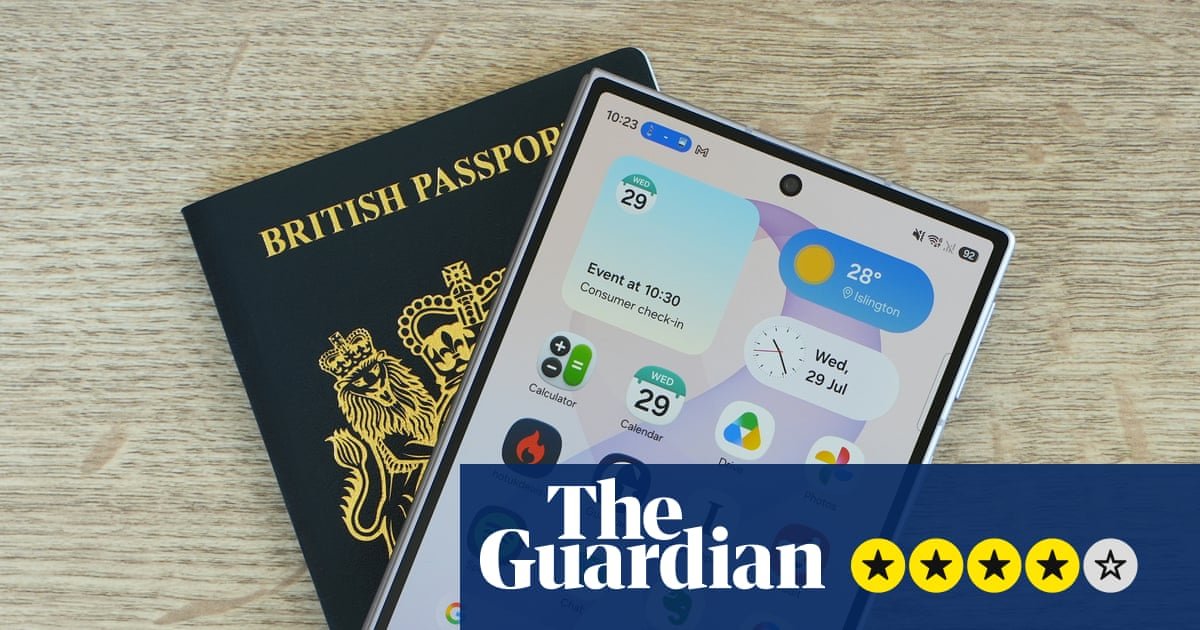
The Galaxy Z Fold 8 ditches the skinny candy bar profile of its forebears in favour of a retro passport-like shape.
Review Samsung Galaxy Z Fold 8 review: your passport to a folding phone future Novel squat Android opens to an iPad-like screen for video or multitasking, with plenty of power and battery life Samsung’s latest folding phone breaks the mould with a squat, passport-like shape reminiscent of the Blackberry, which opens up to become a tablet similar to an iPad mini.
It is certainly a better shape for a tablet than other designs, but is a short and wide phone when closed a compromise too far?
The Galaxy Z Fold 8 is an entirely new variant in Samsung’s foldable family for this year launched alongside the Z Fold 8 Ultra with a more familiar candy bar shape.
Both folders are extremely expensive, with the Fold 8 starting at £1,699 (€1,999/$1,899.99/A$2,699) and the Fold 8 Ultra at £1,899 (€2,199/$2,099.99/A$2,999), with RAMageddon driving up prices even at the top of the market.
While Samsung’s first folding phone adopted a candy bar shape that opened up like a book to a square tablet, others began with more squat and wide forms including the original Google Pixel Fold and Microsoft Surface Duo.
But as the technology matured most folders adopted the narrower closed form, which proved a better shape for performing phone-type duties such as messaging.
The Fold 8 in its closed form is almost the same size as a passport, feeling more like a small notepad than a phone.
7mm thick when closed, which is about the same as a regular phone in a case, but its short and wide design looks more like a mini tablet or notepad in your hand.
Its width also makes it hard to reach the other side of the screen one-handed, making it a two-handed affair most of the time, similar to huge superphones such as the Galaxy S26 Ultra.
Photos, apps, games and websites look and work great on the crisp and super-bright outside screen.
That is until you open the keyboard, which then takes up just over half the screen, leaving you very little space to see the content you are trying to type into.
Apps that include a bar at the top, such as WhatsApp, shrink that space even further.
With the keyboard open you only have a narrow window to see the content of messages when typing on the Fold 8 (left) compared with a regular phone or the taller Fold 8 Ultra (right) Open the Fold 8 like a book to reveal a beautiful 7.6in OLED display, which is crisp, smooth and super-bright, making it easy to see in direct sunlight.
Like all folders the necessarily softer screen material is fragile and a fingerprint magnet, so needs regular gentle cleaning.
The tablet screen’s 4:3 ratio matches that of Apple’s iPads or Microsoft’s Surfaces, which makes it a better fit for video with smaller black bars top and bottom when held in landscape compared to squarer foldables.
Websites, comics, books and apps look great on the inside screen when held in portrait orientation.
Most apps will present a dual-pane tablet interface in either orientation.
But when you directly compare the Fold 8’s internal screen with last year’s Fold 7 or the new Fold 8 Ultra’s squarer display, you realise that landscape video is almost the same size on both tablets; only the thickness of the letterboxing black bars differs significantly.
The speakers of the Fold 8 are pretty good for a phone, but they are only stereo when the tablet is held in portrait, not landscape when watching video which is unfortunate.
With both folders held in landscape, standard 16:9 ratio YouTube videos are 151 x 85mm on the Fold 8 Ultra (left) and 154mm x 86mm on the Fold 8 (right).
6in QXGA+ 120Hz (403ppi) AMOLED flexible display Cover screen: 5.5in WUXGA+ 120Hz (428ppi) AMOLED Processor: Qualcomm Snapdragon 8 Elite Gen 5 for Galaxy RAM: 12 or 16GB Storage: 256, 512GB or 1TB Operating system: One UI 9 based on Android 17 Camera: 50+50MP rear; 10MP+10MP selfie cameras Connectivity: 5G, dual sim, e-sim, USB-C, wifi 7, NFC, Bluetooth 6, UWB, GNSS Water resistance: IP48 (1.5 metres for 30 minutes) Dimensions folded: 123.9 x 81.9 x 9.7mm Dimensions unfolded: 123.9 x 161.4 x 4.5mm Weight: 201g Plenty of power for multitasking The Fold 8 fully charges in 65 minutes hitting 70% in about half an hour using a 45W or greater USB-C power adaptor (not included).
It also supports 20W wireless charging.
The battery lasts a solid 40 hours between charge, using an even split of both screens for a total of eight hours on a mix of 5G and wifi for browsing, messaging, shooting photos and making notes.
Gaming and other more intensive tasks drained the battery faster, but the Fold 8 should comfortably see out even the heaviest of days without needing a top up.
One UI 9 software The Fold 8 can have up to three apps on screen in a multiple different grid layouts with more running as small floating windows.
One UI 9 is based on the latest Android 17 with Samsung providing Android and security updates until 31 July 2033.
The great Now Bar remains from last year’s version for live sports scores, music, timers and other ongoing tasks at the bottom of the lock screen or in the status bar.
The improved Now Nudge, Samsung’s AI suggestion tool from the S26, can surface information from a greater number of sources in a wider range of apps.
The Now Brief AI box remains a weak point, however, rarely suggesting anything useful beyond the weather or your calendar events.
Google’s Gemini is baked in along with plenty of other AI tools that can occasionally be useful.
One oddity is that if you choose not to have the same home screen on the outside and inside displays, the tablet screen ends up with two separate home screen layouts, one for portrait and one for landscape orientation.
That means you have three separate home screens to customise with their own configuration of apps and widgets. skip past newsletter promotion after newsletter promotion Camera The camera app has plenty of modes and can be used open or folded for different shooting methods.
The main 50MP camera is the best of the bunch and similar in performance to the main camera of the standard S26, shooting good photos across a range of conditions.
The 50MP ultrawide is also solid, with consistent colour across both cameras.
The 2x crop zoom on the main camera works fairly well, but magnifying beyond to 4x or 10x digital zoom rapidly becomes poor.
The Fold 8’s selfie cameras are decent and handy for video calls, but you get better results using the main camera for selfies with the outside screen as a viewfinder, even if it is a bit ungainly.
The camera app has plenty of modes and shoots decent video, with some fancy auto-tracking features that make it easy to set the camera up partly folded and keep a subject in frame.
Sustainability The crease in the middle where the screen folds is still evident when the display is off or you run your finger over it.
The phone is generally repairable.
Inside screen repairs cost about £600.
Samsung offers a self-repair programme, as well as Care+ accidental damage insurance that reduces the cost of repairs to £50.
The Fold 8 is made from 14.9% recycled material by weight, which Samsung breaks down in its environmental report.
The company offers trade-in and recycling schemes for old devices.
Price The Samsung Galaxy Z Fold 8 costs from £1,699 (€1,999/$1,899.99/A$2,699).
For comparison, the Galaxy Z Fold 8 Ultra costs £1,899, the S26 Ultra costs £1,279, the Honor Magic V6 costs £1,999.99 and the Google Pixel 10 Pro Fold costs £1,299.
Verdict The Galaxy Z Fold 8 is a bit of a curio from Samsung.
Having forged the way with narrower book-style foldables, suddenly offering a squat, passport-shaped version seems like an odd step.
On paper, the inside screen’s more conventional iPad-like shape makes it better suited to websites, video and apps.
But because the Fold 8’s internal screen isn’t any wider than that of the Fold 7 or Fold 8 Ultra, apps have less screen space to work with while landscape videos are practically the same size, just with slimmer black bars at the top and bottom on the Fold 8.
Meanwhile, the short and fat form of the closed Fold 8 makes for a worse phone experience.
It is much harder to use one-handed and the keyboard takes up far too much of the screen.
I didn’t find it any easier to fit in a pocket than narrower rivals, either.
Shape aside, the Fold 8 is another stunning piece of technology from Samsung with excellent software to make the best of its folding form, plenty of processing power and surprisingly good battery life.
But it only has two cameras on the back with no telephoto option, which is poor for this kind of money.
The Fold 8 is better than some of the original attempts at the passport folder shapes, but there are many good a reasons book-style folding phones evolved into candy bar shapes over the last eight years.
Pros: a phone and tablet in one, thin and light, powerful multitasking abilities, great tablet screen, top performance, solid battery life, water resistance.
Cons: extremely expensive, passport-shape not ideal for phone duties, no dust resistance, more fragile than a regular device and costly to repair, no telephoto camera.
With the Fold 8 Ultra (left) and Fold 8 (right), Samsung offers a choice of shapes for its book-style folding phones.
Explore more on these topicsSamsung Android Smartphones Tablet computers Mobile phones reviews Share Reuse this content