The Supreme Court on Wednesday (July 15, 2026) declined to interfere with a Madras High Court order restraining the Directorate of Vigilance and Anti-Corruption (DVAC) from taking any coercive action against former Tamil Nadu Public Works and Highways Minister E.V. Velu in connection with alleged irregularities in road projects executed during his tenure in the previous DMK government.
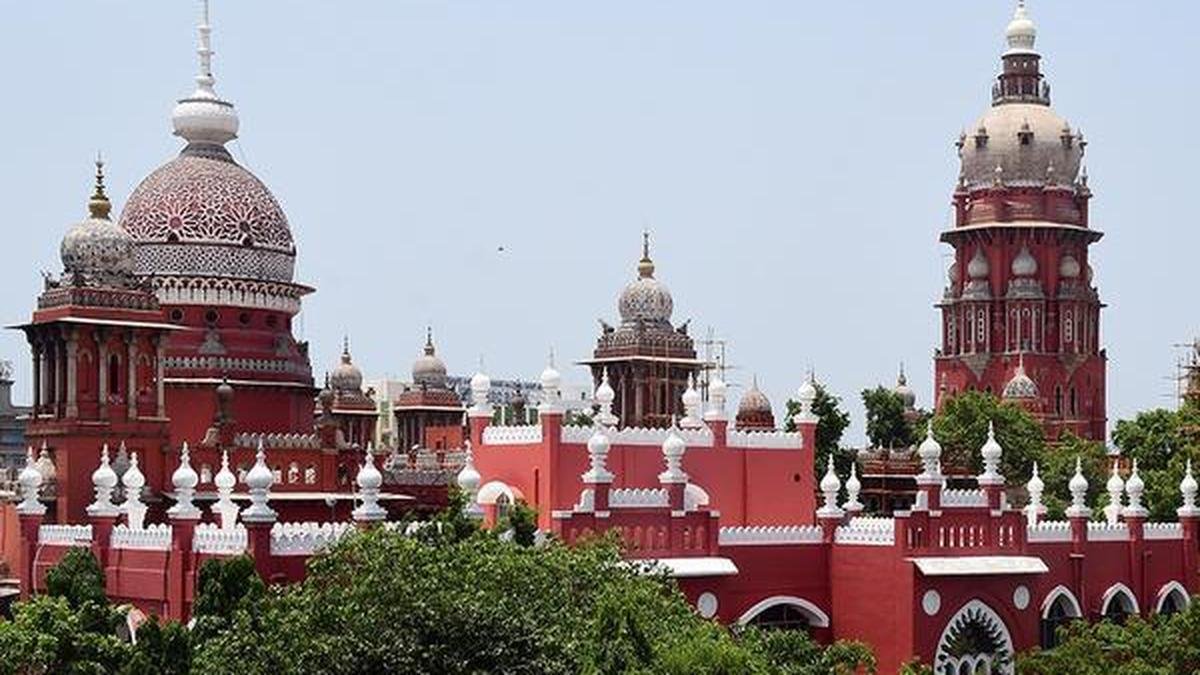
A Bench comprising Justices Vikram Nath and Sandeep Mehta was hearing an appeal filed by the Tamilaga Vettri Kazhagam (TVK)-led State government, challenging the High Court’s July 9 interim order. The High Court had stayed the operation of a Look Out Circular (LoC) issued against Mr. Velu and restrained the DVAC from taking any coercive action against him until July 28, by when the investigating agency had been directed to file its counter affidavit in response to the former Minister’s petition seeking the quashing of the FIR registered on June 26, 2026.
Senior advocate Abhishek Manu Singhvi, appearing for the Tamil Nadu government, submitted that the High Court had passed a “patently bad order”, contending that the interim protection effectively amounted to the grant of anticipatory bail even though no such relief had been sought by the former Minister.
“The order was passed in a quashing petition, which contains no prayer for anticipatory bail... There is a blanket embargo against any coercive steps,” he submitted.
Justice Mehta, however, disagreed with the submission, observing that the High Court had not granted any “blanket embargo”. He pointed out that the interim protection had been made conditional upon Mr. Velu appearing before the investigating officer on July 15, 2026, in compliance with the summons issued to him.
“What do you mean by blanket embargo? He has been directed to appear for investigation. We know from the records that he has been summoned on July 15,” the judge remarked.
‘Cooperate with the probe’
Mr. Singhvi then urged the Bench to direct Mr. Velu to extend full cooperation in the probe. He also pointed out that the former Minister had travelled to Singapore immediately after learning of the searches conducted by the DVAC.
Declining to interfere with the High Court’s order, the Bench dismissed the appeal while directing Mr. Velu to cooperate with the investigation.
“Dismissed. The respondent shall extend all cooperation in the investigation. We have not examined the matter on merits,” the Bench ordered.
During the hearing, senior advocate Mukul Rohatgi, appearing for Mr. Velu, submitted that the prosecution was politically motivated and had been initiated only after the change of government in Tamil Nadu.
“This is just the beginning. I was an ex-Minister. The moment the government changes... this is the first case. Now more will come,” he submitted.
Justice Vikram Nath, however, was quick to point out that similar proceedings had been initiated even during the tenure of the previous government. “You have done the same thing earlier. What’s wrong in that?”, he remarked.
Mr. Singhvi then urged the Bench to direct Mr. Velu to surrender his passport to facilitate the investigation. The Bench, however, declined to pass any such direction, observing that it was open to the State to seek appropriate relief from the competent court.
“It will be open for the Tamil Nadu government to apply before the court concerned for confiscation of the passport. Go and apply. Courts have the power,” the Bench said.
The FIR against Mr. Velu stemmed from a complaint lodged on April 20, 2022, by Jayaram Venkatesan, convenor of the anti-corruption organisation Arappor Iyakkam. The complaint sought action not only against the then Highways Minister but also against several public servants alleged to have facilitated the offences, as well as private contractors who had received public funds for works that were allegedly never executed.
According to the complaint, the State Highways Department had allocated more than ₹5,000 crore under its flagship Comprehensive Road Infrastructure Development Programme (CRIDP), but the funds were allegedly marred by widespread corruption and mismanagement. Mr. Venkatesan alleged that irregularities had occurred across the State and cited several instances in support of his complaint.
Acting on the complaint, the DVAC registered an FIR against Mr. Velu, nine former Highways Department officials, a private contractor and other unknown public servants and private individuals under various provisions of the Prevention of Corruption Act, 1988, and the Indian Penal Code.
While granting interim protection on July 9, the High Court directed Mr. Velu to appear before the investigating officer on July 15, 2026. The court also took note of his submission that he was in Singapore for medical treatment and was scheduled to return to India on July 12.